PUDU MT1 Vac for Banquet Halls in India: Cleaning Applications, Costs and ROI
Banquet halls need to recover quickly after weddings, receptions and corporate events. Dust, dry food crumbs and décor debris can spread across large floors, while spills and sticky marks require separate attention. Cleaning teams must manage this work alongside furniture movement and preparations for the next booking. A cleaning robot for banquet halls in India can take over suitable repetitive floor-cleaning tasks.
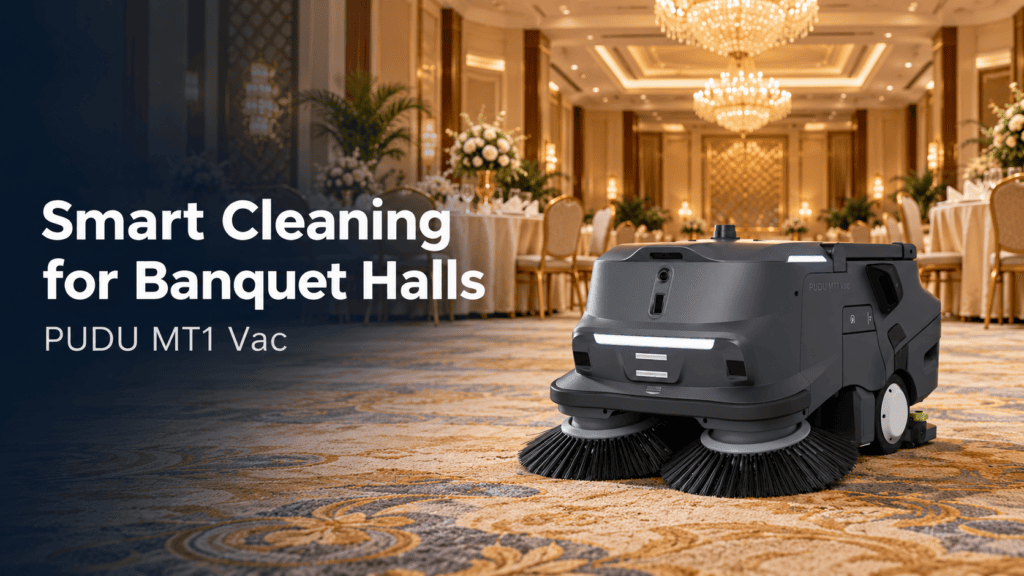
PUDU MT1 Vac is particularly relevant for venues with carpeted areas and regular dry-floor cleaning requirements, combining sweeping, vacuuming and dust mopping.
However, choosing the right solution depends on your flooring, cleaning frequency and type of mess. This guide explains where MT1 Vac fits, when another cleaning machine is needed, and how banquet-hall owners can assess the investment.
Why Banquet Hall Floor Cleaning Is Difficult
Banquet hall cleaning involves more than covering a large floor. After a wedding, reception or corporate function, housekeeping teams must deal with different types of waste, changing furniture layouts and a deadline for the next setup. Four challenges make this work particularly demanding.
1. Short Cleaning Windows Between Events
When a venue hosts a daytime function followed by an evening reception, floor cleaning must fit between guest departure, furniture clearance and the next setup. Delays in one activity reduce the time available for everything that follows.
Automating suitable dry-floor cleaning can help staff work on other preparation tasks while the robot cleans an accessible, designated area.
2. Dry Debris and Wet Spills Need Different Methods
A single event can leave dry crumbs, dust, paper fragments, spilled drinks and sticky food residue. These cannot all be handled effectively with the same cleaning process.
PUDU MT1 Vac supports sweeping, vacuuming and dry dust mopping. Liquid spills and sticky marks require suitable wet-cleaning equipment, while carpet stains need separate treatment. Identifying the type of mess helps teams choose the right method and avoid unnecessary repeat work.
3. Furniture and Décor Restrict Floor Access
Seating rows, buffet counters, stage platforms and trailing tablecloths can block cleaning routes. A layout that works for one event may change completely for the next.
Both staff and robots need access to clean effectively. Before a robotic cleaning run, teams should clear cables and loose decorations, check passage widths and identify areas that require manual attention.
4. Cleaning Demand Changes Across the Year
During busy wedding periods, venues may need repeated cleaning cycles and late-night resets. Quieter months can bring a much lighter workload.
For owners considering a cleaning robot for banquet halls in India, the decision should reflect year-round usage. Regular cleaning across the hall, corridors and pre-function spaces may improve utilisation, provided those areas are suitable for the machine.
A practical cleaning plan combines automation with staff responsibilities: the robot handles suitable repetitive floor work, while the team manages spills, difficult areas and final inspection.
When Does a Cleaning Robot Make Sense for a Banquet Hall?
A cleaning robot is most useful when a venue has regular, repeatable floor-cleaning work. The decision should depend on the workload, accessible area and cleaning method required.
Regular Dry-Floor Cleaning
A banquet hall that frequently needs carpet vacuuming or dry-debris collection has a clear task to evaluate for automation. Beyond the main hall, suitable corridors and pre-function areas can provide additional work between events.
For PUDU MT1 Vac, the strongest starting point is recurring sweeping, vacuuming and dry dust mopping.
Enough Accessible Floor Space
Total property size does not tell you how much a robot can clean. A large hall filled with closely arranged tables may have less accessible floor space than a smaller, open pre-function area.
Assess the floor with your normal seating and buffet arrangements in place. Identify which areas can remain accessible and which need furniture movement or manual cleaning.
A Workload That Justifies the Investment
A hotel with daily conferences, functions and corridor cleaning may use a robot more frequently than a standalone wedding venue with seasonal bookings.
Before investing in a cleaning robot for banquet halls in India, record cleaning frequency, staff hours and overtime across busy and quiet periods. Automation becomes easier to justify when it reduces a recurring expense or releases staff for necessary work.
The Right Type of Cleaning
If the main challenge is carpet dust and dry crumbs, MT1 Vac is worth evaluating. If sticky residue and wet hard-floor cleaning dominate the workload, a scrubber-dryer may be the more suitable first investment.
What to Look for in a Banquet Hall Cleaning Robot
Choosing a banquet hall cleaning robot starts with understanding the venue’s actual operating conditions. Match the machine to your floors, debris and cleaning schedule before comparing specifications.
| What to check | What it means for your venue |
|---|---|
| Floor type | Identify carpeted areas, polished stone, tiles and other finishes that need different cleaning methods. |
| Typical debris | Test the dry waste normally left after your events, following the machine’s operating guidance. |
| Accessible area | Measure the floor the robot can reach with tables, chairs and counters in place. |
| Cleaning window | Check whether the complete task fits between clearance and the next setup. |
| Route clearance | Test passages, turns, carpet transitions and access to the charging station. |
| Routine maintenance | Assign responsibility for emptying containers, inspecting brushes and maintaining filters. |
| Service support | Confirm training, spare-parts availability, warranty coverage and service arrangements. |
Compare Completed Work, Not Just Rated Speed
A manufacturer’s maximum cleaning rate helps shortlist equipment, but it does not establish how quickly your furnished hall will be ready.
During a demonstration, measure the complete cleaning cycle: preparation, robot operation, interruptions, servicing and remaining manual work. Inspect the finished floor using the same standard applied to your existing cleaning team.
The useful comparison is how much acceptable cleaning gets completed within your available time—and how much staff effort it requires.
Where PUDU MT1 Vac Fits in Banquet Hall Cleaning
PUDU MT1 Vac combines sweeping, vacuuming and dry dust mopping. Its role in a banquet venue is to automate suitable dry-floor cleaning while staff manage other housekeeping responsibilities.
Carpeted Halls and Pre-Function Areas
Carpeted spaces need regular vacuuming to remove dry particles introduced by guests, footwear and event activity. MT1 Vac can be evaluated for this recurring workload, with performance checked on the venue’s actual carpet.
Routine vacuuming remains separate from carpet stain treatment and periodic extraction cleaning.
Accessible Hard-Floor Areas
MT1 Vac can also support suitable dry cleaning of hard floors in corridors, reception areas and event spaces. This is useful where dust and loose dry debris are the main concern.
It does not wash away sticky food residue or recover liquid spills. Those tasks need an appropriate wet-cleaning process.
Post-Event Dry Cleaning
After staff remove crockery, large waste and unsuitable debris, the robot can clean designated accessible zones. Meanwhile, staff can work on separate tasks such as table preparation or detailing, where the layout allows.
Routine Cleaning Between Bookings
A venue may also use MT1 Vac for scheduled dry cleaning before opening or between events. This can help distribute cleaning work across the day instead of leaving every task until the final reset.
The deployment should follow a clear sequence: prepare the area, run the suitable cleaning task, inspect the result and service the machine for its next use.
PUDU MT1 Vac Features That Matter in a Banquet Hall
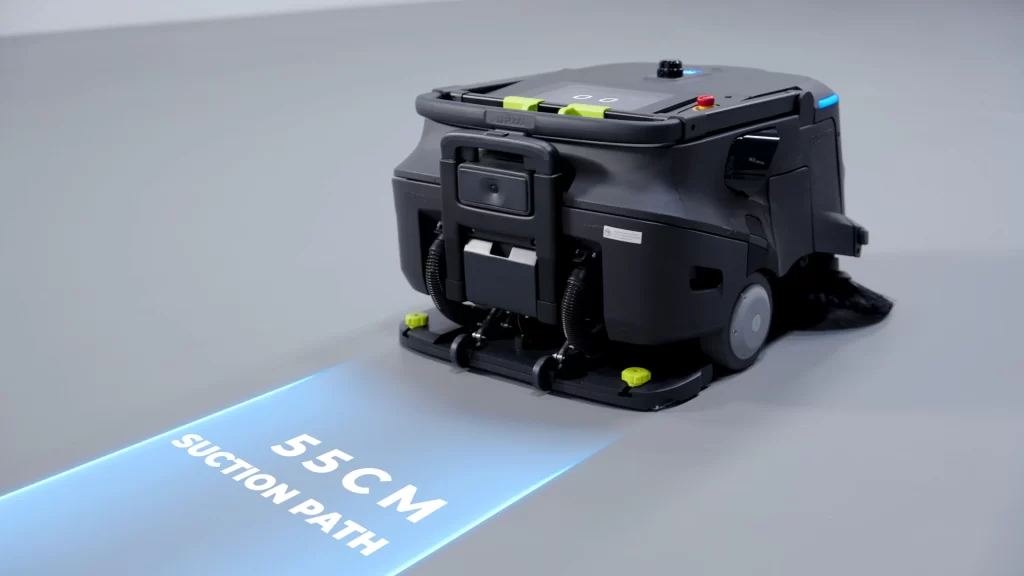
The most useful features are those that address a recurring cleaning task in your venue. Evaluate each feature against the floor, layout and operating schedule.
Vacuuming for Routine Dry Cleaning
MT1 Vac’s vacuuming system is relevant to carpet dust and suitable dry debris. A demonstration should establish pickup performance on the actual surfaces and waste found in your hall.
Do not assume that every type of post-event waste can enter the machine. Wet food, oversized items and tangled decorations need separate assessment and handling.
Carpet and Hard-Floor Recognition
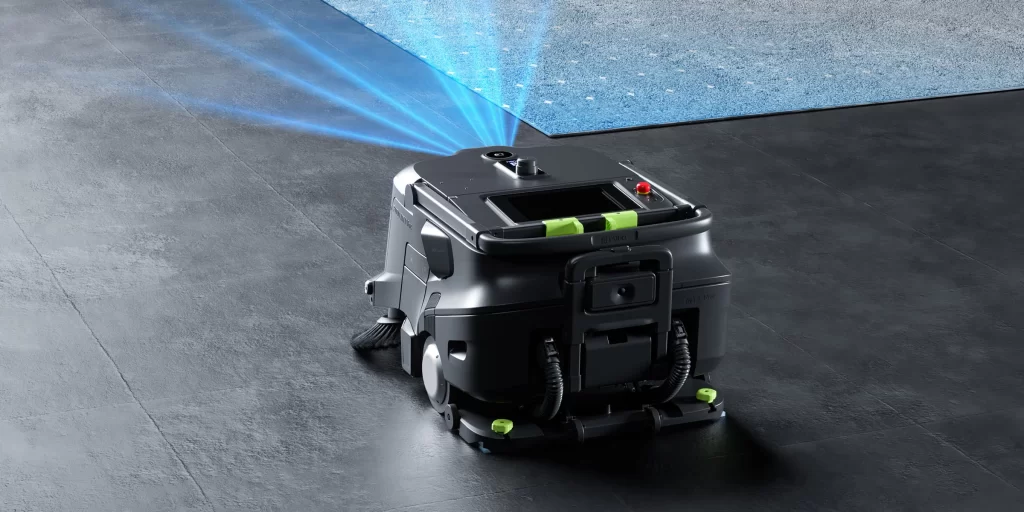
The robot supports recognition of carpet and hard floors, with adjustments to suction and brush speed. This can help in venues where cleaning routes cross different surfaces.
Floor recognition still needs to be supported by compatibility checks, particularly for delicate finishes, loose rugs and unusual carpet transitions.
Spot Cleaning
Vision-based debris detection can support targeted cleaning of suitable visible waste. This may be useful in areas where dry debris accumulates between scheduled cleaning runs.
Staff should still inspect the area: detection capability does not guarantee that every particle or mark will be identified.
Navigation and Accessible Edge Cleaning
Navigation and obstacle detection help the robot move through configured areas. However, closely spaced chairs, trailing fabric and temporary equipment can restrict its route.
Check edge performance and under-furniture access during the trial. Areas that cannot be reached remain part of the manual cleaning plan.
Filtration, Charging and Maintenance
Confirm the filter configuration supplied with the machine and follow its maintenance requirements. Filtration supports dust collection; it should not be presented as a substitute for ventilation or disinfection.
Automatic charging can simplify scheduling, while accessible cleaning components help staff carry out routine servicing. Include charging, emptying and brush care in the daily operating plan.
Wide Cleaning Coverage
MT1 Vac’s 55 cm-wide vacuuming path covers a broad floor area with each pass, helping reduce the passes needed across open banquet halls and pre-function spaces. Actual cleaning time depends on the layout, obstacles and debris.
What MT1 Vac Does Not Replace
A successful deployment gives the robot a defined job within the housekeeping process. MT1 Vac handles suitable dry-floor cleaning, while staff and complementary equipment cover tasks outside that scope.
| Cleaning task | What is still needed |
|---|---|
| Liquid spills and sticky food residue | Suitable wet-cleaning equipment and an appropriate spill-response process. |
| Carpet stains and deep cleaning | Fabric-compatible stain treatment and periodic extraction cleaning. |
| Crockery and large event waste | Staff clearance before the robot starts. |
| Cables and loose decorations | Removal or secure positioning to prepare the cleaning route. |
| Blocked floor areas | Furniture movement or manual cleaning with suitable tools. |
| Washrooms, tables and other surfaces | Dedicated housekeeping procedures and equipment. |
| Final quality checks | Inspection and approval before the next setup or guest arrival. |
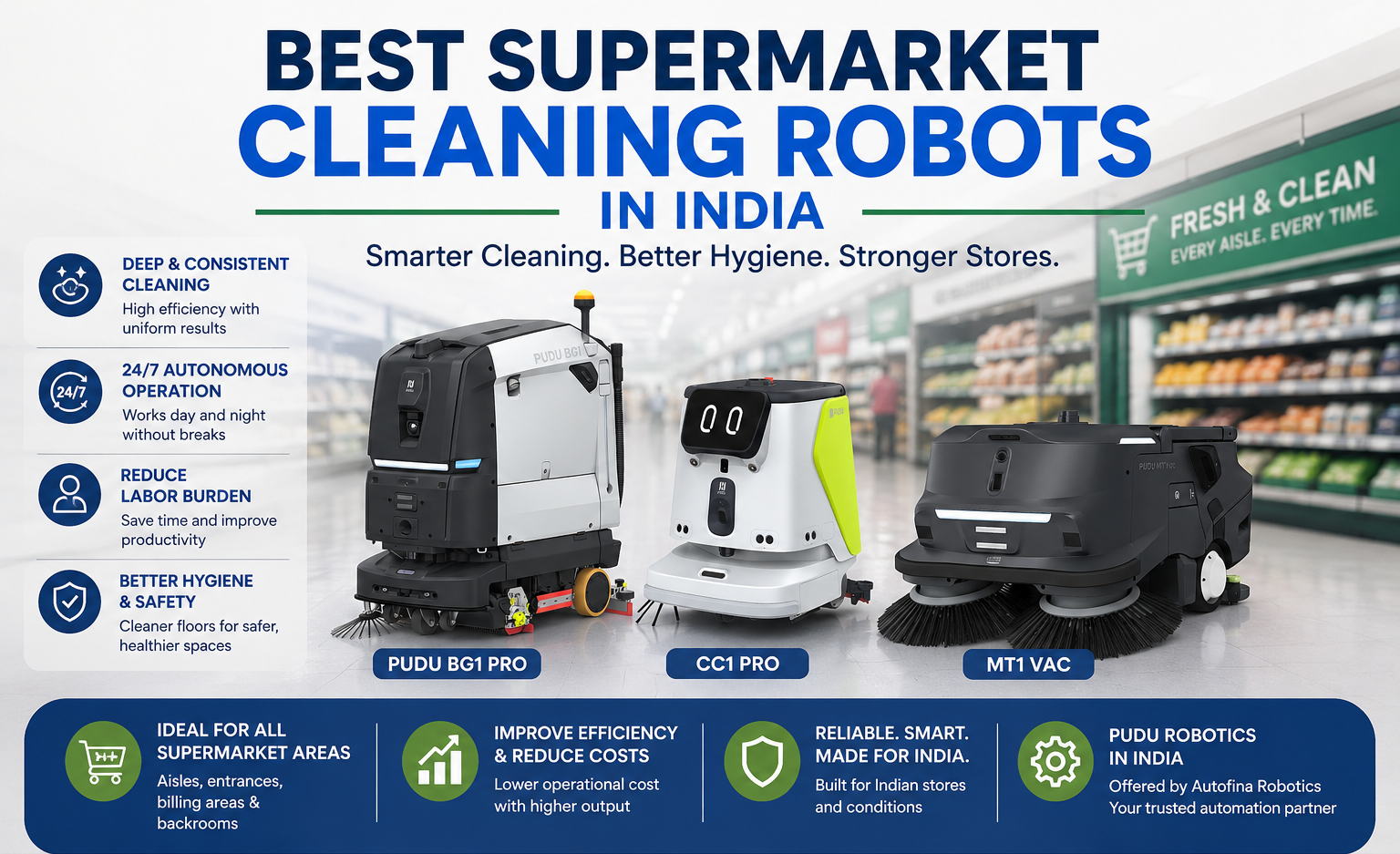
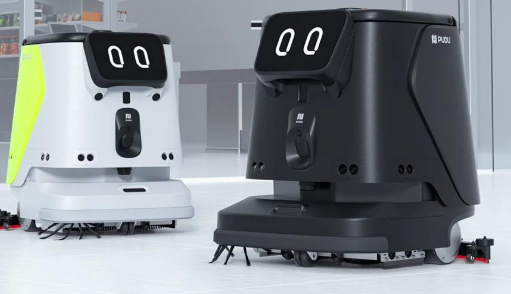
For suitable hard-floor scrubbing, banquet owners can evaluate PUDU CC1 Pro or the operator-controlled SH1 as complementary equipment.
This division of work also makes the financial comparison more accurate. Calculate the robot’s value against the dry-floor tasks it can take over, while retaining the cost of preparation, servicing and the manual cleaning that remains.
Which Other PUDU Cleaning Machines Can Support a Banquet Hall?
The right machine depends on the cleaning task. While PUDU MT1 Vac suits recurring dry-floor cleaning, other models can address different requirements around the venue.
| Cleaning requirement | PUDU model to evaluate | Role in a banquet venue |
|---|---|---|
| Carpet vacuuming and routine dry-floor cleaning | MT1 Vac | Suitable dry cleaning in halls, corridors and pre-function areas. |
| Larger suitable dry debris in open indoor spaces | MT1 | Sweeping where dry-litter collection is the main requirement. |
| Wet scrubbing of suitable hard floors | CC1 / CC1 Pro | Cleaning hard-floor areas that require more than dry vacuuming. |
| Localised hard-floor scrubbing | SH1 | Operator-controlled scrub-and-dry cleaning in accessible areas. |
| Outdoor and semi-outdoor dry sweeping | MT1 Max | Separate cleaning applications around suitable venue approaches and parking areas. |
PUDU distinguishes the MT1 family by application, while CC1 Pro provides scrubbing capabilities and SH1 is a walk-behind scrubber-dryer.
A venue does not automatically need several machines. A carpeted ballroom may prioritise MT1 Vac, while a predominantly hard-floor venue with frequent sticky marks may gain more from a scrubber-dryer.
Start with the largest recurring workload. Add complementary equipment only when the cleaning requirement and utilisation justify it.
How to Use MT1 Vac After a Banquet Event
A clear post-event process helps the cleaning team use automation effectively. The robot should enter the workflow once the area is ready for suitable dry cleaning.
| Step | What happens |
|---|---|
| 1. Clear the venue | Staff remove crockery, large waste, cables and loose decorations. |
| 2. Prepare the cleaning zones | Identify wet spills, clear routes and move furniture where needed. |
| 3. Run the dry-cleaning task | MT1 Vac cleans the approved, accessible areas. |
| 4. Complete separate cleaning tasks | Staff address wet residue, carpet stains and areas the robot cannot reach. |
| 5. Inspect the floor | Check the result and complete any remaining detailing before setup. |
| 6. Prepare for the next run | Empty containers, inspect cleaning components and charge as required. |
Where separate work zones allow, staff can prepare tables or complete other housekeeping duties while the robot operates elsewhere.
However, robot cleaning time is only one part of event turnaround. Furniture clearance, stain treatment and the next setup may still determine when the hall becomes ready. Measure the complete process before promising faster resets.
Manual Cleaning vs MT1 Vac-Assisted Cleaning
A fair comparison considers the same floor area, cleaning task and acceptance standard. If your team already uses commercial vacuum cleaners, compare the robot against that process rather than against brooms alone.
| Factor | Manual cleaning | MT1 Vac-assisted cleaning |
|---|---|---|
| Routine dry-floor work | Staff operate cleaning equipment throughout the task. | The robot handles suitable runs; staff prepare, service and inspect. |
| Consistency | Depends on equipment, methods, training and supervision. | Repeatable routes and settings support consistency; inspection remains necessary. |
| Access | Staff can use suitable tools in difficult spaces. | Coverage depends on clear routes and sufficient clearance. |
| Wet spills and stains | Require appropriate cleaning methods. | Remain separate from the robot’s dry-cleaning work. |
| Performance measurement | Time studies, checklists and inspections can be used. | Available task reports can supplement those checks. |
| Cost | Includes labour, equipment and consumables. | Adds an investment and operating costs while potentially reducing repetitive paid work. |
The useful question is how much staff effort the robot releases while maintaining an acceptable result. That measurement provides the starting point for calculating ROI.
ROI of PUDU MT1 Vac for Banquet Halls in India
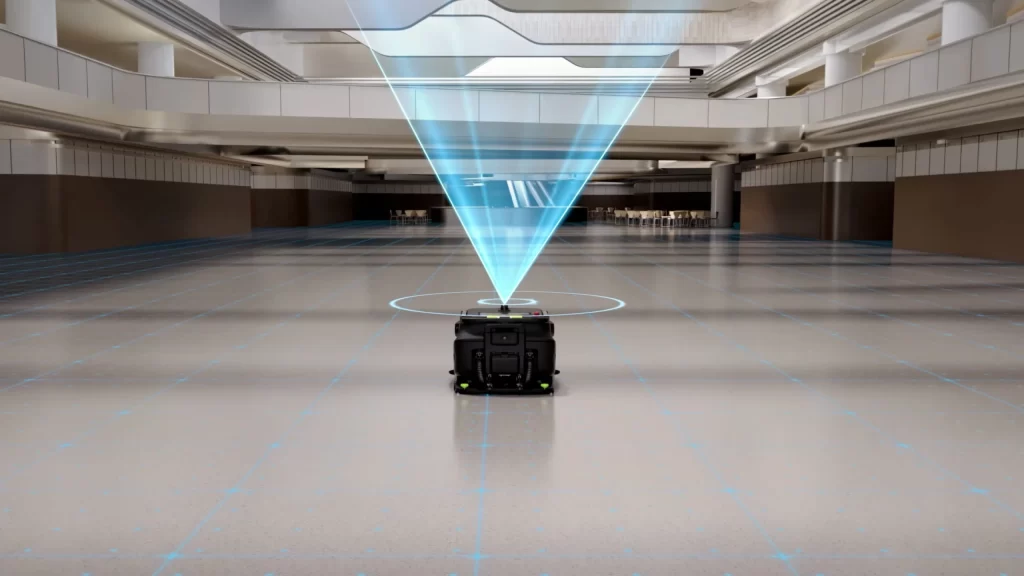
For banquet-hall owners, the financial return depends on annual utilisation, avoidable labour costs and the complete cost of the machine.
Compare routine dry-floor cleaning on both sides. Staff will still be needed for tasks such as furniture movement, washrooms, wet spills and final inspection.
An Illustrative Cost Comparison
The figures below are hypothetical planning assumptions—not an Autofina quotation, prevailing wage benchmark or guaranteed savings.
Assume a venue completes 300 comparable cleaning cycles annually. Manual cleaning requires eight person-hours per cycle, such as four cleaners working for two hours. With robot assistance, assume two person-hours remain for preparation, servicing, detailing and inspection.
| Measure | Manual cleaning | MT1 Vac-assisted cleaning |
|---|---|---|
| Annual cleaning cycles | 300 | 300 |
| Staff time per cycle | 8 person-hours | 2 person-hours |
| Annual staff time | 2,400 hours | 600 hours |
| Assumed fully loaded labour cost | ₹150/hour | ₹150/hour |
| Annual labour value | ₹3,60,000 | ₹90,000 |
| Additional annual robot operating allowance | — | ₹60,000 |
| Annual cost represented in this example | ₹3,60,000 | ₹1,50,000 |
This produces a potential annual net benefit of ₹2,10,000, provided the released labour hours translate into an actual avoidable expense.
Using a hypothetical installed investment of ₹10,00,000:
Simple payback = ₹10,00,000 ÷ ₹2,10,000 = approximately 4.8 years.
Replace these assumptions with measured results and a quotation. Include installation, training, service, consumables, electricity and an appropriate maintenance or replacement allowance. Account for existing equipment costs consistently in both options.
Why Annual Utilisation Matters
Keeping the same assumed six person-hours released per cycle, ₹150 hourly cost and ₹60,000 annual operating allowance:
| Cleaning cycles per year | Potential annual net benefit | Simple payback on hypothetical ₹10 lakh investment |
|---|---|---|
| 150 | ₹75,000 | 13.3 years |
| 300 | ₹2,10,000 | 4.8 years |
| 450 | ₹3,45,000 | 2.9 years |
These scenarios illustrate why a venue with daily cleaning work may have a stronger business case than a seasonal hall. Higher usage may also increase servicing and consumable costs, so adjust the allowance accordingly.
Staff Time Released Is Not Always Cash Saved
If employees remain on the same payroll, released hours provide additional working capacity. Cash savings arise when the venue reduces overtime, temporary labour, outsourced charges or an otherwise necessary hire.
Also, staff person-hours are different from elapsed cleaning time. Measure the robot’s complete task duration to confirm it fits the available window.
Count extra booking income only when cleaning was the actual constraint and additional bookings are achievable. Use the contribution after additional event costs, rather than the full booking revenue.
What to Test Before Buying a Banquet Hall Cleaning Robot
A useful demonstration should reproduce your normal cleaning conditions. Test the machine on actual floors with representative furniture and debris.
Record:
- Coverage: Which areas are accessible, and which remain for manual cleaning?
- Cleaning quality: Does the result meet the venue’s inspection standard?
- Elapsed time: Can the complete task finish within the available window?
- Staff involvement: How much preparation, intervention and servicing is required?
- Operational fit: Are noise, charging access and cleaning routes suitable?
- Support arrangements: What training, maintenance and service response are included?
Include at least one furnished layout and one post-event cleaning scenario. An empty-floor demonstration alone will not show how the machine performs around normal seating arrangements.
Ask Autofina Robotics to help document the trial results and define the proposed scope. Use those measurements to select the configuration and calculate the venue’s business case.
Frequently Asked Questions
Is MT1 Vac suitable for carpeted banquet halls?
It is a relevant option for routine carpet vacuuming. Validate it on the actual carpet and retain separate processes for stain treatment and periodic deep cleaning.
Can MT1 Vac clean spilled drinks or sticky food residue?
MT1 Vac performs dry cleaning. Liquid spills and sticky residue require an appropriate wet-cleaning method.
Should a banquet hall choose MT1 Vac or CC1 Pro?
Evaluate MT1 Vac when carpet vacuuming and dry-floor cleaning dominate. Evaluate CC1 Pro when suitable hard-floor scrubbing is a major requirement.
Can a cleaning robot replace the entire housekeeping team?
No. Staff remain responsible for clearance, spills, inaccessible areas, non-floor tasks, machine servicing and inspection.
Can it work while guests are present?
Assess the intended route, crowd density, noise and operating procedures during the venue trial. Clear cleaning windows are generally easier to plan than operation through dense guest activity.
How quickly does the investment pay back?
There is no universal payback period. It depends on the installed price, annual workload, operating costs and the expenses the venue can actually avoid.
Choose the Right Cleaning Solution for Your Banquet Hall
PUDU MT1 Vac is worth evaluating for banquet halls with recurring carpet vacuuming and dry-floor cleaning requirements. Its value depends on accessible area, cleaning frequency and how effectively the venue uses the staff time released.
For wet hard-floor cleaning, consider complementary equipment such as CC1 Pro or the operator-controlled SH1.
Tell us about your facility and cleaning challenges. We provide Pan India support and installations. Our team at Autofina Robotics will propose routes, coverage estimates, and ROI.
Email: [email protected]
Phone: +91 98192 22944