



AMR-Assisted Picking Solution for Indian Warehouses with PUDU Robotics
India’s warehouse and logistics sector is changing rapidly. E-commerce growth, faster delivery promises, and rising customer expectations now define daily operations. At the same time, warehouse managers face labor shortages, high attrition, and inconsistent productivity. Picking operations sit at the center of this challenge. Studies show that order picking consumes nearly 50–60% of total warehouse operating costs. In India, this number is often higher because most facilities still depend on manual picking. Workers walk long distances, carry heavy loads, and follow paper-based or semi-digital instructions. As a result, productivity suffers. This is where AMR-assisted picking solution offers a practical upgrade path.
Indian warehouses lose up to 20–30% efficiency because of manual walking loops, forklift congestion, and inconsistent manpower. AMRs/AGVs have become the backbone of modern intralogistics — and 2026 is the tipping point.
Table of Content
Why Warehouse Picking Is Becoming a Bottleneck in India?
What Is AMR Assisted Picking Solution?
How Pudu Robots Enable Order-to-Person Picking?
Here’s the Picking Workflow Actually Works
Accuracy, Standardization, and Suitability for Indian Warehouses
Fleet Intelligence and Fast Deployment with Pudu Cloud Veil
AMR Assisted Picking Solution vs Traditional AGV Picking Systems
PUDU T150, T300 and T600 – A Complete AMR-Assisted Picking Solution Robot Lineup
PUDU T300 – Industrial Picking & Delivery Robot
PUDU T600 – Heavy-Payload Industrial Delivery Robot
PUDU T150 – Light-Payload Industrial Delivery Robot
Why Warehouse Picking Is Becoming a Bottleneck in India
What Is AMR-Assisted Picking Solution?
AMR stands for Autonomous Mobile Robot. Unlike fixed conveyors or traditional AGVs, AMRs move freely using vision and laser navigation.
In AMR-assisted picking solution:
- The robot travels to the picking location.
- The worker stays in the aisle.
- Orders reach the picker instead of the picker chasing orders.
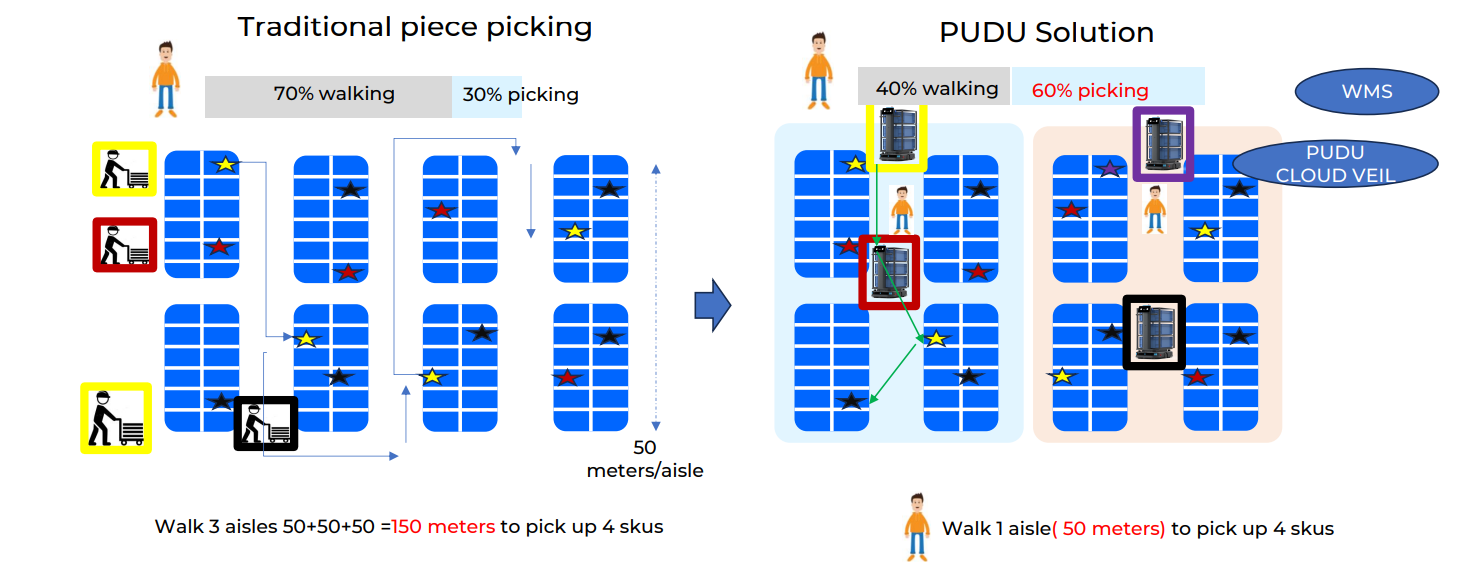
This changes the model from picker-to-goods to goods-to-person.
Instead of walking 150 meters to pick four items, the picker waits while the robot arrives with instructions and baskets.
This approach:
- Reduces walking
- Increases actual picking time
- Allows one picker to work with multiple robots
Productivity improves naturally without forcing higher work speed.
How PUDU Robots Enable Order-to-Person Picking
PUDU Robotics has designed its industrial AMRs specifically for such workflows. The PUDU T300 acts as the main AMR assisted picking solution assistant robot.
Key characteristics include:
- It carries multi-basket trolleys.
- It navigates warehouse aisles autonomously.
- It synchronizes with the warehouse management system (WMS).
- It works safely alongside humans.
Each robot becomes a mobile picking station. It arrives at the shelf, displays picking information, and waits for confirmation before moving to the next location.
This creates a relay-style workflow where:
- One picker can handle two to three batches simultaneously.
- Robots continuously rotate between shelves and unloading points.
Here’s How the Picking Workflow Actually Works
Accuracy, Standardization, and Suitability for Indian Warehouses
Human error remains a major challenge in manual picking operations. Fatigue, high walking distances, and pressure during peak hours often lead to mis-picks and inconsistent performance. PUDU’s AMR assisted picking solution reduces this variability by guiding workers through a structured, technology-led process.
In an AMR-assisted workflow, robots guide pickers to the exact shelf location, while handheld PDAs verify each SKU through barcode scanning. The robot interface confirms task completion before moving to the next pick point. This closed-loop process ensures that every step is validated in real time.
As a result, warehouses achieve:
- Up to 99.9% picking accuracy
- Standardized picking procedures across all workers
- Lower dependence on individual experience levels
- Faster onboarding of new and temporary staff
This is especially important in India, where warehouses often rely on contract labor and experience frequent workforce changes.
At the same time, PUDU robots are designed to operate in the physical realities of Indian warehouses. Many facilities are not built with automation in mind and include ramps, thresholds, narrow aisles, mixed shelving types, and mezzanine floors. PUDU’s AMRs can handle slopes, cross small height differences, and navigate tight aisle widths without requiring fixed tracks or floor markers.
Unlike traditional AGV systems, PUDU’s solution does not depend on magnetic tape, QR codes on the floor, or rigid guide paths. The robots use vision and laser-based navigation to adapt to changing layouts. This makes them well suited for brownfield warehouses where modifying infrastructure is costly and operational downtime must be kept to a minimum.
By combining high picking accuracy with physical adaptability, PUDU’s AMR assisted picking solution addresses two of the biggest challenges faced by Indian warehouses today: human error and non-standard facility layouts.
Fleet Intelligence and Fast Deployment with PUDU Cloud Veil
PUDU’s AMR-assisted picking system does not depend on a single robot. Instead, it operates as an intelligent fleet managed by PUDU Cloud Veil. The software balances robot distribution across different warehouse zones, dynamically assigns tasks, and prevents congestion in high-traffic aisles. It also supports multi-client picking zones, which is especially important for Indian multi-tenant warehouses serving several brands from the same facility.
At the same time, the system offers much faster deployment than traditional automation. Conveyor lines and shuttle-based ASRS typically require 3 to 6 months, along with structural changes and high upfront investment. In contrast, AMR-assisted picking solution can be deployed in 2–4 weeks, needs only WMS API integration, and does not require racking replacement or floor modification. For Indian SMEs and mid-sized warehouses, this combination of intelligent fleet control and rapid rollout makes warehouse automation both practical and financially viable.
AMR Assisted Picking Solution vs Traditional AGV Picking Systems
| Feature | AMR (PUDU T300) | Traditional AGV |
|---|---|---|
| Floor tolerance | High | Very strict |
| Layout change | Easy | Difficult |
| Multi-floor | Supported | Rare |
| Expansion | Add robots easily | Limited |
| Deployment time | 2–4 weeks | 3–6 months |
| Cost barrier | Lower | Higher |
For India’s evolving logistics sector, flexibility matters more than rigid automation.
AMR Assisted Picking Solution Robots Comparison Table: [T150-T300-T600]
| Feature | T150 | T300 | T600 / Underride |
|---|---|---|---|
| Payload | 150 kg | 300 kg | 600 kg |
| Use Case | Light picking | Mid-load transport | Pallet & racks |
| Navigation | VSLAM + LiDAR | Same | Same |
| Aisle Width | 60 cm | 60 cm | 70 cm |
| Speed | 1.2 m/s | 1.2 m/s | 1.2 m/s |
| Floor Adaptability | Excellent | Excellent | Good |
PUDU T150, T300 and T600 – A Complete AMR-Assisted Picking Solution Robot Lineup
PUDU Robotics offers a comprehensive range of industrial AMRs for warehouse and factory logistics, including the PUDU T150, PUDU T300, and PUDU T600. Together, these robots form a unified AMR assisted picking solution designed to support order picking and material movement across different payload requirements and operational scales.
The PUDU T150 is optimised for light-payload tasks such as component delivery, small-bin picking, and intralogistics loops. The PUDU T300 is built for flexible intra-warehouse transport and multi-bin order picking, making it ideal for most picking and sorting operations. The PUDU T600 is designed for heavy-duty transport and pallet-scale logistics, supporting bulk material movement and cross-zone delivery.
By combining these three robot models under a single AMR assisted picking solution, warehouses can deploy the right robot for each task—light, medium, or heavy—while managing them through one coordinated robotic system. This creates a scalable and future-ready automation backbone for modern warehouse operations.
PUDU T300 – Industrial Picking & Delivery Robot
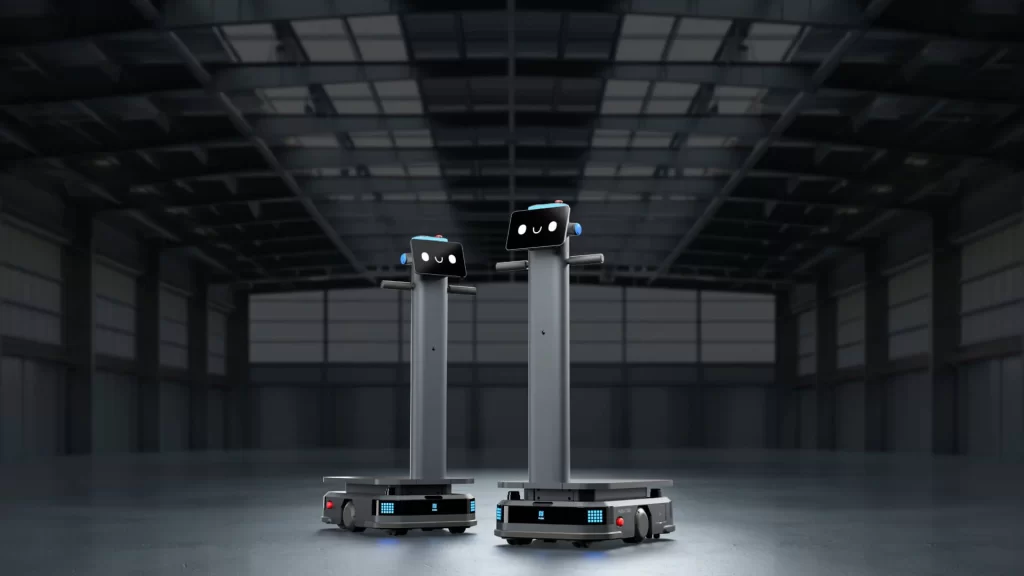
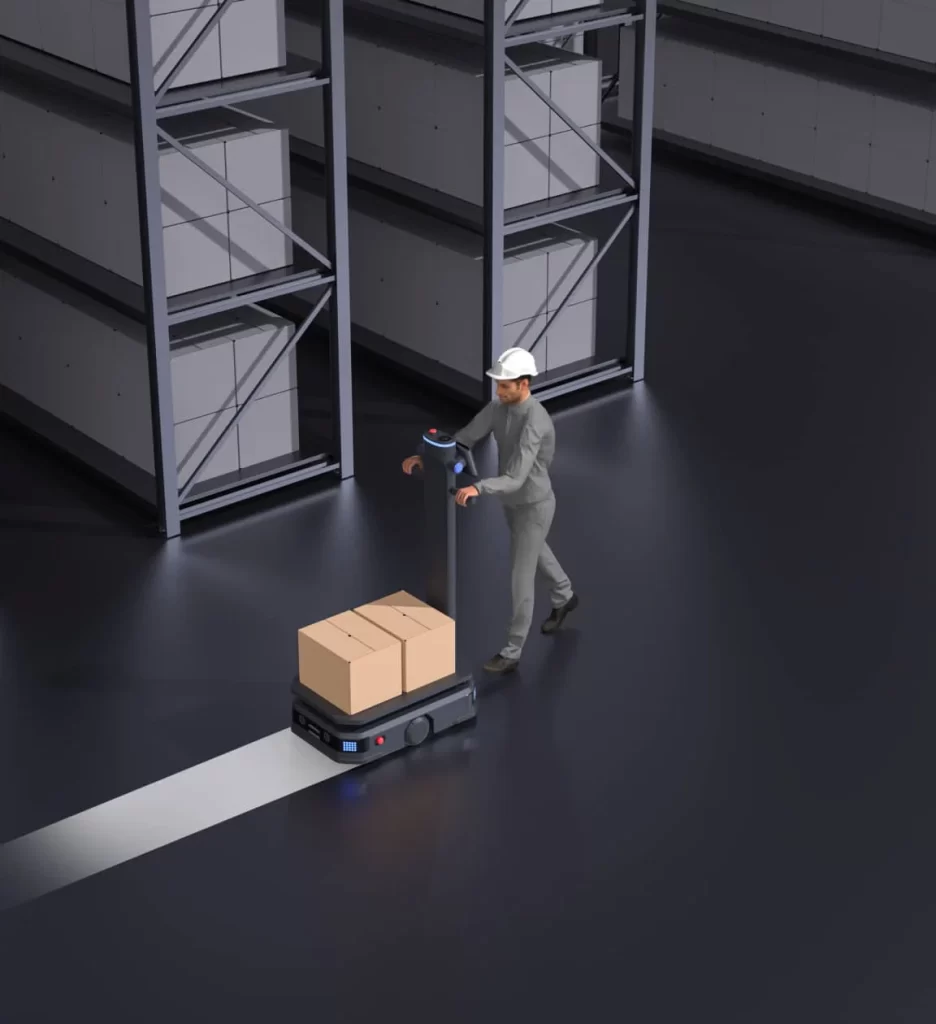
The PUDU T300 is designed for light-to-medium payload transport in warehouse and production environments. It supports autonomous and assisted delivery modes, allowing it to adapt to different operational requirements.
Operating Modes
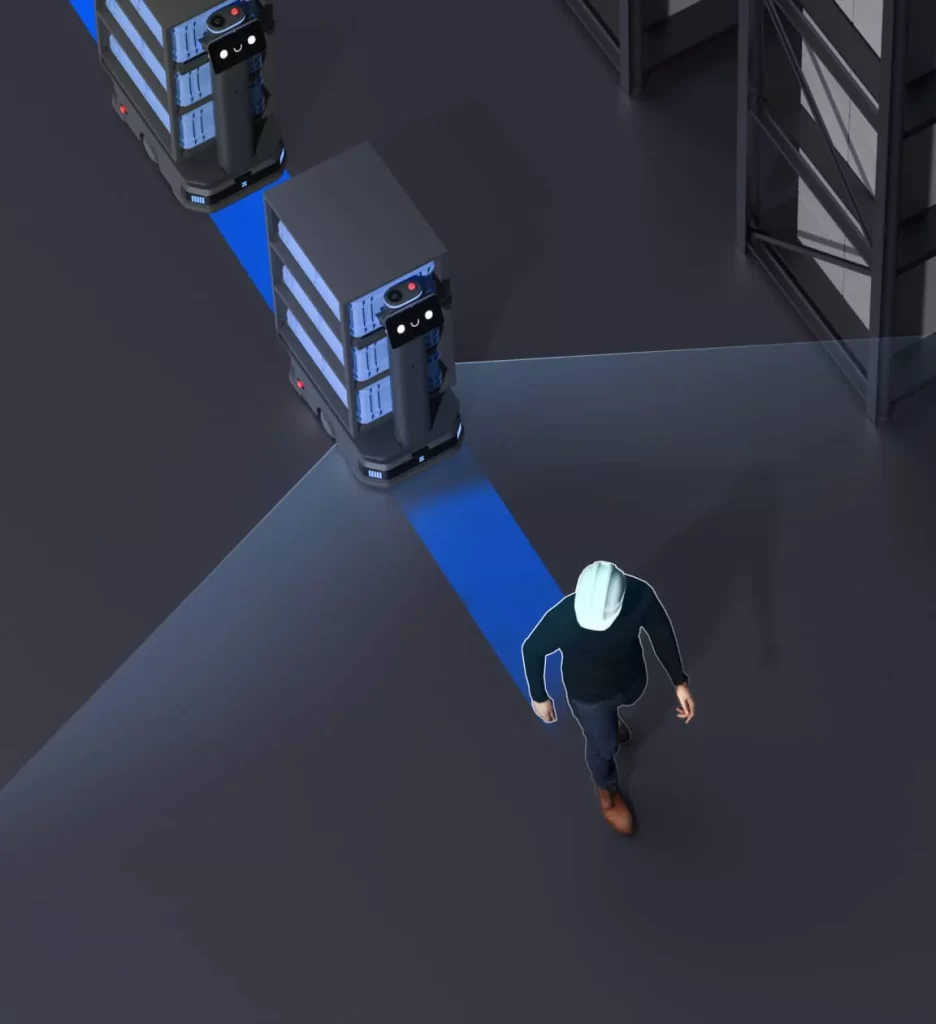
Auto-delivery Mode
In this mode, the T300 navigates autonomously and delivers goods to predefined destinations. Operators can quickly update maps to match changes in production lines or warehouse layouts, ensuring uninterrupted operations.
Follow Mode
The robot uses visual recognition to follow operators or other robots in a queue formation. This mode is commonly used for material preparation and grouped transportation of items across work zones.
Power-assist Mode
When manual control is required for special tasks or map creation, the T300 provides electric power assistance. This makes hand-pushing easier and reduces physical strain on operators.
Expandable Attachments and Configurations
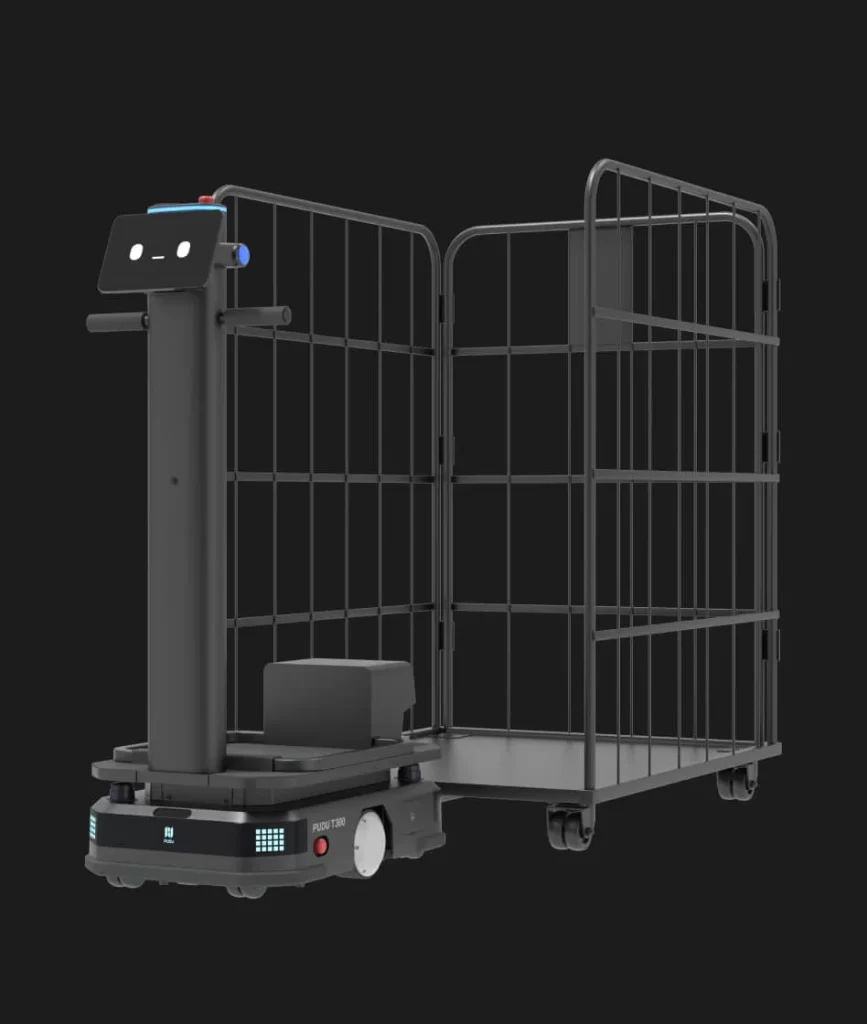
The T300 supports multiple attachment types, allowing it to perform different logistics tasks:
- Standard Mode – for general item transport
- Shelf Mode – for multi-bin picking and sorting
- Lifting Mode – for handling raised cargo
- Towing Mode – for pulling carts or carriers
This modular design increases adaptability and allows the same robot to be used across different workflows.
Navigation and Layout Adaptability
The robot uses VSLAM + LiDAR SLAM navigation. This enables it to understand and adapt to changing production layouts without requiring floor markers or structural changes. It can quickly re-map new routes when aisles or rack layouts change, which is ideal for warehouses with evolving storage patterns.
Safety and Compliance
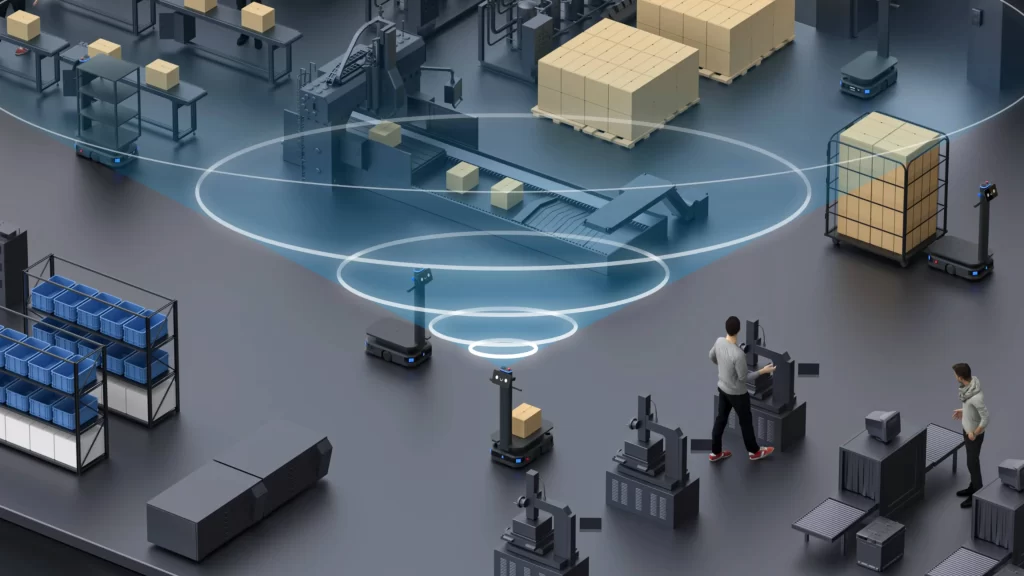
The T300 complies with ISO 3691-4 safety standards and includes multiple protection layers:
- LiDAR sensors
- Depth cameras
- Collision protection sensors
- Emergency stop buttons
It can detect low-lying and suspended obstacles and recognise floor safety markings. This makes it suitable for shared human–robot environments such as Indian warehouses and factories.
Mobility and Terrain Handling
The robot offers:
- 60 cm minimum path clearance, allowing smooth movement in narrow aisles
- Ability to cross 20 mm thresholds and 35 mm grooves
- Compatibility with elevator control systems for multi-floor operations
These features allow precise material movement between production lines and across warehouse levels.
Power and Continuous Operation
The T300 supports 24/7 operations through:
- 8 hours of continuous work
- 2-hour fast charging
- Automatic recharging
- Easy battery replacement
This ensures uninterrupted logistics flow across multiple shifts.
Human–Robot Interaction and IoT Integration
The robot supports multimodal interaction using:
- High-brightness status lights
- Traffic signal indicators
- Customisable buttons
- Audible alerts
It integrates with warehouse infrastructure through:
- E-gate control
- Elevator control
- Pager calling
- Pudu Link mobile app
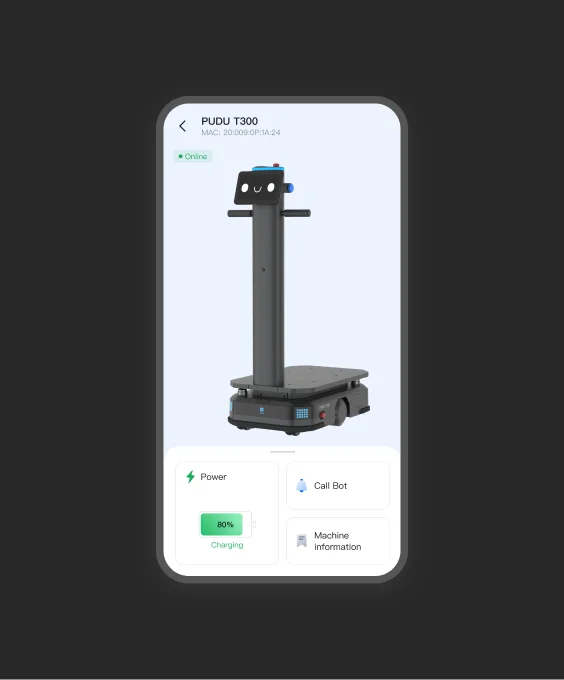
These IoT features enable seamless integration into automated production and warehouse systems.
Technical Specifications – PUDU T300
Machine Dimensions:
835 × 500 × 1350 mm (32.87 × 19.69 × 53.15 in)
Machine Weight:
65 kg (standard mode)
Maximum Load:
300 kg (661.39 lbs)
Battery Capacity:
30 Ah
Charging Time:
2 h (from 0% to 90%)
Run-time:
12 h (no load), 6 h (full load)
Maximum Operating Speed:
1.2 m/s (3.94 ft/s)
Navigation Methods:
VSLAM & LiDAR SLAM
Minimum Path Clearance:
60 cm (23.62 in)
Threshold Crossing Height:
Maximum 20 mm (0.79 in)
Groove Crossing Width:
Maximum 35 mm (1.38 in)
Operating Environment:
0°C ~ 40°C
Site Requirements:
Indoor environment and flat ground
This robot is a good fit if:
- You handle medium payloads (up to 300 kg) such as multi-bin loads, trays, or grouped picking orders.
- You need a robot that supports both autonomous and assisted operation (auto-delivery, follow mode, and power-assist).
- Your warehouse or factory requires modular configurations (shelf, lifting, or towing modes) for different workflows.
- Your storage layout or production lines change over time, requiring flexible navigation without physical guides.
- You want one robot model that can serve picking, sorting, and internal transport using the same platform.
PUDU T600 – Heavy-Payload Industrial Delivery Robot
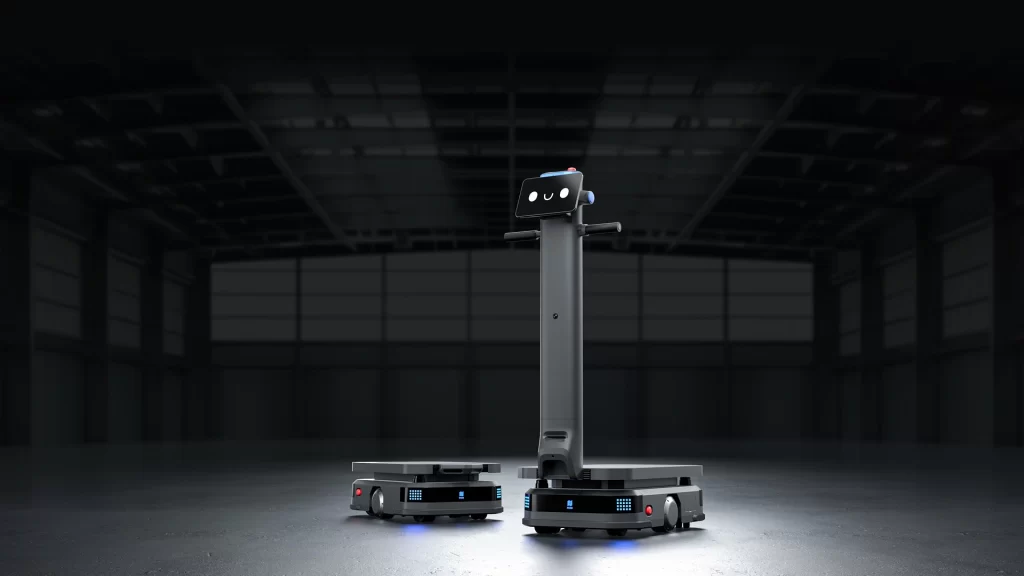
The PUDU T600 and PUDU T600 Underride are designed for heavy-payload logistics tasks such as pallet transfer, bulk material transport, and inter-zone movement. Both models are built on a robust mobile chassis and include a touchscreen interface and handle for operator interaction.
While the standard T600 is suited for direct load transport using pallets and carriers, the T600 Underride features a low-profile design that allows it to move under racks and trolleys, lift cargo from below, and transport loads in narrow or space-constrained environments. This makes it especially useful for warehouses and factories where goods are stored on mobile racks or need to be collected from underneath shelving systems.
High Payload Capacity
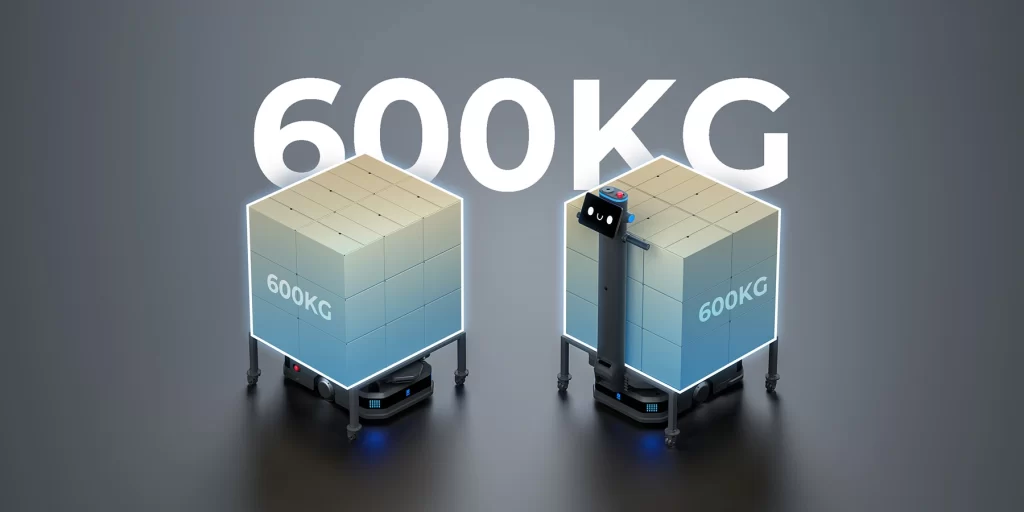
With a 600 kg payload capacity, the T600 significantly reduces the number of trips required for material movement. This improves transport efficiency per trip and lowers operational time for heavy goods.
Rack Recognition and Autonomous Handling
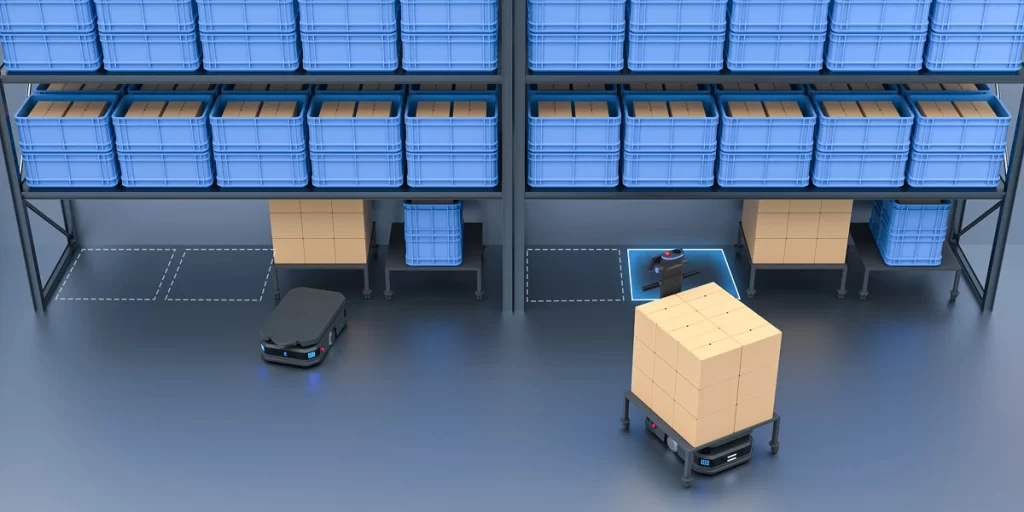
The robot uses advanced perception systems to recognise rack groups and target storage locations. It can autonomously perform pick-and-place operations, enabling fully unmanned workflows in structured warehouse environments.
Intelligent Elevator Scheduling
In multi-elevator environments, the system prioritises idle elevators first. It monitors elevator status in real time and avoids peak-time congestion, improving cross-floor delivery efficiency.
Narrow Aisle Traffic Management
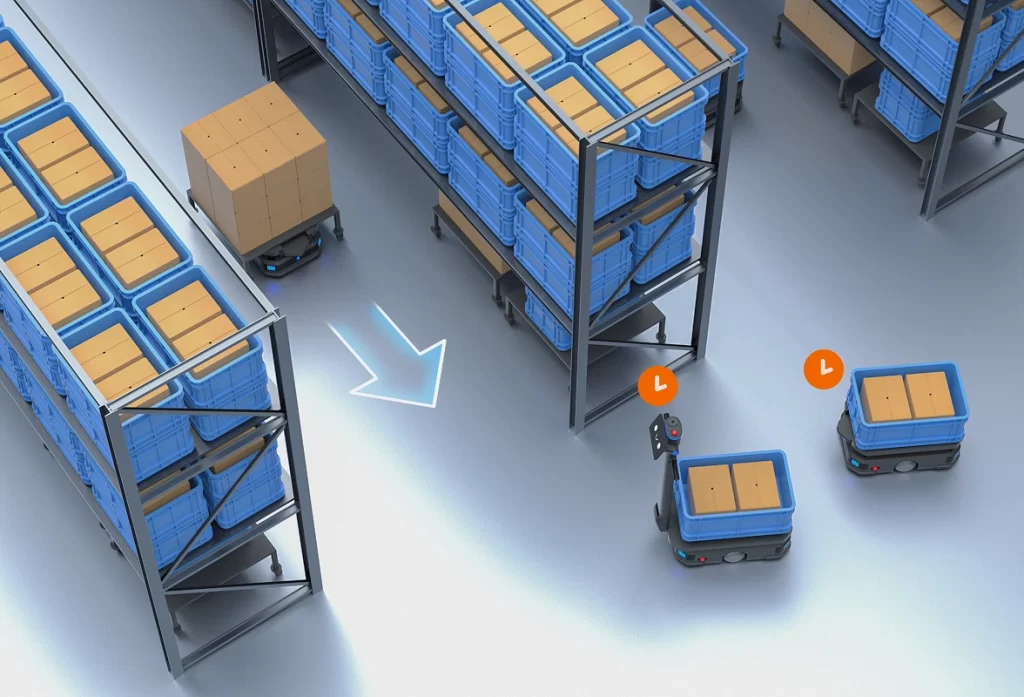
The T600 dynamically selects:
- Single-lane traffic mode
- Dual-lane traffic mode
This decision is based on aisle width and real-time load dimensions. This allows efficient coordination of multiple robots even in narrow environments.
Flexible Deployment and Integration
The T600 adapts quickly to layout changes without requiring facility modification. It supports:
- VDA5050 protocol for multi-robot scheduling
- On-premises system deployment for secure operations
This allows integration into large-scale logistics networks without custom development.
Advanced Safety Systems
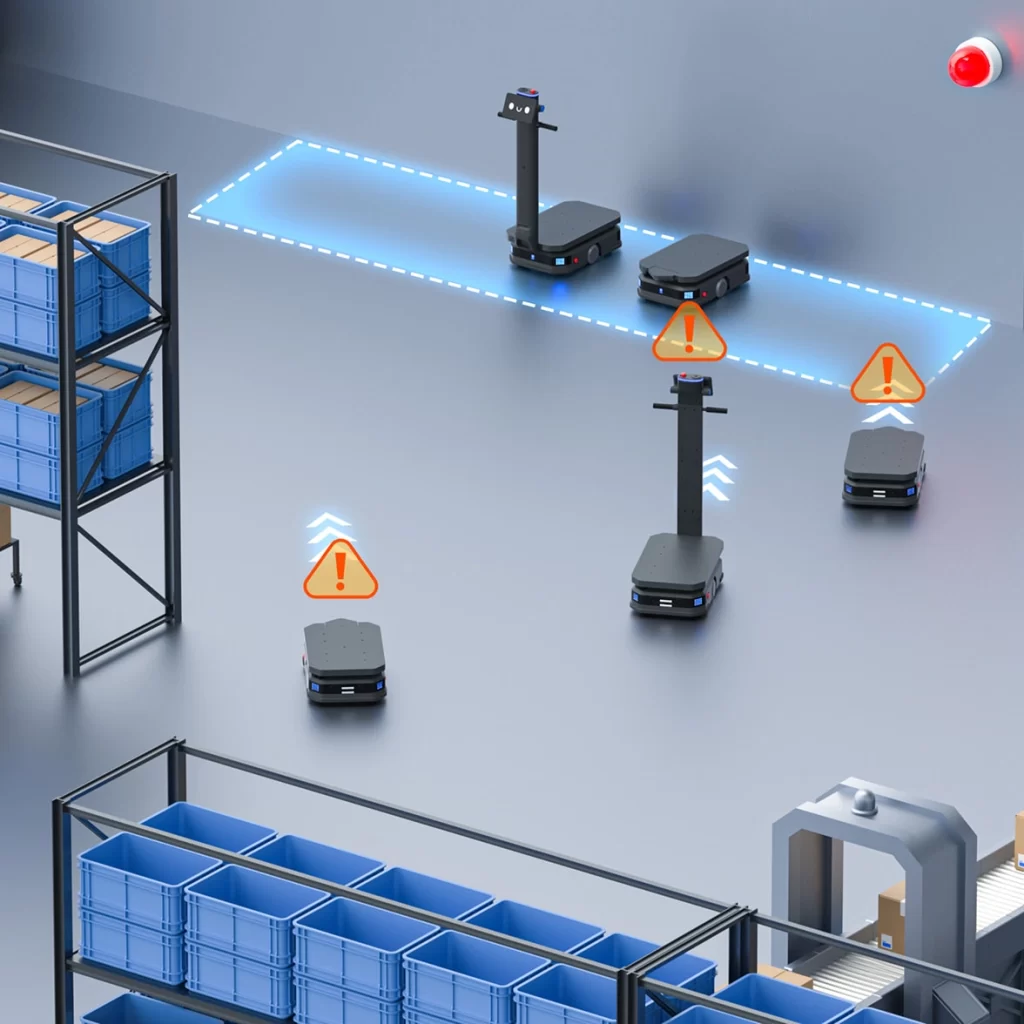
The robot includes:
- Ground projection warning lines
- Dynamic obstacle avoidance
- Disaster avoidance system (fire, earthquake response)
- Automatic safe-zone parking
These features create a secure human–robot collaborative environment.
Power and Continuous Operation
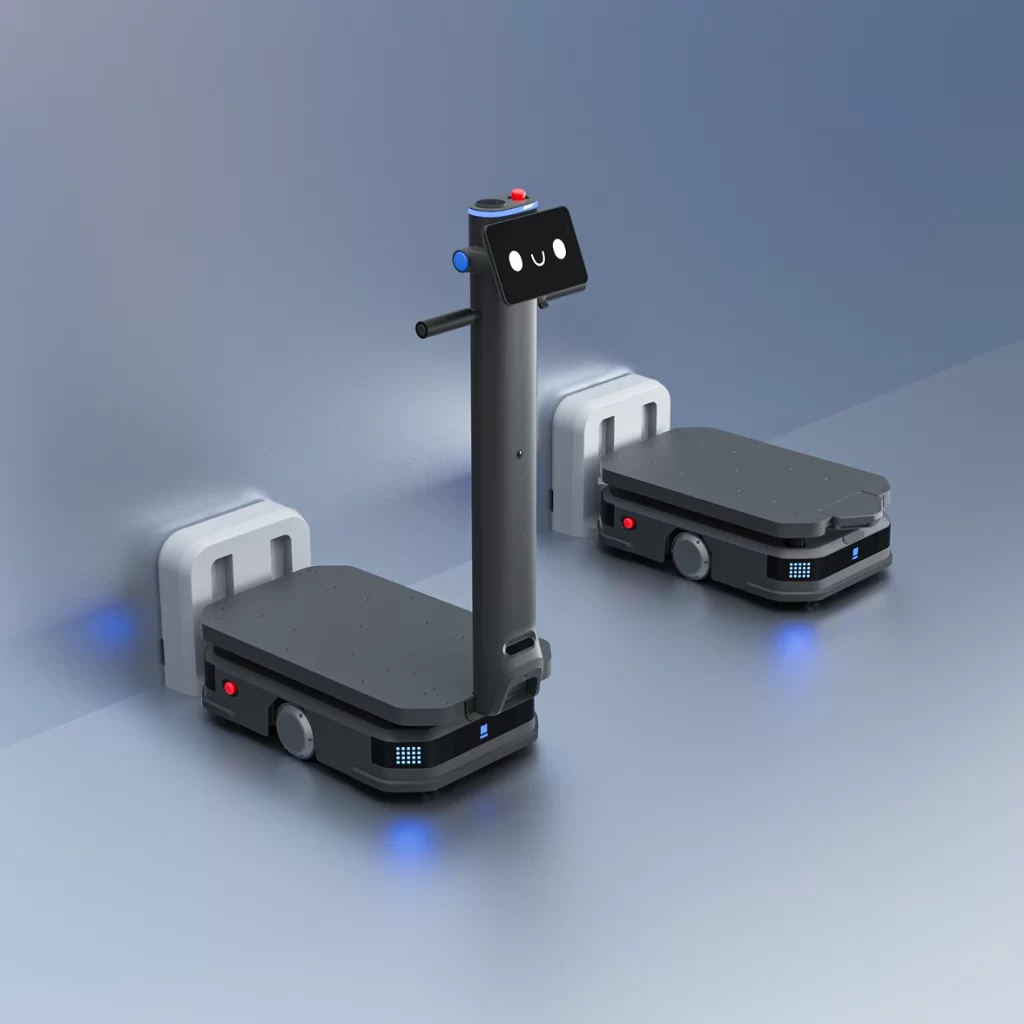
The T600 supports:
- 12-hour battery runtime
- 2-hour fast charging
- Automatic recharging
- Battery replacement
This ensures continuous heavy-load transport across multiple shifts.
IoT and Control Integration
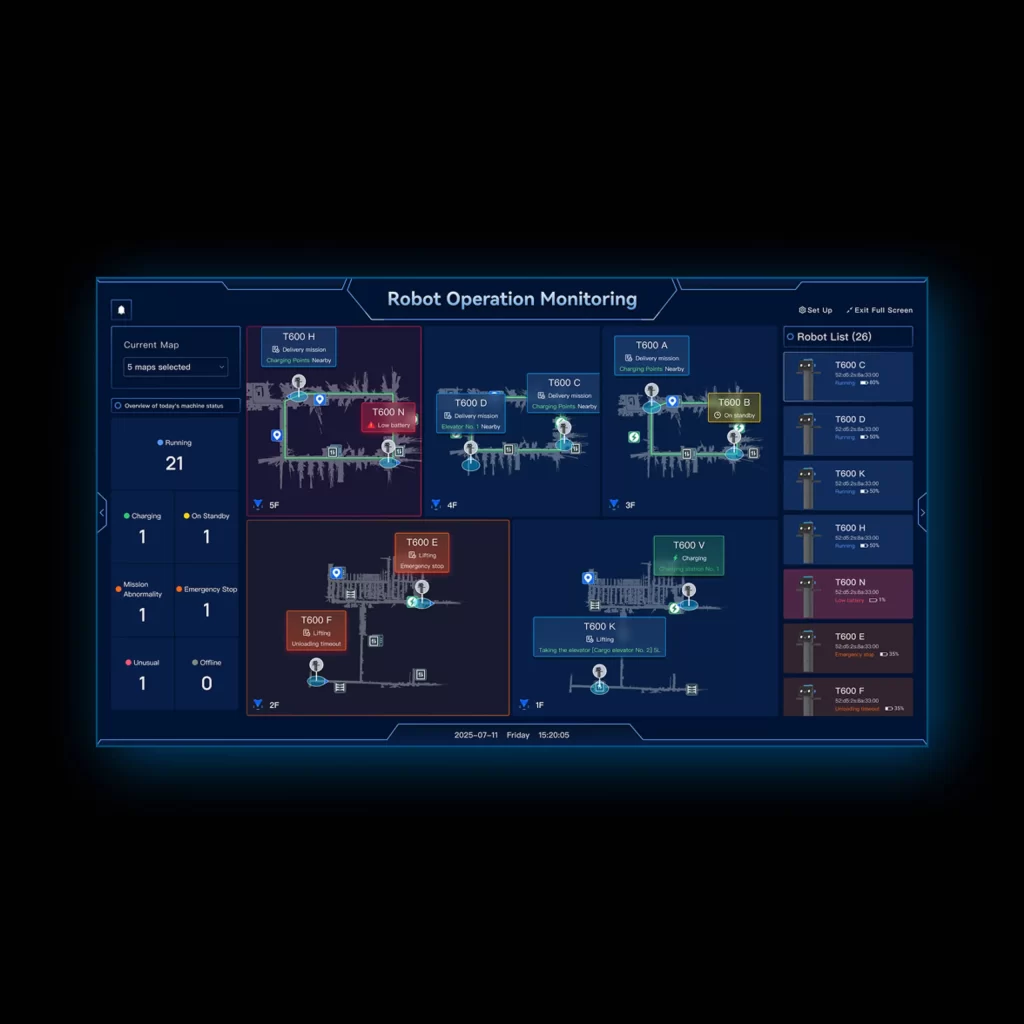
The T600 integrates with:
- E-gate systems
- Elevators
- Pager calling systems
- Pudu Link app
This enables centralised control and monitoring of logistics tasks.
Technical Specifications – PUDU T600 (As-Is)
Dimensions:
960 × 500 × 1350 mm (37.8 × 19.7 × 53.1 in)
Weight:
112 kg (247 lbs)
Maximum Load:
600 kg (1322 lbs)
Battery Capacity:
30 Ah
Charging Time:
2 h (from 0% to 90%)
Run-time:
12 h (no load)
Cruise Speed:
0.2 ~ 1.2 m/s (0.67 ~ 3.94 ft/s)
Navigation Method:
VSLAM + LiDAR SLAM
Minimum Passability:
70 cm (27.6 in)
Max. Surmountable Height:
10 mm (0.39 in)
Max. Surmountable Gap:
35 mm (1.38 in)
Operating Environment:
0°C ~ 40°C (32°F ~ 104°F)
This robot is a good fit if:
- You move heavy loads (up to 600 kg) such as pallets, bulk containers, or rack-based carriers.
- Your operation requires inter-zone transport across large warehouse or factory areas.
- You want to reduce dependency on manual pallet handling or forklifts for repetitive routes.
- Your facility has narrow or space-constrained aisles and needs controlled traffic modes (single-lane or dual-lane).
- You use mobile racks, trolleys, or carriers and want autonomous pickup using the Underride configuration.
PUDU T150 – Light-Payload Industrial Delivery Robot
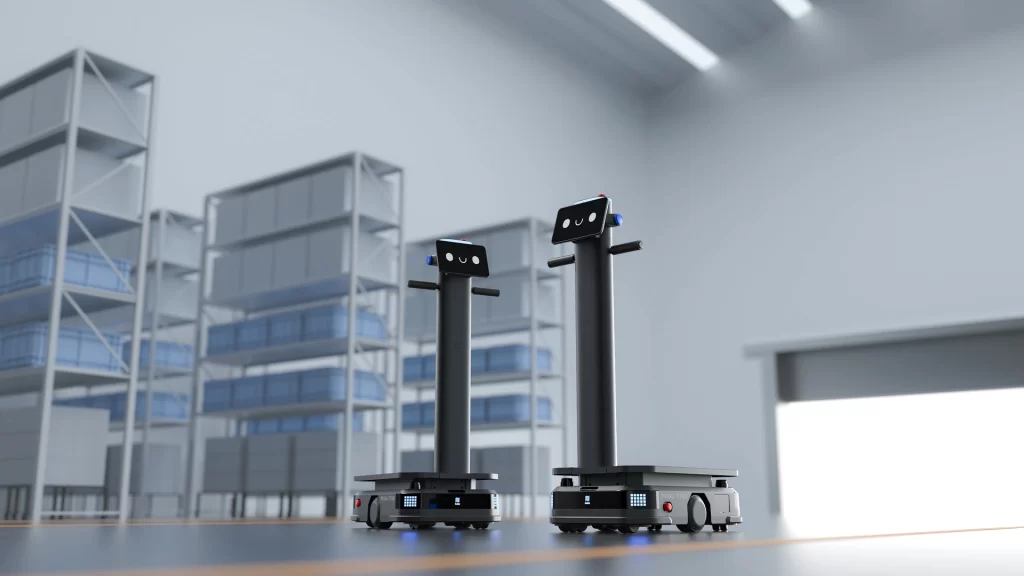
The PUDU T150 is a light-payload industrial AMR designed for fast deployment and high adaptability in complex production and warehouse environments. It is built for intralogistics, component delivery, and picking support where flexibility, stability, and rapid commissioning are critical.
Unlike traditional industrial robots that require long setup times and site modification, the T150 is designed as a true plug-and-play industrial robot. It can be deployed and made operational within one hour, making it suitable for factories and warehouses that need quick automation without disrupting existing workflows.
Rapid Deployment and Easy Setup
The T150 enables rapid deployment in just one hour. It does not require site modification, floor markers, or local servers. The robot performs onboard mapping with multi-robot self-networking, eliminating the need for complex IT infrastructure.
- Mapping can be completed in 10 minutes
- Reliable operation can begin within 1 hour
- Faster automation enables ROI within 3 months
- This makes the T150 particularly suitable for Indian facilities that operate in leased spaces or frequently reconfigure layouts.
Precision Navigation and Operational Stability
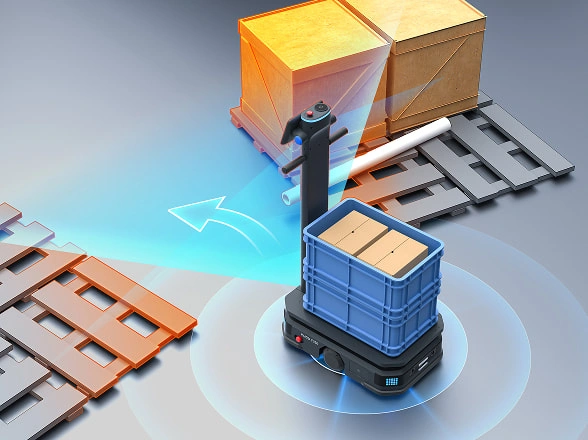
The T150 uses VSLAM + LiDAR localization to achieve accurate positioning and stable navigation in dynamic industrial environments. This allows the robot to adapt in real time to moving people, carts, and equipment while maintaining precise routing.
This navigation system ensures:
- Stable motion in busy production areas
- Reliable operation in changing layouts
- Continuous task execution without interruptions
Aerospace-Grade Unibody Design
The robot features an aerospace-grade unibody structure made from high-strength materials. This design provides superior impact resistance and durability, allowing the T150 to operate in demanding industrial conditions.
Its structure is built for:
- Intensive duty cycles
- Long service life
- High mechanical stability
The design supports up to 5 years of reliable high-efficiency operation, making it suitable for continuous industrial use.
Intuitive Operation and User Interaction
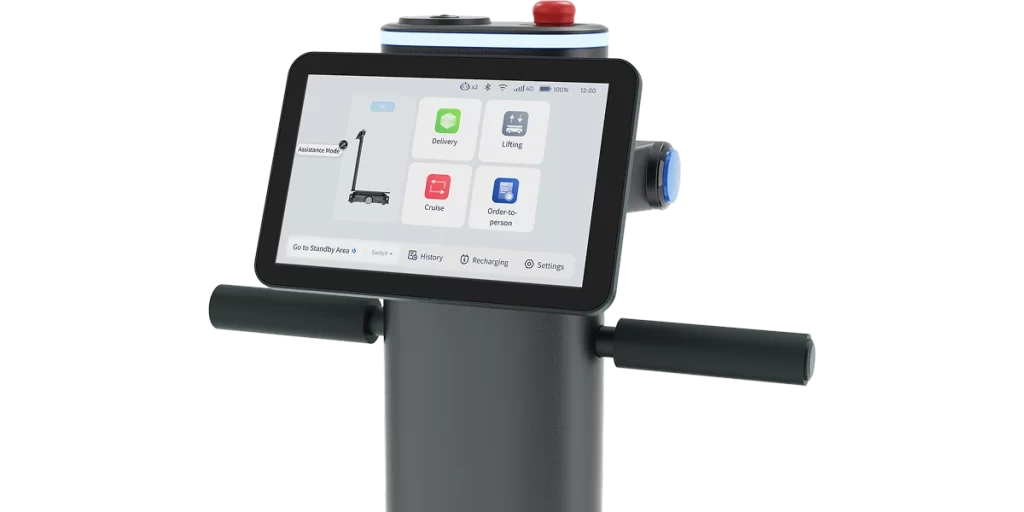
The T150 is equipped with an onboard touchscreen interface powered by a proprietary operating system. Operators can directly dispatch tasks, switch modes, and configure workflows from the robot itself.
It supports multiple control and communication methods:
- Button pagers
- PUDU Link mobile app
- API integration with enterprise systems
This multi-channel control approach simplifies training and allows operators to use the robot immediately with minimal learning time.
Adaptability in Complex Environments
The robot integrates:
- Dual RGBD cameras
- 360° dual LiDAR sensors
- AI-driven multi-level navigation
- Intelligent obstacle avoidance
This allows the T150 to operate safely and precisely in complex industrial environments, including:
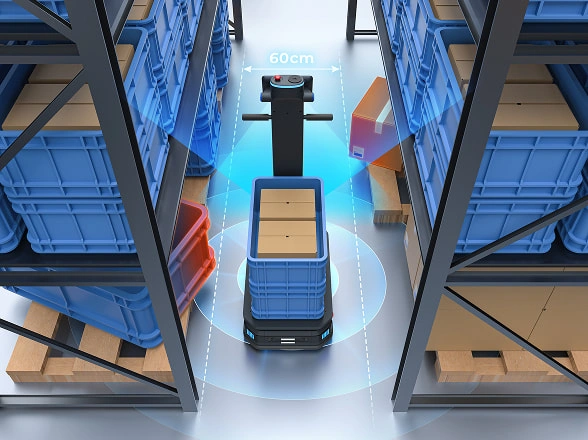
- Narrow aisle racking systems
- Non-standard pathways
- Mixed human–robot traffic
- Confined passageways
It can rapidly detect obstacles and reroute itself to maintain smooth and stable operations.
Safety and Industrial Certification
The T150 meets ISO 3691-4 safety standards and holds industrial-grade CE certification. These certifications ensure compliance with industrial safety requirements and support stable production environments.
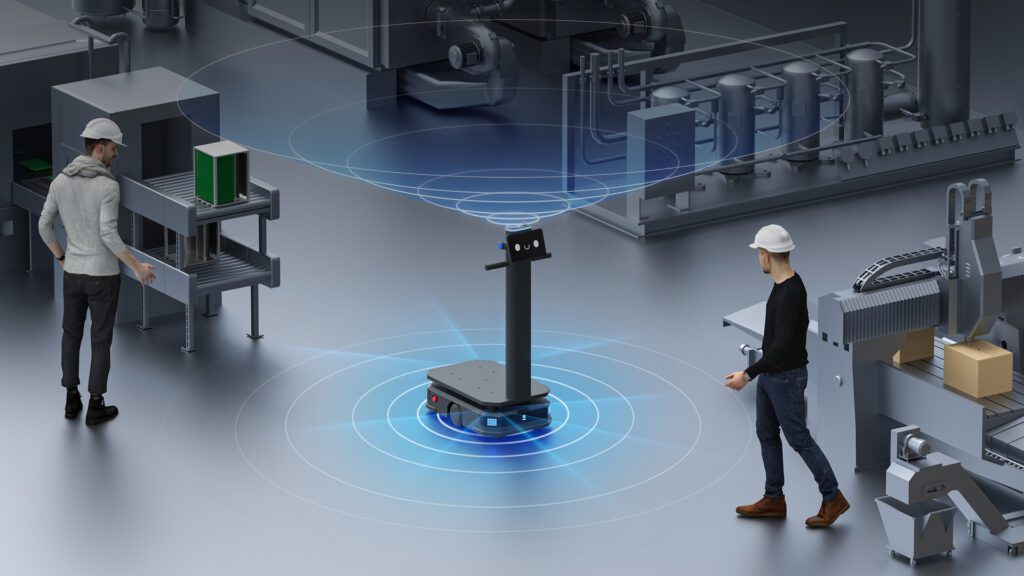
Its safety architecture enables:
- Safe collaboration with human workers
- Reliable obstacle detection
- Stable navigation in shared spaces
This is essential for Indian factories and warehouses that operate mixed traffic environments.
Power System and Continuous Operation
The T150 supports 24/7 continuous operation through a flexible power ecosystem that includes:
- Rapid battery swapping
- Automatic charging
- Wired power options
This allows the robot to maintain high uptime and ensures uninterrupted material flow across multiple shifts. Facilities can choose the most suitable power strategy based on their operational requirements.
IoT and Infrastructure Integration
The T150 integrates with industrial infrastructure through:
- E-gate control
- Elevator control
- Pager calling
- PUDU Link system
These IoT features allow it to become part of a connected logistics environment and support automated material movement across zones and floors.
Application Scenarios
The T150 supports a wide range of intralogistics and warehouse tasks, including:
- Intralogistics loop delivery
- Material replenishment and retrieval
- Inter-line material handling
- Component and parts delivery
- Warehouse picking and distribution
Its light payload and compact footprint make it ideal for fast, repetitive delivery tasks inside factories and distribution centers.
Technical Specifications – PUDU T150 (As-Is)
Machine Dimensions:
835 × 500 × 1350 mm (32.8 × 19.7 × 53.1 in)
Machine Weight:
81 kg (178.57 lbs)
Maximum Load:
150 kg (330.7 lbs)
Battery Capacity:
30 Ah
Charging Time:
2 h (0% to 90%)
Operating Time:
12 h (no load)
Maximum Operating Speed:
0.1 ~ 1.2 m/s (0.66 ~ 3.94 ft/s)
Navigation Method:
VSLAM + LiDAR
Minimum Passability:
60 cm (23.6 in)
Step-Climbing Capability:
20 mm (0.79 in)
Gap-Crossing Capability:
35 mm (1.38 in)
Operating Environment:
0°C ~ 40°C (32°F ~ 104°F)
This robot is a good fit if:
- You need to automate light payload movement such as bins, totes, or small cartons between workstations or zones.
- Your facility has narrow aisles (around 60 cm clearance) and mixed human–robot traffic.
- You want fast deployment without floor markers, civil work, or long commissioning cycles.
- Your layout changes frequently and you need a robot that can be re-mapped quickly.
- You are starting AMR adoption with a pilot project or small fleet for intralogistics and picking support.
PUDU’s T150, T300, and T600 robots form the technological foundation of a high-performance AMR assisted picking solution for modern warehouses. By reducing unnecessary walking, standardising picking processes, and enabling accurate order fulfillment, these robots directly improve productivity and operational control. Their flexible navigation and fast deployment make automation viable even in existing Indian warehouse layouts. As demand continues to rise across e-commerce, retail, and manufacturing, such intelligent robotics will become essential to sustaining growth. In India, Autofina Robotics, the official distributor of PUDU Robotics, plays a key role in delivering this technology with local implementation and support. This partnership ensures that Indian enterprises can confidently adopt a proven AMR assisted picking solution that is scalable, reliable, and built for long-term success.
Autofina Robotics is Pudu Robotics’ certified national partner for India — offering demos, mapping studies, ROI reports, and end-to-end commissioning.
To evaluate which AMR fits your warehouse or factory, schedule a 30-minute consultation.