Best Lab Sample Delivery Robot For Hospitals in India 2026: Safety & Staff Time
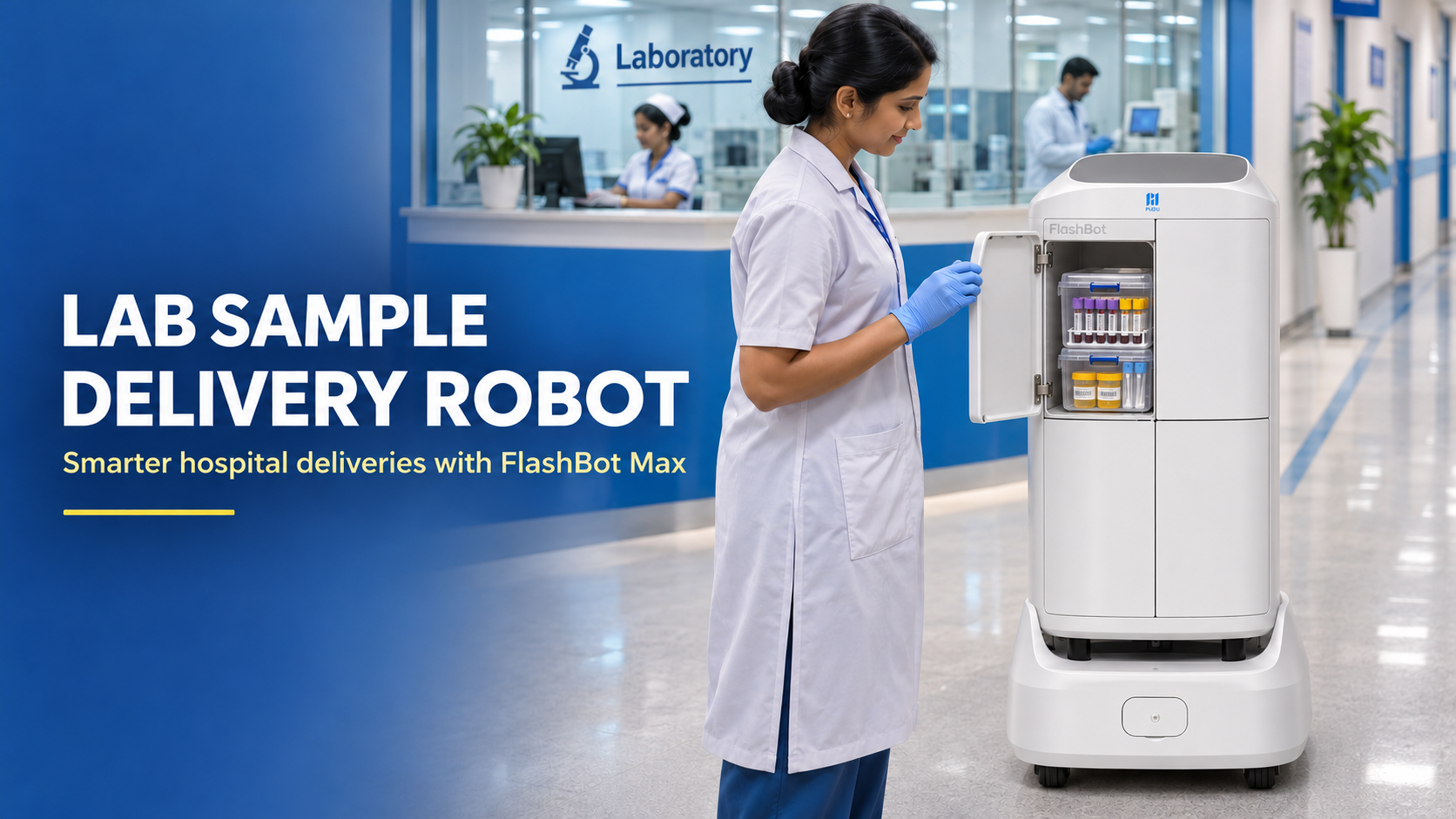
A blood sample is ready at a nursing station. A medical item needs to reach a ward several floors away. Each delivery requires someone to leave their work area, walk through corridors, wait for a lift and complete a handover. Repeated throughout the day, these journeys become a substantial operational workload. A lab sample delivery robot can automate suitable internal transport routes, helping hospitals reduce routine courier work while maintaining defined loading and receiving procedures.
For hospital administrators, the opportunity is to recover staff time and organize deliveries more consistently.
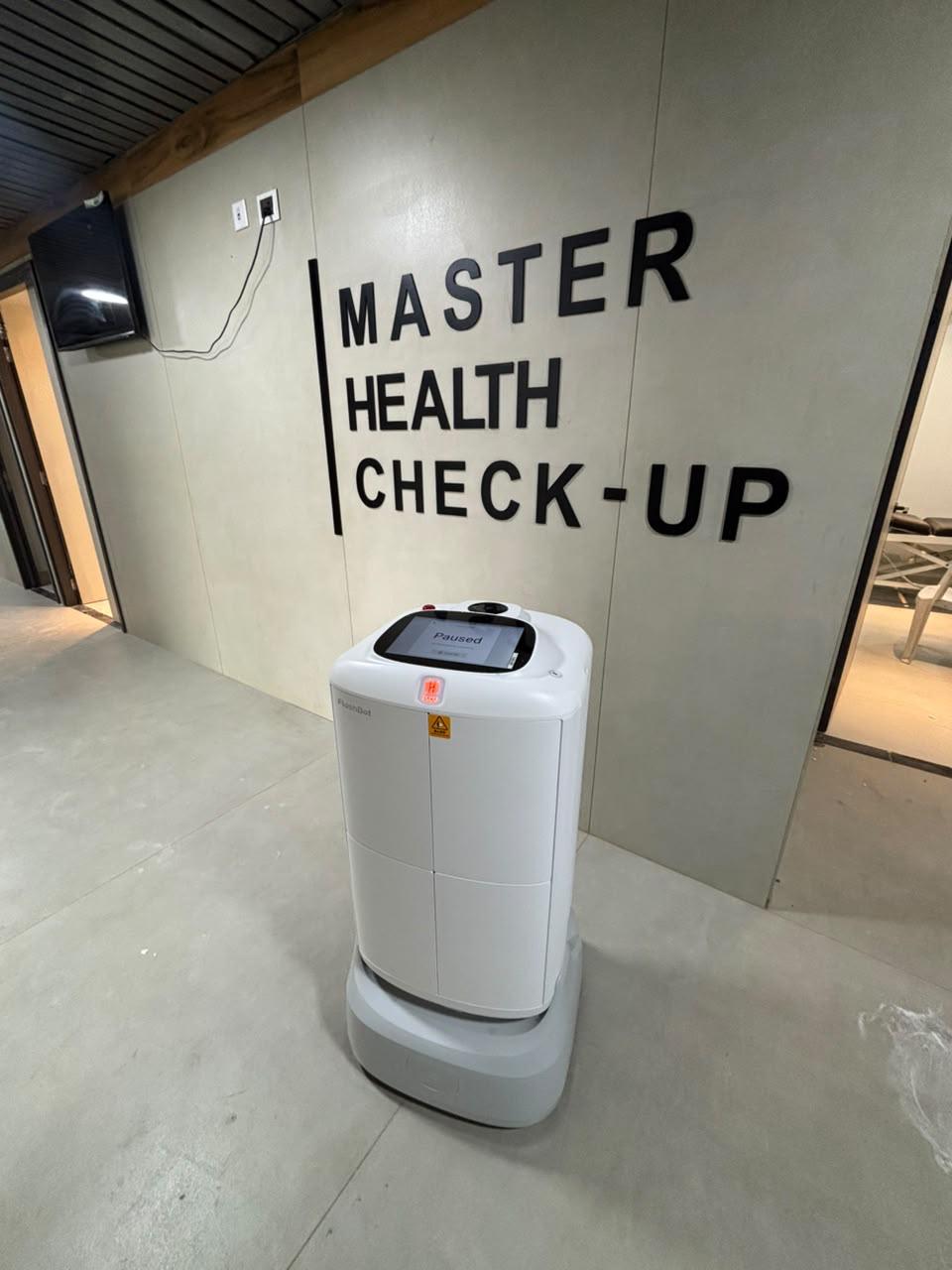
PUDU FlashBot Max brings enclosed compartments, autonomous navigation and building-integration options to this task. Its value depends on matching those capabilities to the hospital’s materials, routes and working practices.
What Is a Lab Sample Delivery Robot?
A lab sample delivery robot transports appropriately packaged specimens between approved pickup and receiving points within a hospital or laboratory facility. These journeys may connect blood collection rooms, nursing stations, wards and a central laboratory.
Staff prepare and identify the specimens, place the approved carrier inside the robot and assign the destination. At the receiving point, authorized personnel retrieve the carrier and complete the laboratory’s acceptance checks.
The same delivery platform may also support approved medical-item and supply movements under separately defined workflows.
For example, a hospital might evaluate FlashBot Max for:
- Collection-point-to-laboratory transport.
- Pharmacy-to-ward deliveries.
- Movement of small medical supplies between departments.
- Repeated deliveries across hospital floors.
Each application needs its own handling requirements. Successful medical-supply delivery demonstrates transport capability; specimen suitability also requires laboratory approval of packaging, timing and other relevant conditions.
Where Manual Hospital Deliveries Consume Staff Time
The visible journey is only part of a delivery task. Staff may need to organize the load, leave their assigned area, wait for a lift, locate the receiver and return before resuming their original duties.
In a busy hospital, a short journey can therefore create a longer interruption.
The workload also depends on who performs the delivery. A ward attendant’s trip affects ward support capacity; a phlebotomist’s trip may interrupt collection work. Where nurses or laboratory personnel undertake deliveries, their assigned responsibilities can also be disrupted.
Hospitals should measure the complete task before estimating automation benefits.
| Part of the delivery | What to measure |
|---|---|
| Dispatch preparation | Active staff time preparing the load for movement |
| Outbound and return journey | Walking and floor-to-floor travel |
| Lift and handover delays | Waiting that keeps the employee occupied |
| Delivery frequency | Trips by route, shift and busy period |
| Workflow interruption | Duties paused to complete the journey |
A lab sample delivery robot becomes worth evaluating where these journeys are frequent, repeatable and suitable for automation. The objective is to reduce the transport burden while preserving the checks that protect the materials being carried.
How FlashBot Max Supports Controlled Point-to-Point Delivery
FlashBot Max combines enclosed cargo compartments with autonomous movement between configured destinations. For hospital use, this creates a practical way to organize recurring deliveries between departments.
The enclosed design helps keep transported items out of casual public view. Supported access-verification options can restrict retrieval to intended users, subject to the configured permissions and hospital procedures. Staff should still use appropriate packaging and verify the contents at dispatch and receipt.
Navigation allows the robot to follow mapped routes through shared indoor areas. Where compatible elevator and access integrations have been commissioned, delivery routes can extend across floors and controlled entrances.
This gives hospitals several capabilities to assess:
- Organized loading: compartments configured around approved carriers or items.
- Controlled retrieval: access methods matched to the receiving workflow.
- Repeated route execution: deliveries to predefined hospital destinations.
- Multi-floor movement: where the installed lift system supports the commissioned integration.
- Operational visibility: available task and status information for managing deliveries.
The important question is how these features work together on the actual route. A demonstration should include the packed load, occupied corridors, lift waiting and receiver interaction.
Robot arrival should also be recorded separately from confirmed receipt. Reaching the destination does not establish that the medical item or specimen has been accepted.
Supporting Staff Safety and Hygienic Sample Transport
Automating suitable deliveries can reduce the number of journeys employees make while carrying specimen packages through hospital corridors. Enclosed transport and controlled retrieval can also support a more clearly defined handling process.
These are potential operational benefits. Their effect on exposure or incident rates must be evaluated through the hospital’s own risk assessment and records.
For specimens, three elements deserve separate attention: containment, transport conditions and equipment hygiene.
Containment begins with laboratory-approved containers and packaging. The packed carrier must fit securely, remain stable during movement and allow staff to load and retrieve it without unnecessary handling.
Transport conditions depend on the specimen and examination. The laboratory should define acceptable timing, temperature, orientation and any other relevant requirements. An enclosed robot compartment alone does not establish refrigeration or validated temperature control.
Equipment hygiene covers cleaning and, where required, disinfection of carriers and cargo areas using approved methods compatible with the equipment.
This is also where terminology matters. “Sample sterilization” is generally unsuitable wording for diagnostic specimen transport: sterilizing the specimen could alter material needed for testing. The article should instead discuss protecting specimens and cleaning or disinfecting transport equipment.
A hospital workflow should establish:
- Who checks packaging before loading.
- Who cleans the carrier and compartment.
- Which cleaning agents and procedures are approved.
- What happens if leakage or contamination is suspected.
- Who can isolate the delivery and arrange recovery.
A lab sample delivery robot can support these controls, while hospital staff remain responsible for implementing and checking them.
How to Calculate Staff Hours Released
The clearest time-saving calculation compares active staff involvement before and after automation. Robot travel time alone does not show how much employee time has been recovered.
Start with eligible daily trips and the average staff minutes required for each manual delivery. Then measure staff involvement in the proposed robot workflow, including loading, dispatch, retrieval, cleaning and any interventions.
Consider this illustrative example:
| Measure | Assumption |
|---|---|
| Eligible delivery trips per day | 60 |
| Active staff time per manual trip | 8 minutes |
| Active staff time per robot-assisted trip | 3 minutes |
| Potential time released per trip | 5 minutes |
| Potential time released per day | 5 hours |
| Over 26 operating days | 130 hours per month |
Staff hours released per day = Daily trips × Reduction in active staff minutes per trip ÷ 60
These figures illustrate the calculation; they are not measured FlashBot Max results.
Actual savings will depend on route length, batching, staff availability, lift conditions and exception handling. Additional support duties must be included in the assessment.
The resulting hours represent staff capacity available for other work. Cash savings require a separate assessment of expenditure actually avoided, alongside robot operating and maintenance costs.
From Pickup to Laboratory Acceptance: The Delivery Workflow
A useful specimen-delivery workflow defines who is responsible at every handoff.
First, staff prepare the specimens. They verify identification, close the containers and package them according to the laboratory’s approved procedure.
Next, an authorized user loads and dispatches the robot. The carrier is secured in the assigned compartment, and the correct receiving destination is selected. Relevant specimen or batch references should be linked to the delivery through the agreed process.
The robot then travels along its configured route. Any lift or door interaction depends on the commissioned building integration. A defined escalation process should cover delays or blocked routes.
At the destination, authorized staff retrieve the carrier. The laboratory checks identification, packaging and any required transport conditions before accepting the specimens.
FlashBot Max at Apaxis Hospital, Chennai: Hospital Delivery in Practice
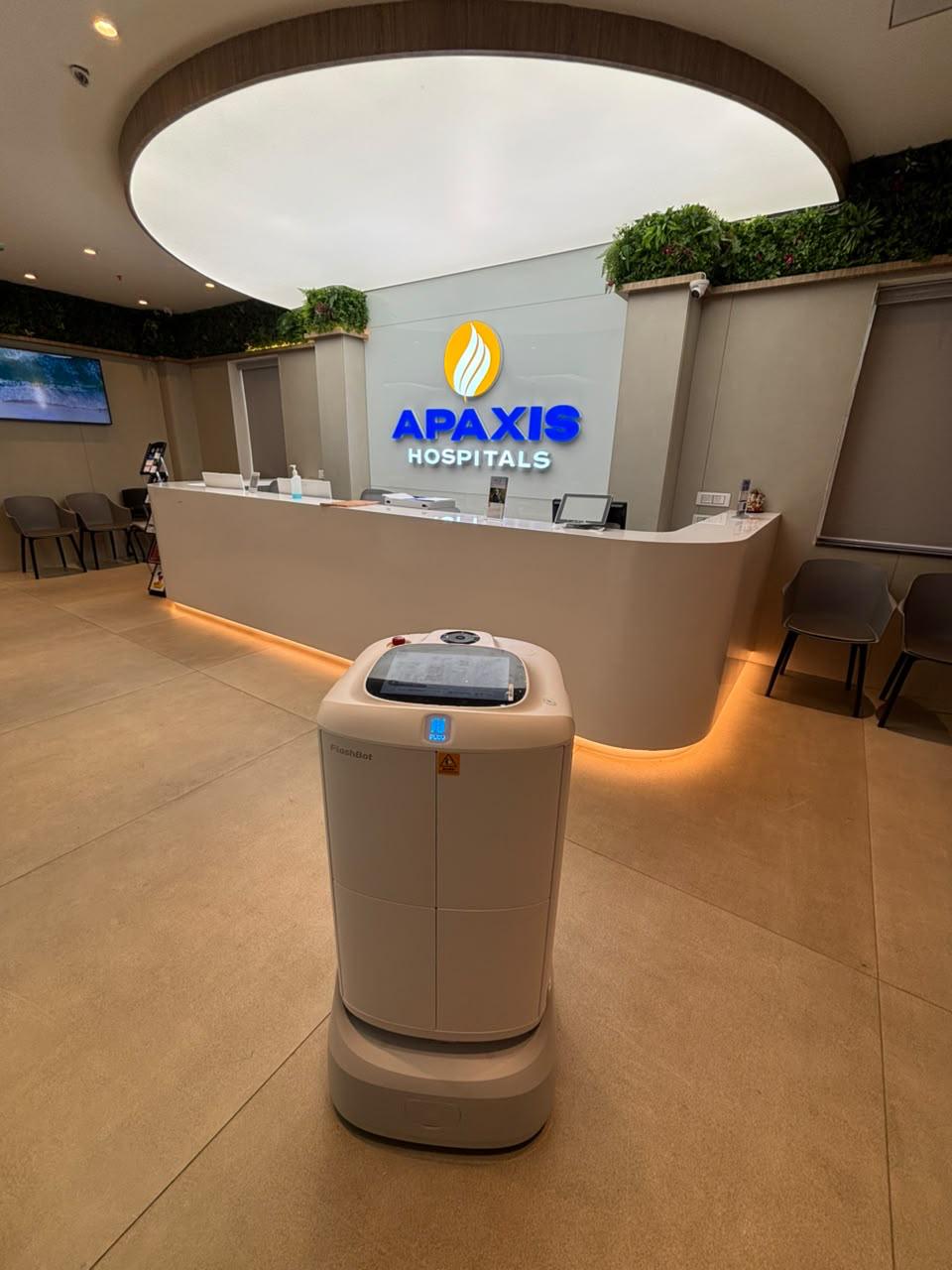 For hospitals considering a lab sample delivery robot, practical deployment experience helps demonstrate how robotic transport can fit into everyday operations.
At Apaxis Hospital, Chennai, Autofina’s deployment context identifies FlashBot Max as supporting the movement of medical items. The operational dashboard for the selected period, 15 September to 14 October 2026, provides a measurable picture of robot activity.
| Dashboard metric | Reported figure |
|---|---|
| Number of tasks | 1,157 |
| Destination count | 1,459 |
| Runtime | 76.95 hours |
| Running mileage | 17.29 km |
These figures show repeated robot activity within an operating hospital. For administrators, that is a useful starting point: delivery automation can become part of the hospital’s working routine, with activity recorded for operational review.
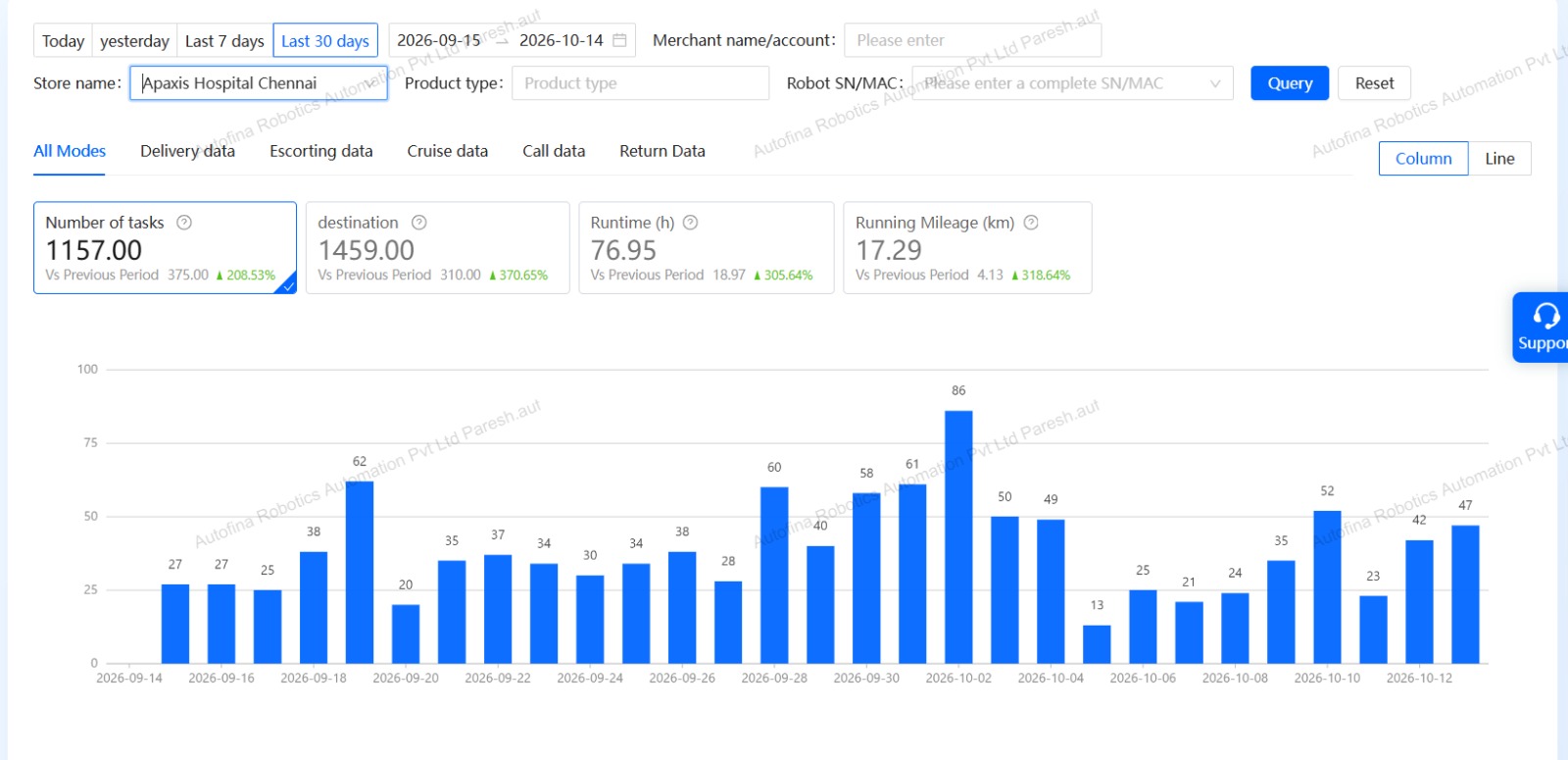
The report also allows teams to examine daily workload variation. That matters when planning delivery schedules, charging windows and the routes where automation could provide the greatest benefit.
The dashboard is an “All Modes” summary. It does not separate medical-item deliveries from other activity, identify the number of specimens carried or establish successful-delivery rates. Its runtime figure should therefore not be presented as staff hours saved, and individual delivery logs would be needed to calculate complete cycle times.
For laboratory applications, this hospital experience provides relevant implementation context. The next step is to validate the intended specimen route, including packaging, transport conditions and laboratory acceptance.
Read our detailed hospital delivery robot in India article for the broader Apaxis deployment context.
Turning Repeated Deliveries into a More Efficient Hospital Workflow
A lab sample delivery robot offers its greatest value when it takes responsibility for suitable, recurring journeys that would otherwise occupy hospital employees.
Consider a collection point that sends prepared samples to a central laboratory throughout the day. Each manual journey requires someone to be available, carry the load and return. Automating that route can allow the employee to remain closer to their assigned work while authorized staff manage loading and receiving.
The benefit extends beyond walking time. Fewer courier interruptions can help teams organize collections, receiving duties and other hospital activities more consistently.
Before deployment, hospitals should establish:
- Route suitability: pickup points, destinations, floors and access requirements.
- Material suitability: approved specimens, packaging and handling conditions.
- Staff responsibilities: who loads, receives, cleans and responds to exceptions.
- Performance measures: delivery intervals, active staff minutes and interventions.
- Backup arrangements: what happens during delays, charging or equipment downtime.
A pilot should compare the existing process with the proposed robot workflow under representative conditions. Measuring both transport performance and staff involvement helps identify where FlashBot Max delivers practical value.
The strongest business case connects the journeys automated with the hospital work that becomes easier to complete.
Frequently Asked Questions About Lab Sample Delivery Robots
Can FlashBot Max transport blood and other laboratory samples?
It can be evaluated for appropriately packaged specimens on approved hospital routes. The laboratory must confirm suitability for the intended specimen types, transport conditions and receiving process before routine use.
Does a lab sample delivery robot sterilize samples?
Diagnostic specimens generally need to retain their characteristics for testing. The relevant controls are suitable packaging, specimen protection and approved cleaning or disinfection of transport equipment. Enclosed compartments alone do not establish sterility or temperature control.
How many staff hours can a hospital save?
Savings depend on trip frequency and the reduction in active staff involvement. Measure manual delivery time, then account for loading, receiving, cleaning and interventions in the robot workflow. The Apaxis dashboard does not independently establish staff hours saved.
How can hospitals use the staff time released?
Hospitals can redirect time toward duties appropriate to each employee’s role, such as patient assistance, sample collection, accessioning, documentation or ward replenishment. Managers should assess both the minutes recovered and whether fewer delivery interruptions improve daily work.
Give Hospital Teams More Time for Essential Work
A lab sample delivery robot can help hospitals organize suitable transport routes, reduce routine staff travel and make more time available for essential duties. FlashBot Max’s value becomes clearest when the hospital measures the complete workflow and validates the materials being carried.
Planning to automate internal deliveries? Contact Autofina Robotics with your pickup points, daily trip count, floor details and transport requirements to assess where FlashBot Max could help your hospital.