PUDU ET1 Cleaning Robot: AI-Powered Cleaning for Small Commercial Spaces
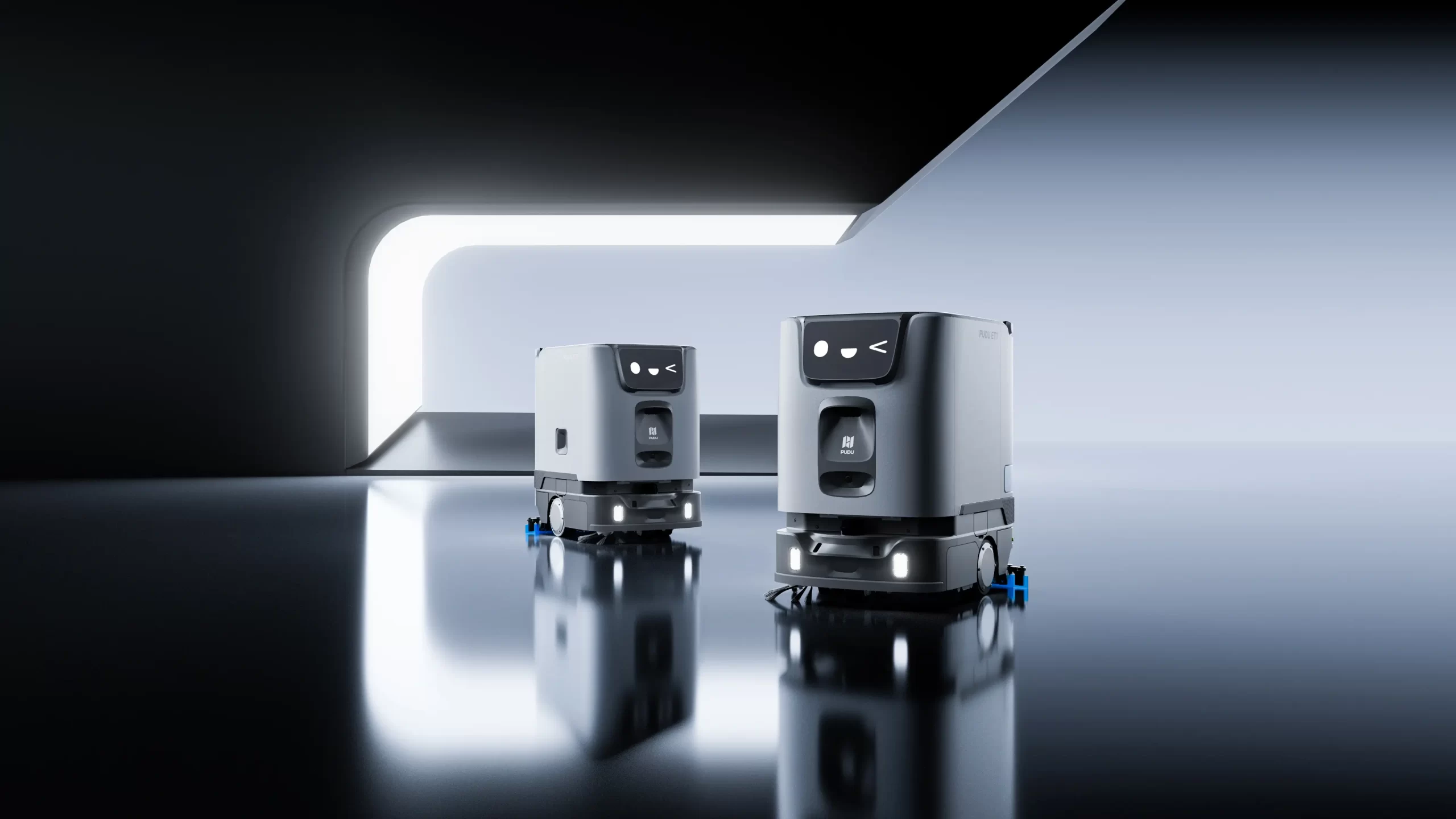
The PUDU ET1 is PUDU Robotics’ new-generation compact commercial cleaning robot, built to bring advanced autonomous cleaning into smaller and more demanding spaces.
Designed for commercial environments of approximately 100–800 m², ET1 combines sweeping, scrubbing, vacuuming and dust-mopping with newer capabilities such as AI-based stain and floor recognition, adaptive scrubbing, 85°C hot-water cleaning, real-time roller self-cleaning and an 8-in-1 automated workstation.
What makes ET1 stand out is not simply its compact size, but the amount of intelligence and automation packed into it. It is designed to recognise different cleaning conditions, adjust how it cleans, and reduce routine operator intervention before, during and after a task.
In this blog, we take a closer look at what makes the PUDU ET1 cleaning robot different, where it fits within PUDU’s cleaning portfolio, and why it represents an important step forward in compact commercial cleaning automation.
Meet the PUDU ET1: A New Category in the PUDU Cleaning Family
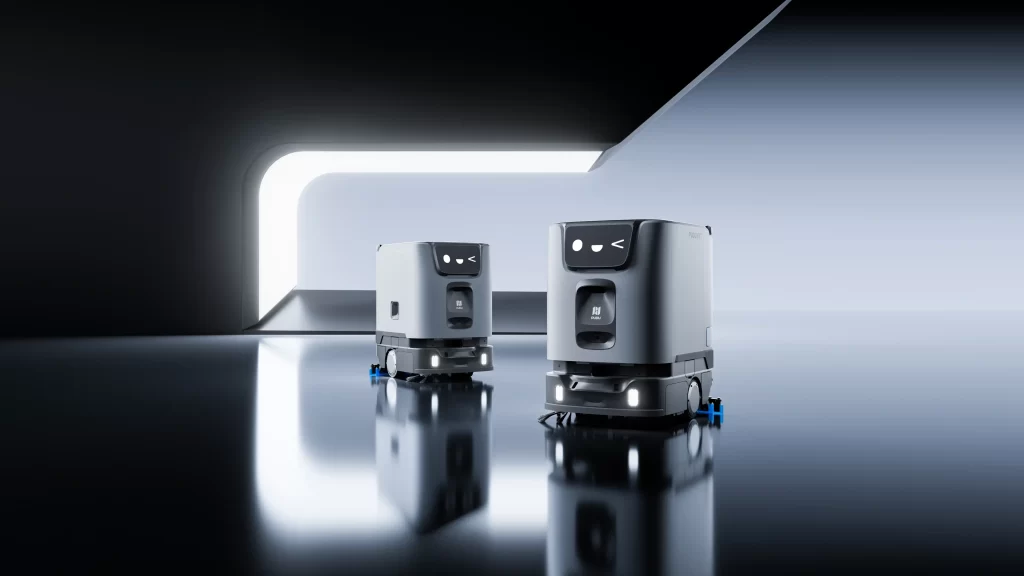
Launched in August 2026, the ET1 is an AI-native compact scrubber-dryer robot specifically developed for commercial spaces of approximately 100 to 800 m².
PUDU identifies the following among its primary applications:
- Convenience stores
- Drugstores
- Chain restaurants
- Business and economy hotels
- Office spaces
It is also the first product in PUDU’s new E Series, extending the company’s commercial cleaning portfolio into smaller and more space-constrained environments.
The important point is that PUDU has not simply taken an existing cleaning robot and reduced its dimensions.
ET1 combines:
- Four cleaning functions
- AI-based floor and stain recognition
- Adaptive scrubbing
- Hot-water cleaning
- Automatic mapping
- Extensive post-cleaning automation
– all within a compact platform.
In other words, ET1 is built around a different question:
How much commercial cleaning capability can be brought into spaces where every centimetre matters?
The PUDU cleaning range already covers several distinctly different cleaning requirements.
There are solutions for:
- Manual assisted floor cleaning
- Autonomous multi-purpose cleaning
- Large-area sweeping
- Commercial vacuuming
- Heavy-duty floor care
ET1 enters that portfolio with a more specific mission: bringing autonomous professional cleaning into smaller commercial premises without making the machine itself the centre of attention.
Its physical dimensions immediately illustrate that philosophy.
The PUDU ET1 measures approximately:
- 500 × 380 × 580 mm
- Around 45 kg in weight
- Minimum width clearance: approximately 50 cm
- Minimum height clearance: approximately 60 cm
Its compact body allows it to work through narrow aisles and constrained layouts where deploying a larger floor-cleaning machine may be less practical.
Yet ET1 is not positioned as a light-duty domestic-style robot.
PUDU specifies:
- Cleaning productivity: approximately 300–720 m² per hour
- Maximum operating speed: 1 m/s
- Clean-water tank: 8 litres
- Wastewater tank: 7.2 litres
- Dust box: 2.5 litres
- Published runtime: approximately 2.5–4 hours, depending on operation
This balance between a compact footprint and commercial cleaning hardware is fundamental to understanding ET1.
It is intended to occupy the space between a simple robotic floor cleaner and the larger autonomous machines typically associated with major facilities.
And that explains why PUDU describes the ET1 as an “AI-Native Compact Scrubber-Dryer Robot.”
- The “compact” part gets it into the environment.
- The “scrubber-dryer” part gives it serious floor-care capability.
- And the “AI-native” part determines how it responds once it gets there.
Four Cleaning Functions in One Compact Robot
One of ET1’s fundamental capabilities is its 4-in-1 cleaning system, combining sweeping, scrubbing, vacuuming and dust-mopping in a single autonomous platform. Pudu Robotics
But the more interesting detail is how these functions are arranged.
ET1 uses what PUDU describes as a front-sweep, rear-scrub architecture. Dry debris is addressed toward the front of the robot before the rear cleaning system scrubs the floor and recovers wastewater.
This enables ET1 to deal with different types of contamination during the same cleaning operation rather than treating every floor condition as though it were identical.
Consider a busy café or convenience store.
One part of the floor may contain dust and small debris. Another may have footprints from incoming customers. A beverage spill may have dried into a sticky patch farther down the aisle.
A commercial floor rarely presents one perfectly uniform cleaning problem.
That is why bringing multiple cleaning processes together matters.
ET1 provides a 30 cm scrubbing and dust-mopping width, while sweeping and vacuuming cover approximately 39 cm. The system is therefore compact enough to move through narrow spaces while still performing multiple floor-care processes during a cleaning route. Pudu Robotics
For operators, the advantage is not simply having four feature names on a specification sheet. The objective is to reduce the need to use one method for loose debris, another for wet cleaning and yet another for finishing the floor.
This is especially relevant for smaller premises, where storing and repeatedly operating several separate cleaning machines can itself become inefficient.
With ET1, PUDU’s approach is more integrated:
sweep first, scrub behind, recover the dirty water and continue moving.
Compact Size Without Compromising Cleaning Power
Small cleaning robots can easily create the impression that they are intended only for light daily maintenance.
ET1’s scrubbing system challenges that assumption.
At the centre of the wet-cleaning system is a roller capable of reaching a maximum speed of 800 rpm. PUDU pairs this with up to 5,000 Pa of downward pressure, helping maintain consistent contact between the roller and the floor.
The system is designed to tackle contamination such as:
- Grease
- Footprints
- Other stubborn floor stains
—rather than simply wiping over the surface.
85°C Hot-Water Cleaning Changes the Equation
One of the ET1’s most distinctive capabilities is its use of hot water at temperatures of up to 85°C.
The docking station can supply ET1 with hot water, while an onboard heating system is designed to maintain the temperature during the cleaning operation. PUDU specifically positions the feature for dissolving:
- Grease
- Sticky residues
That makes the technology particularly relevant to environments where cleaning involves more than ordinary dust.
Think about areas such as:
- A restaurant counter
- A café beverage station
- A convenience-store entrance
The challenge may be:
- Oil
- Food residue
- Shoe marks
- Sugary spills that have started to dry on the floor
Autonomous navigation alone does not remove those contaminants. The robot still needs effective mechanical cleaning once it reaches them.
ET1 therefore combines three important factors:
- High roller speed
- Sustained pressure against the floor
- Heated water
Scrub, Recover and Move On
Cleaning a floor is only half the process. The water used to clean it also has to be removed.
ET1 is designed to recover dirty water during the cleaning pass, leaving the floor substantially dry rather than allowing wastewater to remain behind.
PUDU says this helps:
- Reduce water accumulation
- Reduce water marks
- Reduce slip risk
- Support use on more moisture-sensitive surfaces such as hardwood and marble
This becomes particularly valuable in customer-facing businesses.
The objective is not merely to clean the floor after everyone has left.
It is to make automated cleaning increasingly compatible with a space that is still being used.
AI Magic Cleaning: When the Robot Decides How to Clean
Autonomous movement and intelligent cleaning are not necessarily the same thing.
A robot can be perfectly capable of navigating from Point A to Point B while still applying exactly the same cleaning behaviour to every square metre of flooring.
ET1 takes a different approach through what PUDU calls AI Magic Cleaning.
The system connects environmental perception, motion control and the physical cleaning system into a single decision loop. Mapping, floor recognition, stain identification, cleaning heatmaps and adaptive cleaning are used to adjust how the robot performs a task instead of simply following a route with fixed settings. Pudu Robotics
That distinction is central to the ET1 story.
The question is no longer only:
“Where should the robot clean?”
It increasingly becomes:
“What is the robot seeing, and how should it clean it?”
Different floor? Different response.
ET1 can identify changes in floor surfaces and adjust its cleaning operation.
For example, when the system detects the edge of a carpet, it can raise the scrubbing roller to avoid wetting the carpet. Pudu Robotics
That may sound like a small action, but mixed-floor environments are common in commercial facilities.
A hotel lobby may transition between hard flooring and rugs. An office may include both tiled corridors and carpeted areas. Retail entrances often combine mats with polished flooring.
For an autonomous robot, understanding those transitions is just as important as knowing where the walls are.
A liquid spill requires a different response again
ET1 can also recognise liquid contamination.
Rather than running its dry sweeping components directly through the spill, the sweeping brush and side brush can be lifted, helping prevent the liquid from being spread into the surrounding area. Pudu Robotics
This illustrates why recognition matters.
A robot that merely sees an obstacle can avoid it.
A cleaning robot that identifies what type of contamination it is dealing with can change its cleaning behaviour accordingly.
And stubborn stains trigger more intensive cleaning
ET1’s AI Adaptive Scrubbing takes this concept further.
When stubborn contamination is recognised, the robot can automatically perform a three-part adjustment: increase roller speed, reduce travelling speed and increase water output. Pudu Robotics
Instead of applying maximum cleaning intensity everywhere—or treating a stubborn stain exactly like an already-clean section of flooring—the robot can direct additional cleaning effort to the areas where it is needed.
This has implications for both cleaning effectiveness and resource utilisation.
Rather than thinking of ET1 as a machine executing a fixed cleaning programme, it is more useful to think of its AI workflow as:
Detect → Interpret → Adjust → Clean.
That is where the term AI-native cleaning starts to have practical meaning
Real-Time Roller Self-Cleaning: Solving the Dirty-Mop Problem
There is an obvious problem with conventional mopping that is easy to overlook.
The cleaning tool itself becomes dirty.
As a mop, pad or roller travels across a contaminated floor, it collects dirt. Unless that contamination is removed effectively, the same cleaning surface continues travelling into the next section of the floor.
Automation does not automatically solve this problem. A robot could theoretically travel perfectly around a building while continuing to clean with an increasingly contaminated tool.
ET1 addresses this through real-time roller-mop self-cleaning.
PUDU describes the system as cleaning the roller while the robot is scrubbing, helping the cleaning element remain consistently cleaner during operation rather than waiting until the entire task is finished. Pudu Robotics
At the same time, wastewater is recovered rather than being left on the floor or repeatedly circulated across the cleaning path.
This creates an important distinction between simply automating the movement of a mop and automating a cleaning process.
For high-frequency commercial environments—particularly restaurants, retail outlets, hotels and other spaces where different types of contamination may exist within the same route- the condition of the cleaning roller matters just as much as the robot’s navigation accuracy.
And ET1’s approach to self-cleaning does not stop when the robot finishes its route.
That is where its 8-in-1 automated workstation becomes particularly interesting.
Full-Process Automation Beyond Floor Cleaning
A cleaning robot may automate the task of scrubbing the floor, but if staff still need to refill water, drain wastewater, wash the roller, rinse the squeegee, measure cleaning solution and manually charge the machine after every task, a considerable amount of routine work remains.
This is where the PUDU ET1’s 8-in-1 automated workstation becomes an important part of the overall system.
After completing a cleaning task, ET1 can return to its workstation for automated maintenance. PUDU’s station supports automatic charging, roller cleaning, squeegee rinsing, roller spin-drying, clean-water refill, wastewater drainage, cleaning-agent dosing and water heating.
An 8-in-1 Automated Maintenance Cycle
Together, these functions extend automation beyond navigation and floor cleaning:
- Automatic charging: ET1 returns to replenish its battery.
- Automatic roller cleaning: helps remove contamination collected during cleaning.
- Automatic squeegee rinsing: cleans another component that regularly comes into contact with dirty water.
- Automatic roller spin-drying: helps prepare the roller for subsequent use.
- Automatic clean-water refill: reduces the need for staff to refill the tank manually.
- Automatic wastewater drainage: removes recovered dirty water.
- Automatic cleaning-agent dosing: controls solution addition automatically.
- Automatic water heating: prepares hot water for ET1’s high-temperature cleaning process.
The significance of this system is straightforward: automation should not simply transfer labour from cleaning the floor to servicing the robot.
Automatic Dust Collection
ET1 also incorporates a 2.5-litre onboard dust box and automatic dust collection after cleaning runs. PUDU states that the system is designed to reduce disposal frequency to around once per week, although actual intervals will naturally depend on the amount of debris and frequency of operation.
For businesses carrying out several cleaning cycles throughout the day, reducing these repetitive maintenance tasks can be just as valuable as automating the cleaning route itself.
Built for Spaces Where Larger Cleaning Robots Struggle
The ET1’s compact form factor is not simply a design choice. It is central to where the robot is intended to operate.
At 500 × 380 × 580 mm, ET1 requires a minimum clearance of approximately 50 cm in width and 60 cm in height. PUDU specifically highlights its ability to navigate narrow aisles and operate during business hours with minimal disruption.
That opens possibilities in environments where a larger commercial scrubber-dryer may simply be too bulky.
A pharmacy may have tightly spaced shelves. A café may have tables, counters and narrow walkways. A convenience store needs to clean around displays and refrigeration units. A business hotel may need to move through corridors and lobby areas while guests are still present.
ET1 is designed around these constraints rather than treating them as exceptions.
The result is a commercial cleaning robot that can bring autonomous wet and dry cleaning into areas that have traditionally relied heavily on manual cleaning equipment.
From Deployment to Daily Operation
Advanced cleaning capability only becomes useful if operators can deploy and use it without unnecessary complexity.
Auto Mapping and One-Click Start
ET1 can autonomously map a new environment, and PUDU says it does not require conventional pre-mapping or a complicated setup process before beginning cleaning. This makes initial deployment, demonstrations and changes between smaller sites considerably more straightforward.
Different Interfaces for Managers and Operators
ET1 also uses a dual-system operating design:
Admin Mode gives managers access to professional configuration and management functions, while User Mode simplifies everyday operation for cleaning personnel. Built-in training and proactive maintenance alerts are also part of the operating system.
The physical maintenance design follows the same principle. Components including the side brush, squeegee, roller, roller chamber, sweeping brush, tanks, dust box and battery are removable, while PUDU describes the cleaning modules as having an approximately 30-second quick-release design.
Where Can PUDU ET1 Be Used?
ET1 makes the most sense in facilities where cleaning requirements are serious but floor space and manoeuvring room are limited.
Retail and Convenience Stores
Retail environments combine narrow aisles, customer traffic, dust, packaging debris and occasional liquid spills. ET1’s compact navigation, four cleaning modes and spill recognition make this one of its most natural applications.
Restaurants, Cafés and Food & Beverage Spaces
Food-service environments frequently deal with grease, footprints, crumbs and sticky beverage residue. ET1’s 85°C hot-water scrubbing, adaptive stain cleaning and wastewater recovery are especially relevant here.
Hotels and Offices
Hotels and offices commonly contain mixed floor surfaces and need cleaning to take place without significantly interfering with guests or employees. ET1’s carpet-edge recognition and compact dimensions make it suitable for these mixed commercial environments.
It can also be considered for pharmacies, smaller healthcare areas, showrooms and other high-frequency commercial spaces where maintaining floor standards throughout the day is important.
PUDU ET1 vs Other PUDU Cleaning Robots
One of the most important questions is not whether ET1 is more advanced than every other PUDU cleaning robot.
It is where ET1 fits within the portfolio.
Different PUDU models have been designed around very different cleaning environments, floor areas and contamination types.
| Robot | Primary Cleaning Role | Best Suited For | Key Difference from ET1 |
|---|---|---|---|
| PUDU ET1 | Sweep, scrub, vacuum and dust-mop | Compact commercial spaces | Compact 50 cm clearance, hot-water scrubbing and full-process workstation automation Pudu Robotics |
| PUDU CC1 | 4-in-1 autonomous cleaning | General commercial facilities | Larger 15 L clean/dirty water capacity and higher 700–1,000 m²/h coverage Pudu Robotics |
| PUDU CC1 Pro | AI-enhanced 4-in-1 cleaning | Larger, higher-frequency commercial sites | AI spot scrubbing, performance detection and larger-scale coverage; 70 cm minimum path Pudu Robotics |
| PUDU BG1 / BG1 Pro | Large autonomous sweep-and-scrub cleaning | Warehouses, factories and large facilities | 75 L clean-water tank, 60 L wastewater tank and up to 2,000 m²/h covered cleaning Pudu Robotics |
| PUDU SH1 | Smart upright scrubber-dryer | Detailed manual cleaning | Human-operated rather than autonomous; designed to augment a cleaner Pudu Robotics |
| PUDU MT1 | Autonomous dry sweeping | Large indoor spaces | 35 L trash bin and up to 1,800 m²/h standard sweeping performance Pudu Robotics |
| PUDU MT1 Max | Advanced autonomous sweeping | Complex and semi-outdoor environments | 3D LiDAR perception, 35 L waste capacity and up to 10-hour runtime Pudu Robotics |
| PUDU MT1 Vac | Sweeping, vacuuming and dust-mopping | Large indoor and carpeted areas | 55 cm vacuum path and dedicated high-capacity dry vacuuming system Pudu Robotics |
The key takeaway is that ET1 does not replace the rest of the PUDU cleaning range.
Instead, it fills a gap at the compact end of the portfolio.
For larger areas requiring higher productivity or greater tank capacity, CC1 Pro or BG1 may be more appropriate. For large-scale dry sweeping, the MT1 family serves a different requirement entirely. ET1 is particularly compelling when wet cleaning capability, AI adaptation and compact manoeuvrability need to exist together.
PUDU ET1 Technical Specifications at a Glance
ET1 delivers a cleaning efficiency of approximately 300–720 m²/h, with a 30 cm scrubbing/dust-mopping path and a 39 cm sweeping/vacuuming path. It carries an 8 L clean-water tank, 7.2 L wastewater tank and 2.5 L dust box, with a published runtime of 2.5–4 hours and approximately 3 hours of charging time.
| PUDU ET1 Technical Specifications | |
|---|---|
| General Specifications | |
| Product Type | AI-Native Compact Scrubber-Dryer Robot |
| Dimensions (L × W × H) |
500 × 380 × 580 mm 19.69 × 14.96 × 22.83 in |
| Weight | Approx. 45 kg (99.2 lbs) |
| Maximum Cruise Speed | 1.0 m/s (3.28 ft/s) |
| Cleaning Efficiency |
300–720 m²/h 3,229–7,750 ft²/h |
| Run Time | 2.5–4 hours |
| Battery Capacity | 35 Ah |
| Charging Time | Approx. 3 hours |
| Cleaning System | |
| Cleaning Functions | Sweeping, Scrubbing, Vacuuming & Dust-Mopping |
| Cleaning Architecture | Front-Sweep, Rear-Scrub Design |
| Scrubbing / Dust-Mopping Width | 30 cm (11.81 in / 0.98 ft) |
| Sweeping / Vacuuming Width | 39 cm (15.35 in / 1.28 ft) |
| Maximum Roller Speed | 800 RPM |
| Downward Roller Pressure | 5,000 Pa |
| Suction Power | Up to 20 kPa |
| Maximum Hot-Water Temperature | 85°C |
| Roller Self-Cleaning | Real-Time Roller Mop Self-Cleaning |
| Wastewater Recovery | Instant Dirty-Water Recovery for Fast-Drying Floors |
| Tank & Dust Capacity | |
| Clean Water Tank | 8 L (2.11 gal) |
| Waste Water Tank | 7.2 L (1.9 gal) |
| Dust Box Capacity | 2.5 L (0.66 gal) |
| Navigation & Clearance | |
| Minimum Width Clearance | 50 cm (19.69 in / 1.64 ft) |
| Minimum Height Clearance | 60 cm (23.62 in / 1.97 ft) |
| Mapping | Automatic Mapping with One-Click Start |
| AI & Intelligent Cleaning | |
| AI Cleaning Technology | AI Magic Cleaning |
| Floor Surface Recognition | Automatic Recognition and Cleaning-Mode Adjustment |
| Stain Recognition | AI-Based Stain Recognition with Adaptive Scrubbing |
| AI Adaptive Scrubbing | Increases Roller Speed, Reduces Travel Speed and Increases Water Output for Stubborn Stains |
| Carpet Detection | Detects Carpet Edges and Lifts the Scrubbing Roller |
| Liquid Spill Detection | Lifts Sweeping Brush and Side Brush to Help Prevent Secondary Contamination |
| 8-in-1 Automated Workstation | |
| Automated Station Functions |
Auto Charging Automatic Roller Cleaning Automatic Squeegee Rinsing Automatic Roller Spin-Drying Automatic Clean Water Refill Automatic Waste Water Drainage Automatic Cleaning Agent Dosing Automatic Water Heating |
| Automatic Dust Collection | Supported |
| Additional Features | |
| Operating Interface | Dedicated Admin and User Modes |
| Cleaning Module Design | Approx. 30-Second Quick-Release Cleaning Modules |
| Optional Advertising Display | 21.5-inch HD Display |
More Than a Cleaner: An Optional Customer-Facing Display
ET1 can also be equipped with an optional 21.5-inch HD advertising display.
For businesses such as supermarkets, retail stores, hotels and restaurants, this allows the robot to become a moving communication platform while it works. Content can include promotions, campaigns, announcements or other dynamic information. PUDU also supports custom body wraps for additional branding opportunities.
This is not the primary reason to choose ET1, but in customer-facing environments it adds an interesting second function to a machine that is already moving through public areas.
Is the PUDU ET1 Right for Your Facility?
ET1 is particularly worth considering when a facility has:
limited aisle width, approximately 100–800 m² of cleaning area, frequent hard-floor cleaning requirements, food or beverage spills, mixed flooring, customer traffic during cleaning hours, or a desire to reduce routine maintenance around the robot itself.
However, the correct PUDU robot ultimately depends on the environment.
A large manufacturing plant may benefit more from BG1’s capacity. A massive dry warehouse may need MT1. A carpet-heavy facility may favour MT1 Vac. A property requiring broader 4-in-1 cleaning across larger areas may be better suited to CC1 Pro.
Selecting a cleaning robot should therefore start with the floor, contamination type, available clearance, required productivity and operating pattern- not simply with the newest model.
Frequently Asked Questions About PUDU ET1
1] What cleaning functions does PUDU ET1 perform?
ET1 combines sweeping, scrubbing, vacuuming and dust-mopping in one autonomous platform.
2] Can ET1 use hot water?
Yes. Its docking station can provide water at up to 85°C, while onboard heating is designed to maintain the temperature during cleaning.
3] How narrow a passage can ET1 navigate?
PUDU specifies a minimum width clearance of approximately 50 cm and a minimum height clearance of 60 cm.
4] Can ET1 recognise carpets?
Yes. ET1 can detect carpet edges and raise its scrubbing roller to help keep carpets dry.
5] Does ET1 react differently to stubborn stains?
Yes. AI Adaptive Scrubbing can reduce travel speed while increasing roller speed and water output when stubborn contamination is recognised.
6] Does ET1 automatically refill and drain water?
Yes, when used with its 8-in-1 workstation, ET1 supports automatic clean-water refill and wastewater drainage along with several other automated maintenance processes.
Conclusion: Compact Cleaning Has Become Much Smarter
The PUDU ET1 represents an important extension of autonomous commercial cleaning into smaller, busier and more space-constrained environments.
Its compact footprint is certainly important, but that alone is not what makes ET1 interesting. What stands out is the combination of 4-in-1 cleaning, 85°C hot-water scrubbing, AI-based surface and stain recognition, adaptive cleaning, real-time roller self-cleaning and an 8-in-1 automated workstation. Pudu Robotics
Together, these capabilities move ET1 beyond the idea of a small robot that simply follows a programmed cleaning route. It is designed to recognise changing conditions, modify its cleaning behaviour and automate much of the maintenance required once the task is complete.
For retailers, restaurants, hotels, offices and other commercial facilities where floor space may be limited but cleaning standards remain high, ET1 introduces a compelling new option.
Small footprint. Intelligent cleaning. Less routine intervention.
That is the role PUDU ET1 is designed to fill.
Ready to See PUDU ET1 in Action?
Request a Live Demo
Tell us about your facility and cleaning challenges. We provide Pan India support and installations. Our team will propose routes, coverage estimates, and ROI.
Email: [email protected]
Phone: +91 98192 22944