



Office Service Robots in India: Use Cases, Benefits & ROI
Modern workplaces are no longer just about desks, laptops, and meeting rooms. They are evolving into smart, interconnected environments where efficiency, experience, and automation play a critical role.
As offices scale; especially across India’s IT parks, corporate campuses, and co-working spaces- manual processes are becoming a bottleneck. Employees spend time on non-core activities, support staff turnover affects consistency, and internal logistics remain inefficient.
This is where office service robots are making a real impact.
These robots are not futuristic concepts anymore. They are already being deployed across offices to automate repetitive tasks, improve productivity, and enhance workplace experience.
Modern workplaces are no longer just about desks, laptops, and meeting rooms. They are evolving into smart, interconnected environments where efficiency, experience, and automation play a critical role.
As offices scale; especially across India’s IT parks, corporate campuses, and co-working spaces- manual processes are becoming a bottleneck. Employees spend time on non-core activities, support staff turnover affects consistency, and internal logistics remain inefficient.
This is where office service robots are making a real impact.
These robots are not futuristic concepts anymore. They are already being deployed across offices to automate repetitive tasks, improve productivity, and enhance workplace experience.
What is an Office Service Robot?
An office service robot is an autonomous mobile robot (AMR) designed to perform operational and service-related tasks within office environments.
Unlike industrial robots, which operate in controlled factory settings, office robots are built for dynamic, human-populated spaces.
Core Capabilities
- Autonomous navigation using SLAM, LiDAR, and cameras
- Real-time obstacle avoidance in crowded environments
- Task scheduling and multi-point delivery
- Human interaction via touchscreen and voice
- Integration with office infrastructure (elevators, access systems)
Simple Definition
Office service robots are intelligent, self-navigating systems that assist employees by handling routine operational tasks within office spaces.
What Do Office Service Robots Do?
Office service robots act as mobile operational assistants, handling a wide range of tasks across departments.
1. Internal Delivery & Logistics
- Transport documents, parcels, and office supplies
- Deliver laptops, accessories, and IT equipment
- Move items between departments without human involvement
Eliminates unnecessary employee movement
2. Multi-Floor Autonomous Delivery
- Use elevators independently
- Navigate across floors and buildings
- Perform secure, scheduled deliveries
Essential for large Indian corporate offices and IT parks
3. Reception & Visitor Assistance
- Greet and guide visitors
- Provide directions to meeting rooms
- Display company information
Reduces dependency on front desk staff
4. Pantry & Cafeteria Support
- Deliver snacks, beverages, and meals
- Assist during meetings and events
- Support corporate dining environments
Improves employee convenience
5. Smart Workflow Integration
- Sync with internal systems and apps
- Enable automated task assignment
- Provide real-time delivery updates
Becomes part of the office’s digital ecosystem
Why Indian Workplaces Need Office Service Robots
Indian workplaces today are evolving rapidly in terms of infrastructure, scale, and expectations. However, internal operations within most offices still rely heavily on manual processes. This creates a gap between how modern offices are designed and how they actually function on a day-to-day basis.
Office service robots address this gap by introducing structured, automated workflows that reduce inefficiencies, improve consistency, and enable scalability. The need for such systems is particularly pronounced in India due to the combination of large office spaces, labor dependency, and increasing expectations around productivity and workplace experience.
Operational Challenges in Indian Offices
1. Productivity Loss from Internal Movement
In most office environments, employees spend a significant portion of their day on non-core activities such as walking across floors, coordinating small internal tasks, or physically moving items between departments. While each instance may seem minor, the cumulative impact is substantial.
Studies show that a large share of the workday is spent on low-value tasks, and frequent interruptions further reduce efficiency. In large Indian offices, this impact is amplified due to scale and layout complexity.
- Employees lose 30–60 minutes daily on internal movement
- Increased delays in task execution
- Reduced focus on core responsibilities
2. High Dependency on Support Staff
Indian offices typically depend on support staff for routine operations such as deliveries, pantry services, and coordination tasks. While effective initially, this model becomes inefficient at scale.
- High attrition leads to frequent retraining
- Inconsistent service quality across staff
- Dependency on availability (breaks, shifts)
- Increased supervision and coordination overhead
This creates variability in processes that should ideally be standardized and predictable.
3. Growing Office Sizes and Operational Complexity
Modern workplaces in cities like Mumbai, Bangalore, and Hyderabad are increasingly large and complex.
- Multi-floor corporate setups
- Large campuses and business parks
- Distributed teams across departments
Manual systems struggle to scale in such environments due to increased movement, coordination delays, and inefficiencies in navigating large spaces.
How Office Service Robots Solve These Challenges?
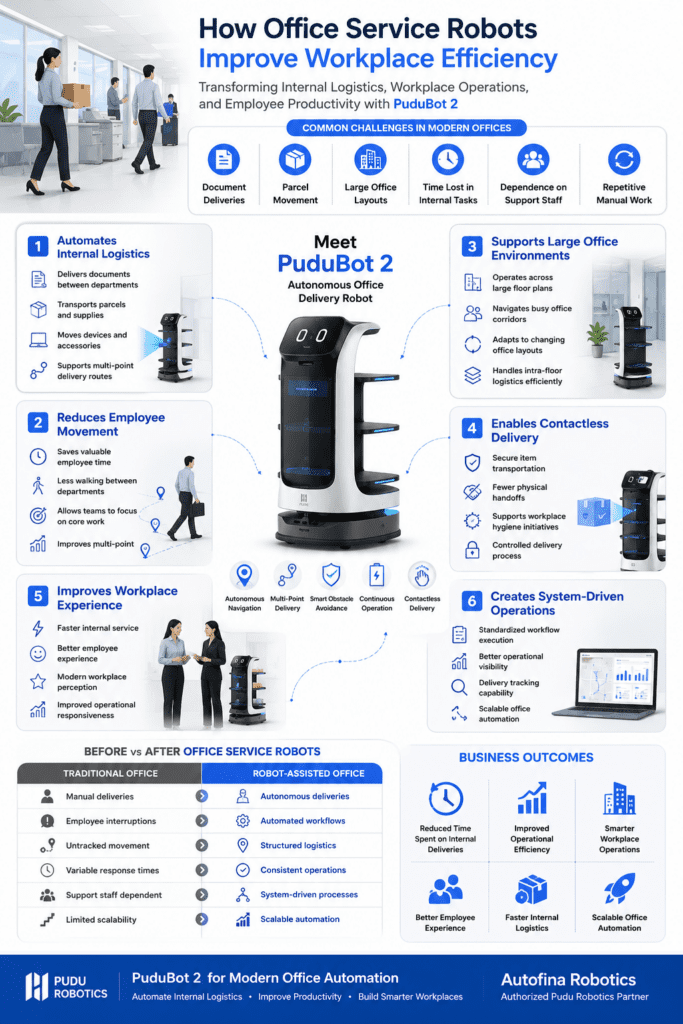 Office service robots directly address these operational gaps by automating internal workflows and reducing dependency on manual processes.
1. Automating Internal Logistics with PuduBot 2
PuduBot 2 enables autonomous delivery within office environments, transforming how routine tasks are executed.
- Handles document, parcel, and device delivery between departments
- Executes multi-point deliveries efficiently
- Reduces employee movement by up to 30–60 minutes per day
- Maintains consistent task execution without delays
This shifts internal logistics from an informal, manual process to a structured and automated system.
2. Reducing Dependency on Support Staff
By automating routine delivery functions, PuduBot 2 minimizes reliance on multiple human touchpoints.
- Performs tasks with consistent timing and accuracy
- Operates continuously without fatigue
- Reduces need for multiple support staff roles
- Eliminates delays caused by availability issues
This leads to predictable and standardized operations across the office.
3. Enabling Efficient Operations in Large Offices
PuduBot 2 is designed to operate in complex office layouts and dynamic environments.
- Navigates crowded corridors and workspaces autonomously
- Adapts to changing layouts without infrastructure changes
- Handles high-footfall environments reliably
- Supports large-scale intra-floor logistics
For multi-floor operations, it can be complemented by systems like FlashBot Max, while PuduBot 2 manages intra-floor workflows efficiently.
4. Supporting Contactless and Safe Operations
Office robots enable safer internal logistics by reducing unnecessary human interaction.
- Enables contactless delivery of documents and items
- Reduces physical handoffs
- Minimizes shared touchpoints
- Supports hygiene-focused workplace policies
This is especially relevant in post-COVID workplace environments.
5. Enhancing Workplace Experience and Efficiency
Office robots contribute to a more efficient and modern workplace environment.
- Faster delivery and reduced waiting time
- Improved responsiveness across teams
- Visible automation that enhances office perception
- Better employee and visitor experience
PuduBot 2, along with interactive robots like BellaBot Pro, helps create a smarter and more engaging workplace ecosystem.
6. Driving the Shift to System-Driven Operations
Office service robots enable organizations to move from people-dependent workflows to structured, system-driven operations.
- Standardize task execution
- Enable tracking and monitoring of workflows
- Improve operational visibility
- Support scalability as the organization grows
PuduBot 2 acts as a foundational system that helps offices transition toward fully automated and optimized operations.
Suitability for Indian Office Environments (Both Small & Large Offices)
Indian workplaces are highly diverse. A 20–30 person office operates very differently from a 2,000+ employee IT campus or a corporate tower in BKC. Yet, both face the same underlying issue- too much time and effort is spent on routine internal tasks.
Office service robots must adapt to this diversity. They must work in compact offices, large campuses, shared buildings, and high-footfall environments—without requiring major changes.
This is where PuduBot 2 becomes highly relevant. It is designed to fit into how Indian offices actually function, not how they are ideally designed.
1. Works in Compact Offices with Limited Space
Many small and mid-sized Indian offices operate in:
- Compact floor plates
- Shared commercial buildings
- Mixed-use layouts with cabins, desks, and meeting rooms
Space is often tight, and movement can become inefficient even in smaller setups.
Why This Matters
Even in a small office:
- Employees get up frequently for document sharing or coordination
- Pantry and admin tasks interrupt workflow
- Time gets lost in small, repeated movements
How PuduBot 2 Helps
- Navigates narrow corridors and tight spaces easily
- Handles internal delivery tasks (documents, items, pantry support)
- Reduces interruptions for employees
- Allows teams to stay focused without constant movement
For smaller companies, this directly improves daily efficiency without increasing headcount.
2. Scales Efficiently in Large Corporate Offices
Large offices in cities like Mumbai, Bangalore, and Hyderabad operate across:
- Multiple floors
- Large departments
- Distributed teams
In such setups, internal movement becomes a major operational challenge.
Common Issues
- Delays in document or device movement
- Employees spending time walking across departments
- Increased dependency on support staff
How PuduBot 2 Adds Value at Scale
- Handles multiple delivery points in one route
- Reduces unnecessary employee movement
- Maintains consistent operations across large teams
When paired with systems like FlashBot Max for inter-floor delivery, it creates a complete internal logistics ecosystem.
3. Reduces Dependency on Office Boys and Support Staff
Across Indian offices—small or large—routine tasks are often handled by:
- Office boys
- Admin staff
- Pantry personnel
While this system works, it introduces inefficiencies:
- Delays when staff are unavailable
- Variability in service quality
- Continuous need for supervision and coordination
How PuduBot 2 Changes This
- Automates routine delivery tasks completely
- Ensures consistent execution without delays
- Reduces dependency on multiple support staff
- Allows existing staff to focus on higher-value responsibilities
For small companies, this means doing more with fewer resources.
For large companies, it means standardizing operations across teams.
4. Performs Reliably in High-Footfall Indian Offices
Indian offices are rarely quiet or static. They are dynamic environments with:
- Continuous employee movement
- Visitors, vendors, and deliveries
- Frequent rearrangements and obstacles
Manual systems slow down in such conditions.
How PuduBot 2 Handles Real-World Movement
- Detects and avoids people and obstacles in real time
- Adjusts routes dynamically during congestion
- Operates safely without disrupting office activity
- Maintains task flow even during peak hours
This makes it suitable for:
- Busy corporate offices
- Co-working spaces
- High-density work environments
5. Fits into Multi-Tenant and Shared Office Spaces
Many Indian businesses—especially startups and SMEs—operate from:
- Co-working spaces
- Shared office buildings
- Multi-tenant commercial complexes
These environments come with limitations:
- Shared corridors
- Limited control over infrastructure
- Variable foot traffic
Why PuduBot 2 Works Here
- Requires minimal infrastructure changes
- Can be deployed within a defined office area
- Does not depend on building-level modifications
- Integrates easily into existing workflows
This makes it practical even for companies that do not own large or dedicated office spaces.
6. Supports Both Cost Efficiency and Premium Experience
Indian companies today are balancing two priorities:
- Controlling operational costs
- Improving employee and client experience
PuduBot 2 addresses both simultaneously.
For Cost Efficiency
- Reduces manpower dependency
- Improves productivity without increasing headcount
- Minimizes operational delays
For Workplace Experience
- Faster internal service
- Reduced waiting time
- Visible use of advanced technology
For smaller companies, it signals professionalism and efficiency.
For larger enterprises, it reinforces innovation and operational excellence.
7. Adapts to How Indian Offices Actually Work
The biggest advantage of PuduBot 2 is its adaptability.
Indian offices are:
- Fast-changing
- Resource-conscious
- Operationally diverse
PuduBot 2 does not require:
- Major layout changes
- Complex infrastructure setup
- Long deployment timelines
Instead, it fits into existing workflows and starts delivering value immediately.
- Quick deployment
- Easy operation
- Scalable as the business grows
Best Office Service Robots for Workplaces
Modern offices require more than just automation—they need reliable, scalable, and practical robotic systems that can handle daily operations, employee interaction, and infrastructure-level logistics.
Among the leading solutions from Pudu Robotics, three robots stand out for office environments:
- PuduBot 2 (Primary office operations robot)
- BellaBot Pro (Interaction + service robot)
- FlashBot Max (Multi-floor logistics robot)
Each of these robots serves a different purpose, but together they form a complete office automation ecosystem.
1. PuduBot 2 – Universal Office Delivery & Operations Robot
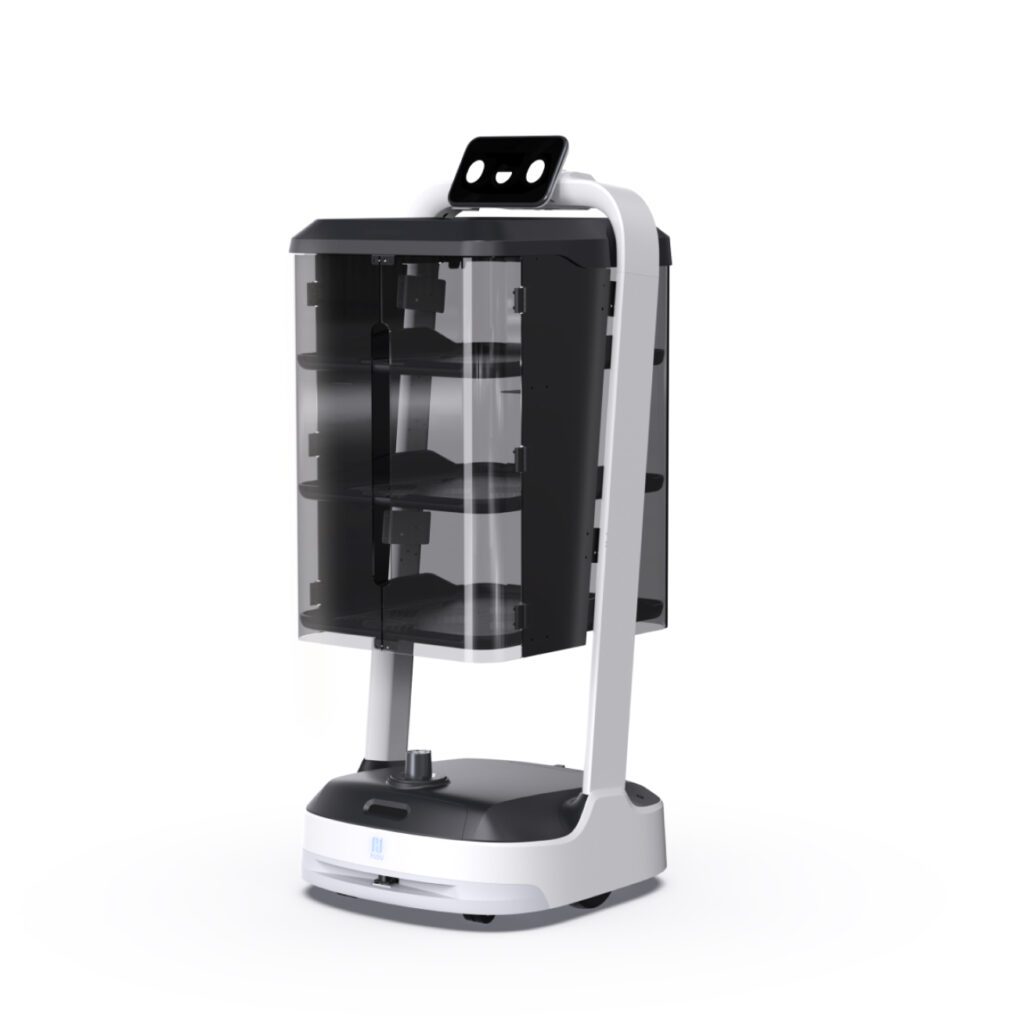 PuduBot 2 is a high-performance autonomous delivery robot designed to handle continuous, high-frequency tasks across office environments. It is built for efficiency, scalability, and real-world adaptability.
A. Autonomous Internal Delivery
- Multi-point delivery across departments
- Document, parcel, and device movement
- Pantry and internal supply logistics
PuduBot 2 automates the most frequent office task—internal movement.
B. Multi-Task Scheduling
- Executes multiple delivery points in a single route
- Handles batch tasks efficiently
- Reduces repetitive trips
C. Real-Time Navigation & Obstacle Avoidance
- Navigates crowded office spaces autonomously
- Avoids people, furniture, and dynamic obstacles
- Recalculates routes in real time
Uses dual LiDAR and SLAM-based navigation for 360° perception and safe movement
D. Smart Integration & Connectivity
- IoT-enabled (Wi-Fi, 4G, LoRa)
- App-based task assignment
- Cloud monitoring and fleet management
E. Continuous Operations
- Auto-charging capability
- Long battery runtime
- Can operate throughout the workday without interruption
Technical Specifications – PuduBot 2
| Parameter | Specification |
|---|---|
| Navigation | PUDU VSLAM+ + Dual LiDAR (360° sensing) |
| Max Load | Up to 40 kg |
| Runtime | 10–24 hours |
| Charging Time | ~3–4 hours |
| Speed | 0.5 – 1.2 m/s |
| Trays | 3–7 adjustable trays |
| Mapping Capacity | Up to 40,000 m² |
| Connectivity | Wi-Fi / 4G / LoRa / IoT |
| Deployment | Marker-less (fast deployment) |
2. BellaBot Pro – Interactive Service & Experience Robot
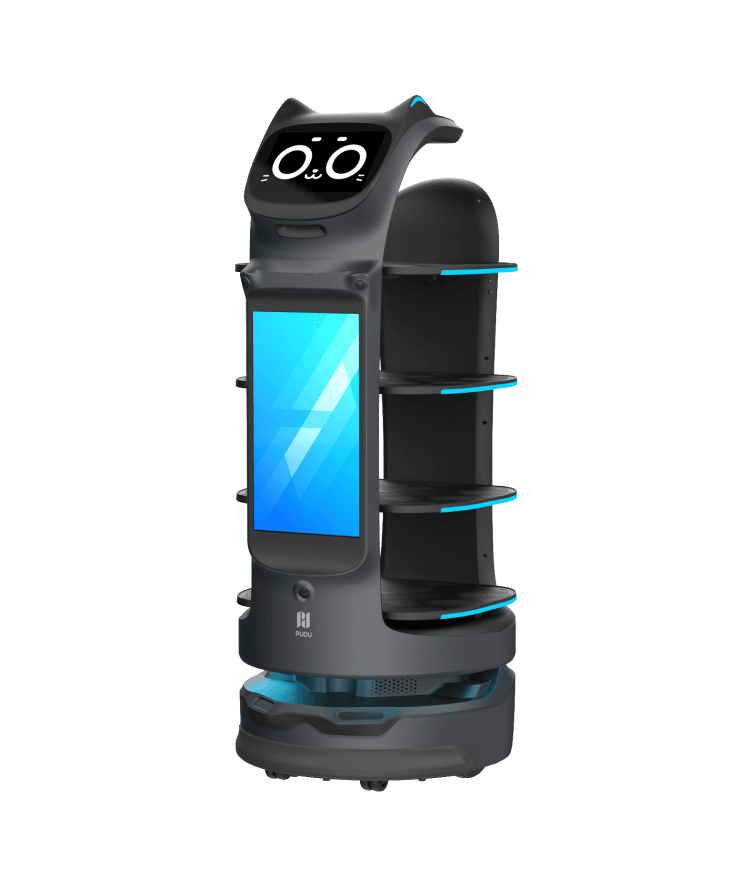 BellaBot Pro is designed for human interaction and service enhancement, combining delivery with AI-driven engagement and communication.
A. Interactive Communication
- Voice interaction and expressions
- Customer/employee engagement
- Smart display interface
B. Service Delivery
- Multi-tray delivery system
- Food, beverages, and small items
C. Smart Recognition
- AI tray and object recognition
- Intelligent announcements and responses
D. Branding & Marketing
- Large display screen for content
- Promotes company messaging
E. Safe Navigation
- Omni-sense obstacle detection
- Smooth movement in tight spaces
Technical Specifications – BellaBot Pro
| Parameter | Specification |
|---|---|
| Load Capacity | 40 kg (multi-tray) |
| Runtime | ~11 hours |
| Charging Time | ~4.5 hours |
| Speed | 0.2 – 1.2 m/s |
| Path Clearance | ~65 cm |
| Screen | Dual LCD (10.1” + 18.5”) |
| Navigation | VSLAM + LiDAR |
| Special Feature | AI interaction + advertising |
3. FlashBot Max – Multi-Floor Logistics & Infrastructure Robot
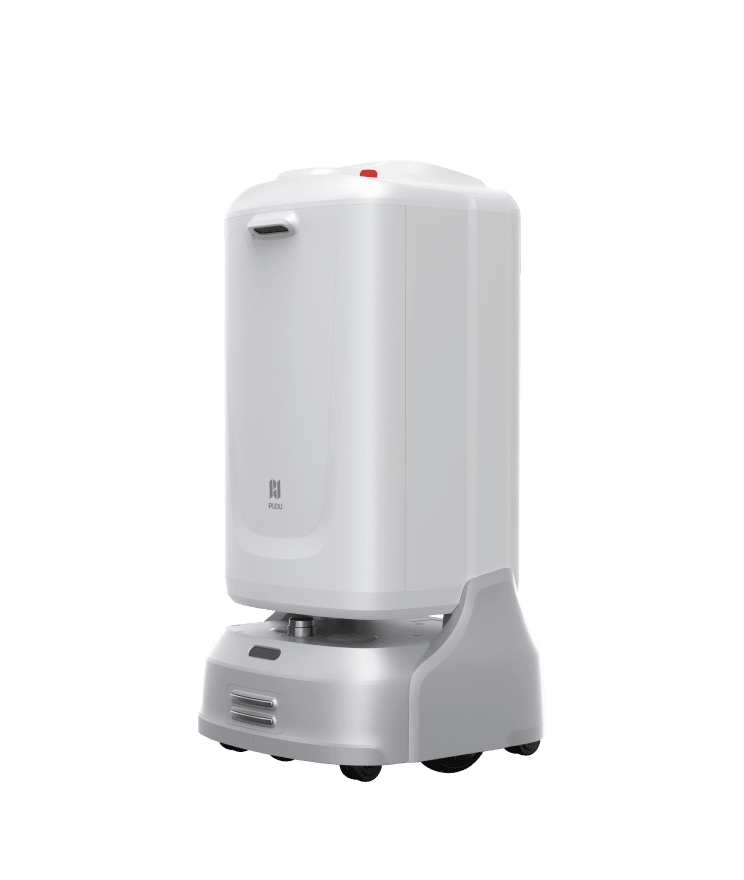
FlashBot Max is built for large-scale, multi-floor environments, enabling secure and automated movement across floors and buildings.
A. Multi-Floor Autonomous Delivery
- Uses elevators independently
- Moves between floors and departments
B. Secure Compartment Delivery
- Locked storage compartments
- Ideal for confidential or sensitive items
C. IoT & Smart Building Integration
- Integrates with elevators, doors, access systems
- Works within smart building infrastructure
D. Long-Distance Logistics
- Handles extended routes across large campuses
- Supports centralized delivery systems
E. Scheduled & Remote Operations
- Pre-defined delivery workflows
- Centralized task management
Technical Specifications – FlashBot Max
| Parameter | Specification |
|---|---|
| Navigation | VSLAM + LiDAR SLAM |
| Max Load | ~30 kg (distributed across compartments) |
| Runtime | Up to ~9 hours |
| Charging Time | ~4 hours |
| Speed | 0.5 – 1.2 m/s |
| Compartment System | 2–4 secure compartments (modular) |
| Delivery Type | Enclosed, secure compartment-based delivery |
| Access Control | Password / NFC / Mobile authentication |
| Minimum Path Width | ~60–70 cm |
| Multi-Floor Capability | Yes (elevator integration) |
| Connectivity | Wi-Fi / IoT integration (Cloud + building systems) |
| Platform | PUDU Cloud / Fleet Management System |
| Obstacle Avoidance | Multi-sensor fusion (LiDAR + cameras + ultrasonic) |
| Deployment | Multi-floor mapping, fast setup |
| Special Features | Secure delivery, IoT integration, optional sterilization |
Comparison: PuduBot 2 vs FlashBot Max vs BellaBot Pro
| Function / Capability | PuduBot 2 | FlashBot Max | BellaBot Pro |
|---|---|---|---|
| Internal Delivery (core office task) | Strong | Limited | Moderate |
| Multi-point delivery | Strong | Moderate | Moderate |
| Multi-floor delivery | Moderate | Strong | Limited |
| High-frequency daily usage | Strong | Limited | Limited |
| Navigation in crowded offices | Strong | Moderate | Strong |
| Employee productivity impact | Very High | Medium | Low |
| Interaction / engagement | Moderate | Low | High |
| Infrastructure dependency | Low | High | Low |
| Suitability for small offices | Strong | Low | Moderate |
| Suitability for large offices | Strong | Strong | Moderate |
| ROI potential (daily usage) | Very High | Medium | Medium |
Conclusion
Office automation is not about adding technology- it is about fixing the everyday inefficiencies that slow teams down.
In most Indian workplaces, the biggest challenges come from repetitive internal movement, manual coordination, and dependency on inconsistent processes. This is where office service robots deliver real, measurable value.
While solutions like BellaBot Pro enhance experience and FlashBot Max enables multi-floor logistics, the foundation of office efficiency lies in optimizing daily operations, and that is where PuduBot 2 stands out.
It handles high-frequency internal tasks with consistency, speed, and reliability, making it the most practical and high-impact choice for office environments.
Autofina Robotics, the official distributor of Pudu Robotics in India, helps you implement this seamlessly; from identifying the right use cases to deployment and ROI planning.
If you are looking to improve productivity and streamline operations, the right place to start is clear:
Start with PuduBot 2.
Book a live demo with Autofina Robotics today and see how your office can operate smarter from day one.