



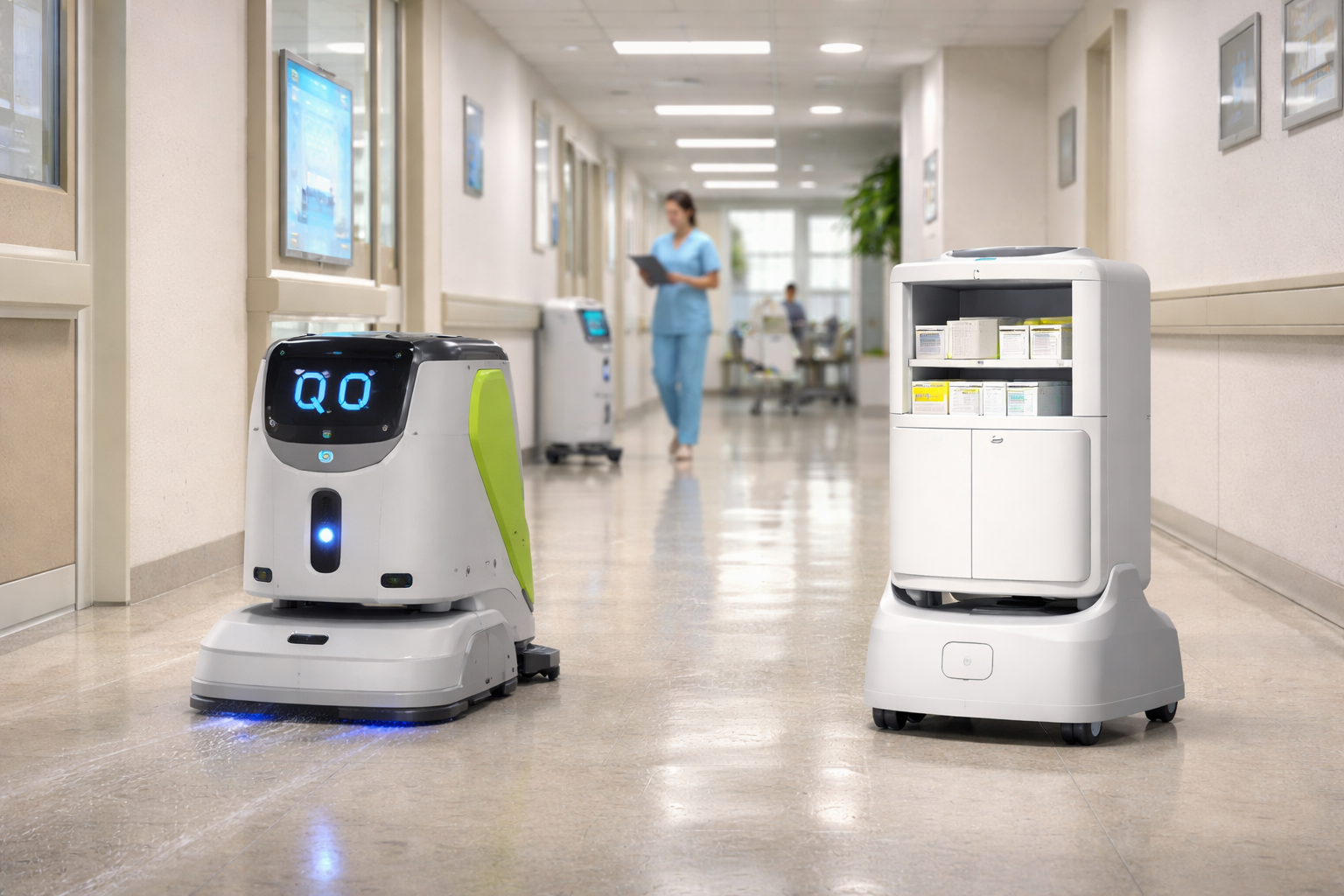
Best Delivery & Cleaning Robots for Hospital Automation in India 2026
The best delivery and cleaning robot in Indian hospitals is becoming essential as healthcare facilities face rising patient volumes, stricter hygiene standards, and increasing expectations around patient safety. Modern hospitals must maintain high levels of cleanliness, ensure timely movement of medicines and samples, and reduce delays in internal operations—all of which directly influence patient care quality and health outcomes.
At the same time, hospitals continue to struggle with staff shortages, particularly in housekeeping and support roles. High attrition rates and shift-based dependency often make manual operations inconsistent. As a result, many healthcare facilities are adopting healthcare robotics in India to automate repetitive tasks and improve operational efficiency.
Post-COVID, infection control has become even more critical. Hospitals now require frequent, standardized cleaning along with safer movement of medicines, samples, and medical waste. In this context, robotic cleaning in healthcare India offers a more controlled, reliable, and contactless approach.
Finally, hospitals must meet strict compliance and audit requirements. Unlike manual processes, autonomous robots in hospitals generate detailed logs and task reports. This allows hospitals to maintain traceable operations and stay better prepared for regulatory audits and quality checks.
Table of Content:
What Are Delivery and Cleaning Robots in Hospitals?
How Robots Improve Patient Care in Hospitals
How Can Robotic Automation Help in Hospitals?
Key Benefits of Delivery and Cleaning Robots for Indian Hospitals
Robots Supporting Hospitals During COVID-19
Compliance & Regulatory Alignment in Indian Hospitals
Challenges in Indian Hospitals – And How Robots Solve Them
Key Features to Find the Best Delivery and Cleaning Robots in Indian Hospitals
Best Delivery and Cleaning Robots in Indian Hospitals: CC1 Pro & FlashBot Max
Best Cleaning Robot for Indian Hospitals: CC1 Pro
Best Service Delivery Robot for Indian Hospitals: FlashBot Max
Why Indian Hospitals Are Adopting Robotics for Patient Safety
The Future of Hospital Automation in India – And Why It Matters Now
What Are Delivery and Cleaning Robots in Hospitals?
Delivery and cleaning robots in Indian hospitals are autonomous systems designed to handle routine tasks like internal transport and floor cleaning. These robots reduce manual workload, improve consistency, and support better hygiene standards across hospital environments.
Delivery Robots (Hospital Logistics AMRs)
Delivery robots, also known as hospital delivery robots in India, are used for moving items such as medicines, lab samples, linens, and food across different departments.
They navigate autonomously using LiDAR and AI, allowing them to move safely through crowded corridors and avoid obstacles like patients, stretchers, and staff. In addition, these robots offer contactless and secure delivery, which helps reduce contamination risks and ensures timely movement of critical items.
Cleaning Robots (Autonomous Cleaning Systems)
Cleaning robots are designed to automate floor maintenance tasks such as scrubbing, vacuuming, and mopping. Some advanced models also support UV-based disinfection for added hygiene control.
Hospitals can schedule these robots for repeatable and consistent cleaning cycles, ensuring that high-traffic areas like OPDs, lobbies, and corridors remain clean throughout the day. This makes cleaning robots for hospitals a reliable solution for maintaining hygiene standards without depending entirely on manual staff.
How Robots Improve Patient Care in Hospitals
Robotic automation in hospitals is not only about improving operational efficiency. It also plays an important role in improving patient care and health outcomes. By automating routine logistics and cleaning tasks, robots allow healthcare staff to spend more time focusing on patients instead of repetitive operational work.
For example, faster delivery of medicines ensures timely treatment, consistent cleaning helps prevent hospital-acquired infections, and automated transport of samples reduces diagnostic delays. Together, these improvements help hospitals provide safer and more reliable care for patients.
How Can Robotic Automation Help in Hospitals?
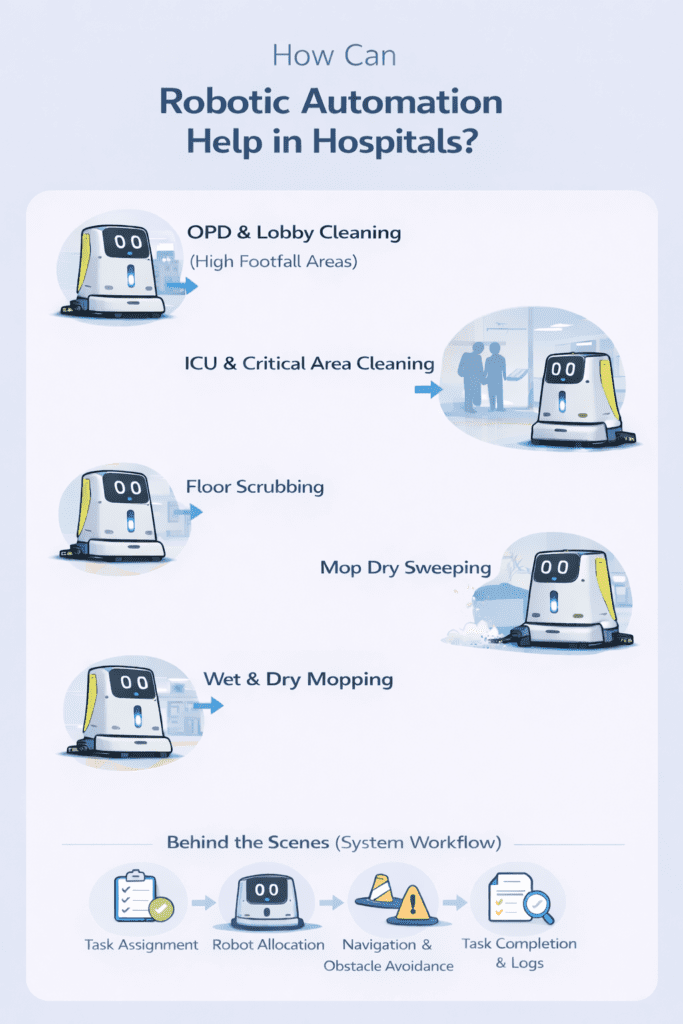
Delivery and cleaning robots in Indian hospitals are designed to fit into everyday hospital operations and handle repetitive, time-sensitive tasks with consistency. Instead of depending on staff availability, hospitals can assign tasks to robots, which then navigate autonomously, complete the job, and log every activity. This makes operations faster, more reliable, and easier to track—especially in high-pressure environments.
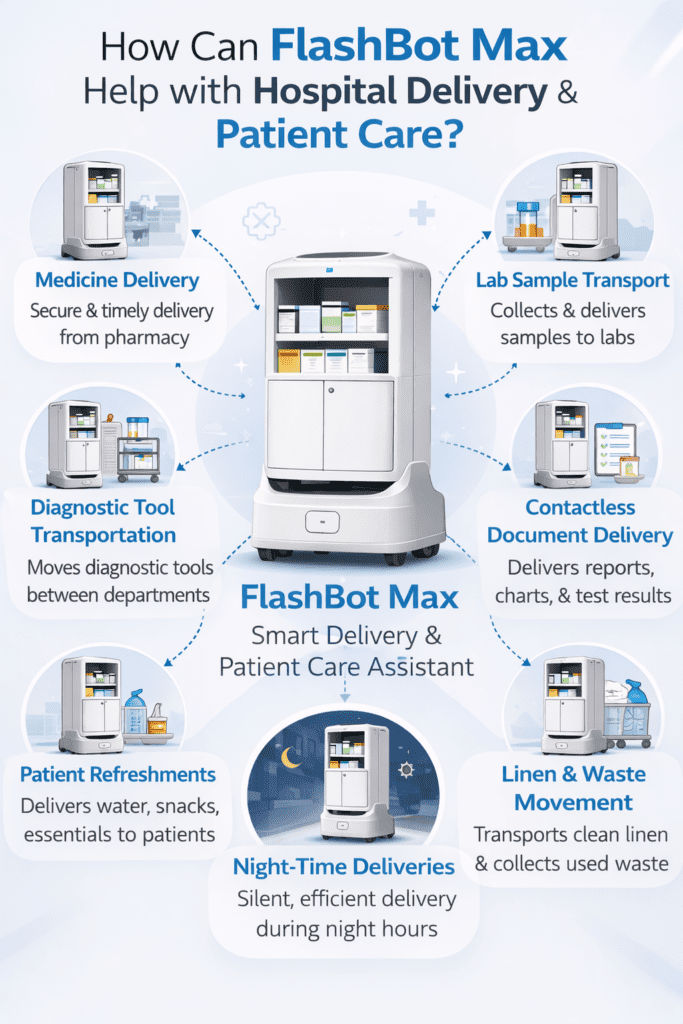
Medicine Delivery (Pharmacy to Wards)
In this case, staff assign a delivery task from the pharmacy to a ward. The hospital delivery robot in India picks up the medicines and navigates through corridors on its own. It avoids obstacles like patients and stretchers and completes a secure, contactless delivery at the destination, while updating the system with task status. Faster and reliable medicine delivery ensures that patients receive treatment on time, which is especially critical in emergency wards and intensive care units.
Lab Sample Transport (Ward to Diagnostics)
For lab operations, staff load samples into the robot and assign a delivery task. The robot moves directly to the diagnostic lab without delays caused by manual handling. This improves turnaround time and reduces unnecessary movement of staff across departments. Faster sample transport also helps reduce diagnostic turnaround time, allowing doctors to make quicker clinical decisions and begin treatment earlier.
Linen & Waste Movement
Hospitals can schedule robots to handle linen and waste transport throughout the day. The robot delivers clean linen to wards and collects used linen or waste, reducing human contact and improving hygiene consistency in internal logistics. This also helps reduce contamination risks and supports safer hospital environments for both patients and staff.
OPD & Lobby Cleaning (High Footfall Areas)
In busy areas like OPDs and lobbies, cleaning robots for hospitals run continuous or scheduled cleaning cycles. They move safely in crowded environments and ensure that floors remain clean despite constant footfall. Cleaner high-footfall areas improve infection control, patient confidence, and overall hospital experience.
ICU & Critical Area Cleaning
For sensitive zones like ICUs, cleaning tasks are scheduled during controlled time windows. The robot follows predefined routes to ensure complete coverage while minimizing unnecessary human movement in critical environments. In critical care areas, consistent cleaning is essential for preventing cross-contamination and protecting vulnerable patients.
Night-Time Deep Cleaning
During low-traffic hours, robots perform deeper cleaning cycles across corridors and common areas. This allows hospitals to maintain cleanliness without disrupting daily operations and ensures readiness for the next day.
Behind the Scenes (System Workflow)
All these tasks follow a structured flow. The system assigns a task, allocates the nearest robot, and the robot navigates using sensors and AI. It avoids obstacles, completes the task, and generates logs—making autonomous robots in hospitals both efficient and audit-friendly.
Contactless Document & Report Delivery
Hospitals frequently move reports, prescriptions, and patient files between departments. FlashBot Max can transport these documents securely and deliver them directly to doctor stations, nurse counters, or administrative offices. This reduces staff movement and ensures faster internal communication.
Diagnostic Equipment & Tool Transport
Certain hospital departments often need to share diagnostic tools or small medical equipment. FlashBot Max can move these items safely between departments such as radiology, diagnostics, and wards. By automating this movement, hospitals reduce manual handling and improve coordination between teams.
Patient Refreshments & Essentials Delivery
Service delivery robots can also assist with simple patient needs. FlashBot Max can transport water bottles, food trays, medicines, or small personal items to patient rooms. This helps reduce the workload on nursing staff and allows them to focus more on direct patient care.
Key Benefits of Delivery and Cleaning Robots for Indian Hospitals
1.Reducing Hospital-Acquired Infections (HAIs)
Hospital-acquired infections remain a major challenge in healthcare facilities. Consistent cleaning and controlled movement of materials play an important role in preventing cross-contamination. Cleaning robots in Indian hospitals help standardize cleaning protocols, ensuring that high-risk areas are cleaned consistently. At the same time, contactless delivery robots reduce unnecessary human interaction during transport of medicines, samples, and supplies.
This helps hospitals strengthen infection control programs and improve patient safety.
2. Workforce Optimization
At the same time, hospitals continue to face staff shortages and high attrition in housekeeping roles. Here, healthcare robotics in India helps reduce the burden on existing teams. Robots take over repetitive tasks like floor cleaning and internal deliveries, allowing staff to focus on more critical responsibilities. This not only improves productivity but also reduces fatigue and dependency on shift-based availability.
3. Faster Internal Logistics
Manual movement of medicines, samples, and supplies often leads to delays, especially in large hospitals. Hospital delivery robots in India solve this by handling transport tasks efficiently and without interruptions. Once assigned, the robot moves directly to the destination without waiting for staff availability. This speeds up internal workflows, particularly for time-sensitive tasks like lab sample transport.
4. 24/7 Continuous Operations
Unlike manual staff, robots operate continuously without breaks or fatigue. Hospitals can schedule cleaning robots for hospitals to run throughout the day or during night hours for deeper cleaning. Similarly, delivery robots remain available for tasks at any time. This ensures uninterrupted operations and consistent service levels across all shifts.
5. Data-Driven Cleaning & Audit Readiness
Another key advantage is visibility and traceability. Autonomous robots in hospitals generate detailed logs for every task—whether it’s cleaning coverage or delivery completion. Hospitals can access reports, track performance, and verify that tasks were completed as scheduled. This makes it easier to meet compliance requirements, including NABH standards, and stay audit-ready at all times.
6.Reducing Nurse Workload and Improving Care Time
In many hospitals, nurses spend significant time transporting medicines, samples, and documents between departments. These routine tasks reduce the time available for patient monitoring and treatment.
Hospital delivery robots automate these logistics tasks, allowing nurses and healthcare workers to focus more on direct patient care. This improves response times, increases staff availability for patients, and enhances overall quality of care.
7.Improved Patient Care and Safety
By automating routine logistics and cleaning tasks, hospitals allow nurses and healthcare staff to spend more time with patients. Faster medicine delivery, improved hygiene, and reduced delays in diagnostics help improve patient safety and overall healthcare outcomes.
Robots Supporting Hospitals During COVID-19
During the COVID-19 pandemic, hospitals around the world used service robots to deliver medicines, food, and medical supplies to isolation wards. These robots helped reduce direct contact between healthcare workers and infected patients while ensuring essential hospital services continued without interruption.
This demonstrated how robotic automation can improve hospital safety while protecting both patients and healthcare staff.
Compliance & Regulatory Alignment in Indian Hospitals
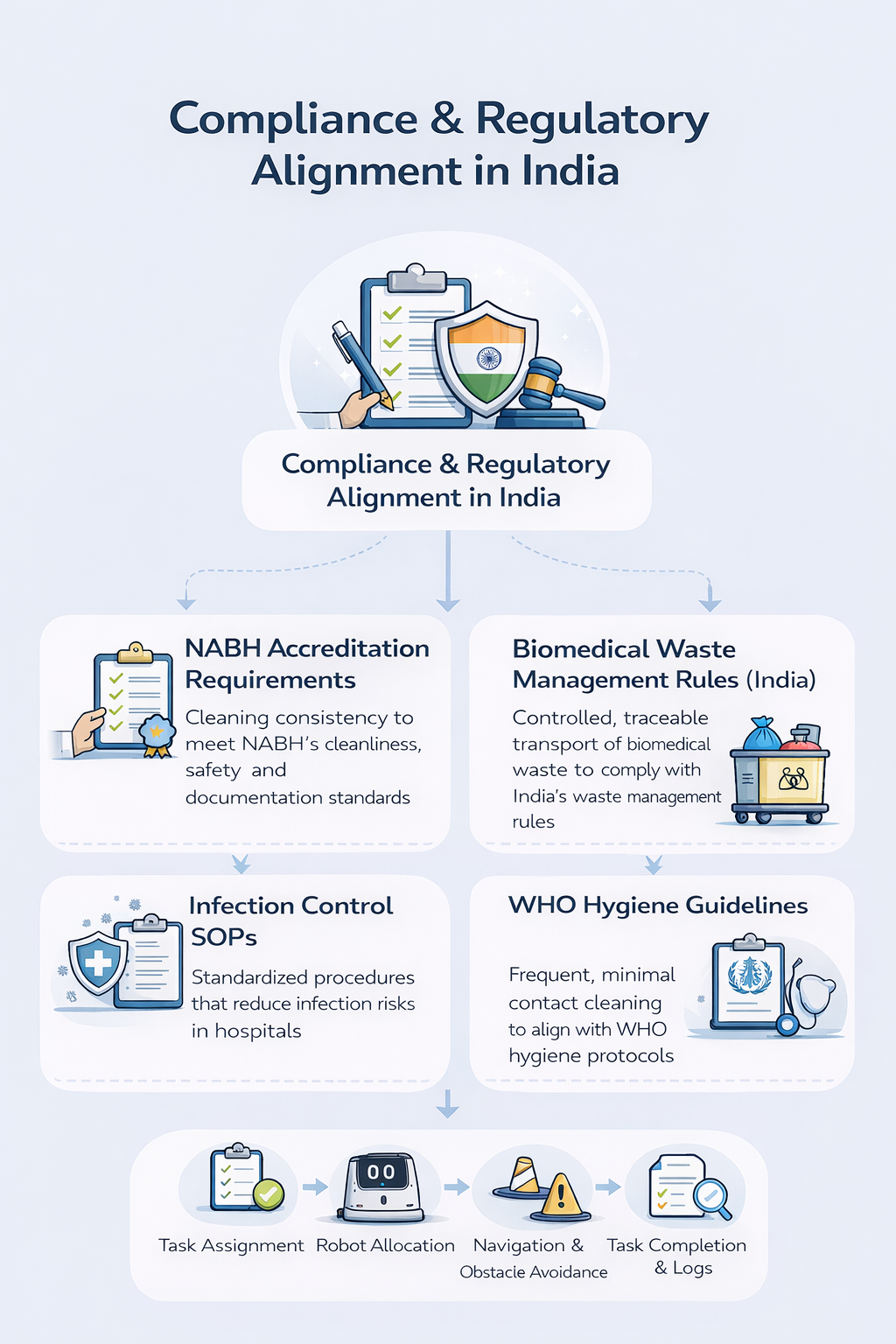
Delivery and cleaning robots in Indian hospitals play an important role in helping hospitals meet strict regulatory and hygiene requirements. In India, compliance is not optional—hospitals must follow defined standards for accreditation, infection control, and waste handling. Failing to meet these can impact licensing, reputation, and patient safety. As expectations around hygiene and auditability increase, hospitals are moving toward standardized and traceable operations, where automation and healthcare robotics in India provide a clear advantage.
NABH Accreditation Requirements
In India, many hospitals aim for or operate under NABH (National Accreditation Board for Hospitals) standards, which require strict protocols for cleanliness, patient safety, and process documentation. Hospitals must show that cleaning activities are consistent, monitored, and recorded.
This is where cleaning robots for hospitals help. They follow fixed routes, run scheduled cycles, and generate logs for every task. As a result, hospitals can demonstrate compliance more easily during audits while maintaining uniform hygiene standards across departments.
Biomedical Waste Management Rules (India)
The Biomedical Waste Management Rules, 2016 (and amendments) mandate proper segregation, handling, and transportation of medical waste within hospital premises. Any lapse can lead to penalties and serious health risks.
Using hospital delivery robots in India for waste or linen movement reduces direct human contact and ensures controlled, repeatable transport. Robots follow predefined paths, which helps hospitals maintain safer internal waste logistics and stay compliant with regulations.
Infection Control SOPs
Hospitals in India follow strict infection control SOPs to prevent cross-contamination and hospital-acquired infections. However, manual execution often varies depending on staff workload and availability.
With robotic cleaning in healthcare India, hospitals can standardize these SOPs. Robots clean the same areas with the same intensity every time, ensuring consistency. This reduces gaps in execution and strengthens overall infection control practices.
WHO Hygiene Guidelines
Many Indian hospitals align their protocols with WHO hygiene guidelines, especially after COVID. These guidelines emphasize frequent cleaning, minimal human contact, and safe handling of materials.
By adopting autonomous robots in hospitals, facilities can meet these expectations more effectively. Robots enable regular cleaning cycles, contactless delivery, and better control over internal movement—helping hospitals maintain globally aligned hygiene standards.
Challenges in Indian Hospitals — And How Robots Solve Them
| Challenge in Indian Hospitals | Impact on Operations | How Robots Solve It |
|---|---|---|
| High footfall in OPDs and corridors | Delays in cleaning and internal movement due to crowding | Autonomous robots use real-time obstacle detection to navigate safely without interrupting operations |
| Narrow corridors and limited space | Difficult movement for staff and inefficiency in manual transport | Compact AMR design allows robots to operate smoothly in tight hospital layouts |
| Staff shortages and high attrition | Inconsistent cleaning and delays in routine tasks | Robots automate repetitive tasks, reducing dependency on manual staff |
| Infection risk and cross-contamination | Higher chances of hospital-acquired infections (HAIs) | Contactless delivery and consistent cleaning reduce human intervention and contamination risk |
| Multi-floor hospital operations | Time-consuming internal logistics between departments | Robots integrate with lifts and move across floors independently for seamless delivery |
Key Features To Find The Best Delivery and Cleaning Robots In Indian Hospitals
Before investing in delivery and cleaning robots in Indian hospitals, it’s important to look beyond basic functionality. Hospitals operate in complex, high-movement environments, so the right robot should handle real-world challenges—not just controlled demos. The features below directly impact performance, safety, and long-term usability in Indian hospital settings.
Navigation & Safety (LiDAR, SLAM)
First, focus on how the robot navigates. Hospitals are unpredictable—patients, stretchers, and staff are constantly moving. A reliable robot should use LiDAR and SLAM-based mapping to move safely and adjust in real time.
This ensures that autonomous robots in hospitals can operate without collisions, even in crowded OPDs and corridors, while maintaining smooth task execution.
Multi-Floor Operation (Lift Integration)
Most Indian hospitals operate across multiple floors, so robots must go beyond single-level navigation. Without lift integration, their use becomes very limited.
Look for hospital delivery robots in India that can connect with elevator systems and move independently between floors. This allows seamless transport of medicines, samples, and supplies across departments.
Fleet Management System
As operations scale, managing multiple robots becomes critical. A strong fleet management system allows hospitals to assign tasks, track robots in real time, and avoid congestion.
With healthcare robotics in India, this system ensures better coordination, faster task allocation, and efficient use of all robots across the facility.
Load Capacity & Multi-Compartment Delivery
Different hospital tasks require different load capacities. For example, medicine delivery, food trays, and lab samples all have different handling needs.
Choose robots that offer multi-compartment storage and secure access. This allows simultaneous deliveries while maintaining safety and separation of items.
Hygiene-Friendly Build
Since these robots operate in sensitive environments, their design should support easy cleaning and infection control.
Cleaning robots for hospitals and delivery robots should have smooth surfaces, minimal exposed components, and materials that can handle regular disinfection without damage.
Best Delivery and Cleaning Robots in Indian Hospitals: CC1 Pro (Cleaning) & FlashBot Max (Delivery)
When hospitals evaluate delivery and cleaning robots in Indian hospitals, the decision ultimately comes down to real-world performance- can the robot handle Indian hospital conditions like high footfall, multi-floor layouts, and strict hygiene requirements? This is where Pudu CC1 Pro and FlashBot Max clearly stand out as purpose-built solutions.
Best Cleaning Robot for Indian Hospitals: CC1 Pro
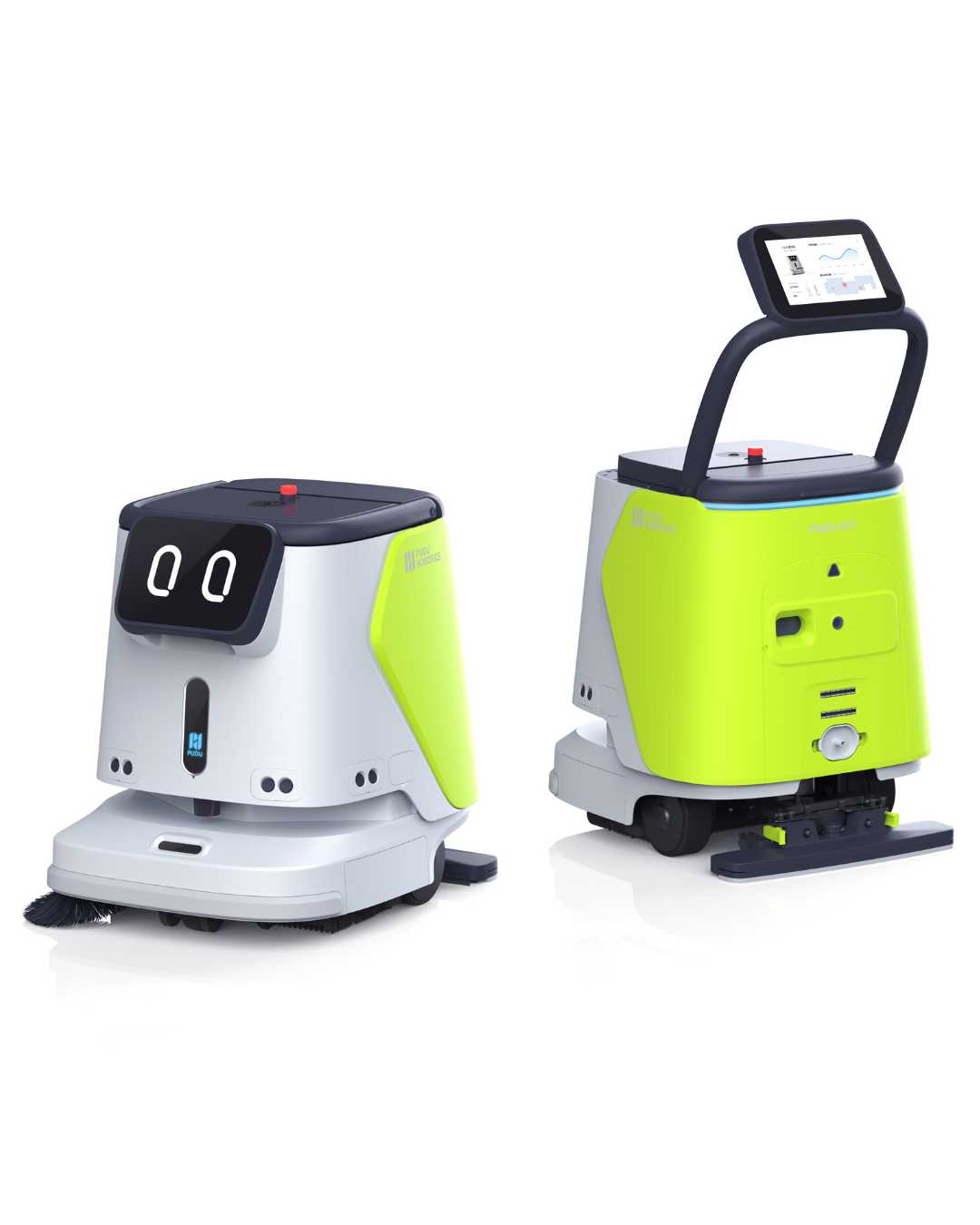
The CC1 Pro is not just another floor cleaning machine- it is a fully autonomous, AI-driven cleaning robot built to handle demanding environments like hospitals. In Indian healthcare facilities, where hygiene standards are critical and footfall is high, a robot like CC1 Pro helps maintain consistent cleaning without increasing manpower.
To begin with, CC1 Pro combines sweeping, scrubbing, vacuuming, and mopping into a single system. Instead of relying on multiple machines or manual processes, hospitals can manage floor cleaning with one intelligent robot. This simplifies operations while ensuring that areas such as OPDs, corridors, waiting halls, and wards remain clean throughout the day.
What truly sets the robot apart is its AI-powered cleaning intelligence. The system can detect stains in real time and automatically perform a secondary cleaning pass when required. It also adjusts cleaning intensity depending on the amount of dirt present and can switch cleaning modes based on floor surfaces such as tiles, vinyl, or smooth hospital flooring. This level of adaptability is especially important in hospitals where different zones require different cleaning standards.
Key Features That Matter for Hospital Environment
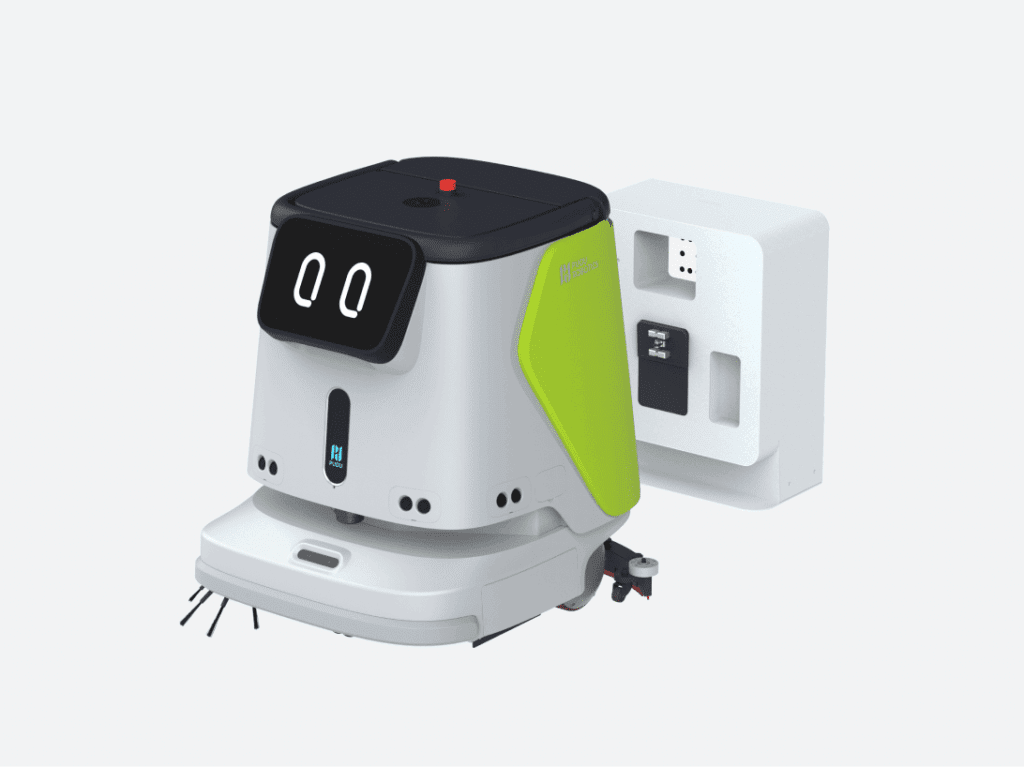
Real-time cleaning verification
A rear AI camera verifies cleaning coverage and ensures no area is missed. The system generates cleaning heatmaps that allow facility managers to track where and how cleaning was completed.
Dynamic obstacle avoidance
The robot safely navigates crowded corridors, OPDs, and waiting areas. It detects people, stretchers, and other obstacles and adjusts its route automatically.
Automatic water refill and charging
CC1 Pro supports automated water management and charging functions, allowing longer cleaning cycles with minimal human intervention.
Operational dashboards and reporting
The robot provides data dashboards that track cleaning coverage, usage, and maintenance status. This helps hospitals maintain transparency and better facility management.
These capabilities directly support NABH hygiene requirements and audit readiness, as hospitals can verify and document cleaning activity.
Technical Specifications – CC1 Pro
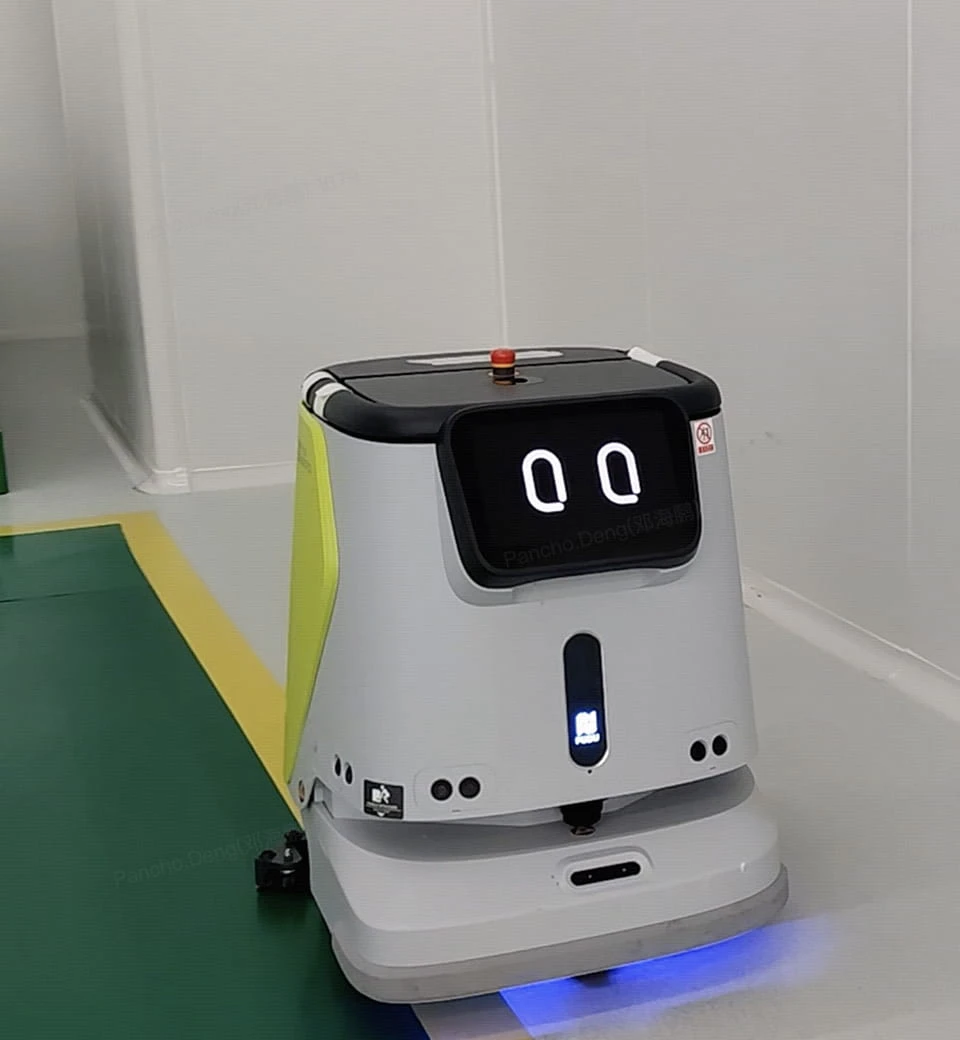
- Cleaning efficiency: 1500–3000 m² per hour
- Run time: 5–9 hours depending on cleaning mode
- Charging time: Approximately 3 hours
- Navigation technology: LiDAR and VSLAM fusion navigation
- Water tank capacity: 30L clean water / 30L waste water
- Cleaning functions: 4-in-1 system – sweeping, scrubbing, vacuuming, and mopping
Why CC1 Pro Is Ideal for Indian Hospitals
CC1 Pro works particularly well in Indian healthcare facilities because it addresses the most common operational challenges. It can operate in high-footfall environments without supervision, ensuring that floors remain clean even during busy hospital hours. At the same time, the robot delivers consistent and repeatable cleaning, something that manual processes often struggle to maintain.
By automating routine cleaning tasks, hospitals can also reduce dependency on large housekeeping teams. Finally, the robot provides clear cleaning logs and performance reports, giving hospitals verifiable proof of cleaning activity when required for audits or internal quality checks.
Best Service Delivery Robot for Indian Hospitals: Flashbot Max
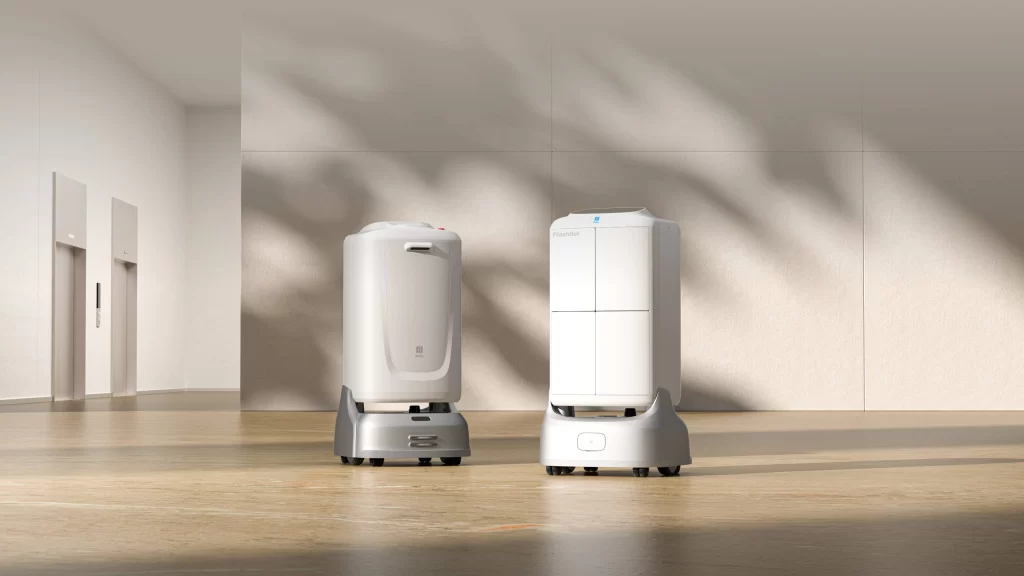
The FlashBot Max is designed to automate internal logistics in large buildings, making it a strong fit for hospitals where medicines, samples, food trays, and supplies constantly move between departments. In many healthcare facilities, delays in internal transport can affect both staff efficiency and patient care. This is where hospital delivery robots in India like FlashBot Max help streamline routine operations.
To begin with, FlashBot Max supports multi-compartment delivery, allowing hospitals to transport different items in a single trip. Medicines, lab samples, documents, and small equipment can be placed in separate compartments and delivered to multiple departments efficiently. This reduces the number of manual trips staff must make across wards, pharmacies, and labs.
Another major advantage is its ability to operate in multi-floor hospital environments. The robot integrates with elevators and building systems, enabling it to move between floors autonomously. As a result, hospitals can automate deliveries from the pharmacy to wards, from wards to diagnostic labs, or from kitchens to patient floors without relying on staff availability.
Key Features That Matter for Hospital Environment
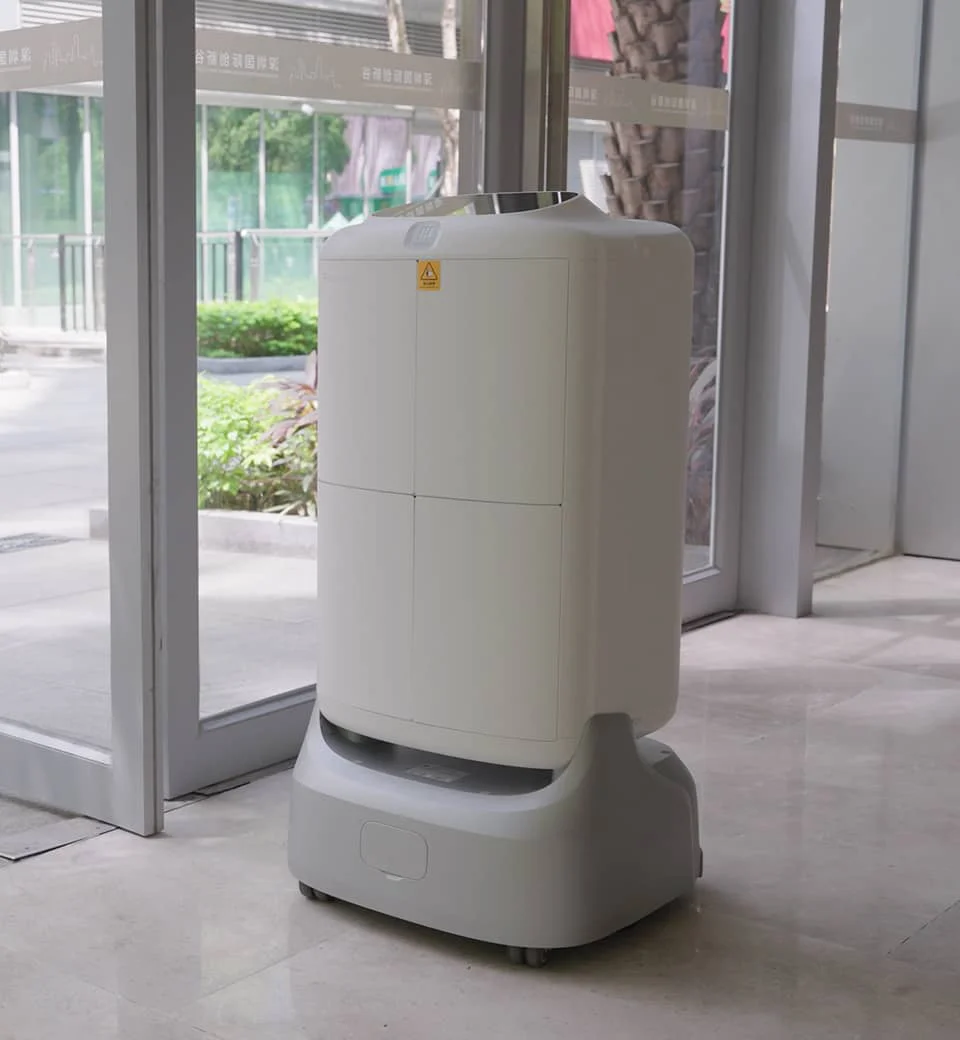
Multi-compartment delivery system
FlashBot Max supports 2–4 adjustable compartments, allowing multiple deliveries in one trip while keeping items separated and organized.
Secure access control
Compartments can be accessed using password authentication, mobile verification, or NFC-based access. This ensures that only the intended recipient can open the compartment and retrieve the items.
Advanced obstacle avoidance
The robot uses LiDAR and multiple sensors to detect people and obstacles in real time, allowing it to navigate safely through busy hospital corridors.
Elevator and building system integration
FlashBot Max connects with elevator systems and building infrastructure so it can move across floors independently and complete deliveries without human assistance.
Remote monitoring and fleet management
Hospitals can track the robot’s location, delivery progress, and operational status through the management platform, ensuring complete visibility of internal logistics.
Contactless and hygienic delivery
Ventilated compartments and optional UV sterilization help maintain hygiene while transporting sensitive items such as medicines or lab samples.
Technical Specifications – FlashBot Max
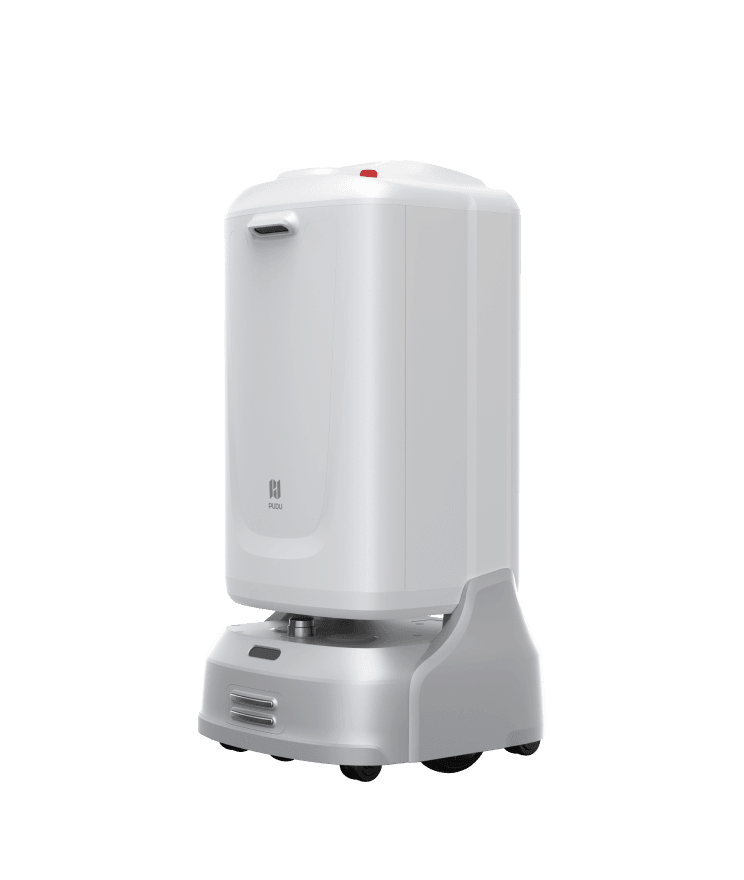
- Dimensions: 538 × 534 × 1052 mm
- Robot weight: Approximately 60 kg
- Payload capacity: 10 kg per compartment layer (up to around 20 kg total)
- Compartments: 2–4 adjustable compartments
- Run time: Up to approximately 9 hours
- Charging time: Approximately 4 hours
- Navigation technology: VSLAM and LiDAR SLAM navigation
- Speed: 0.5–1.2 m/s adjustable operating speed
- Minimum path clearance: Approximately 70 cm corridor width
Why FlashBot Max Is Ideal for Indian Hospitals
FlashBot Max works particularly well in Indian healthcare facilities because it addresses the operational challenges hospitals face daily. The robot can move safely in crowded corridors, operate in narrow pathways, and manage deliveries across multiple floors without supervision.
By automating routine transport tasks, hospitals can reduce delays in medicine delivery, improve lab sample turnaround time, and lower the workload on nurses and support staff. At the same time, delivery and cleaning robots in Indian hospitals help create a more reliable internal logistics system- one that is faster, safer, and easier to monitor through digital reporting and task logs.
Why Indian Hospitals Are Adopting Robotics for Patient Safety?
Indian hospitals are increasingly adopting hospital robots in India as part of a broader shift toward healthcare robotics in India and smart hospital infrastructure. As patient volumes grow and hygiene expectations rise, hospitals are turning to robotic automation to strengthen infection control, reduce manual workload, and ensure faster movement of medicines, samples, and supplies. In addition, robotic systems support hospital automation in India by delivering consistent cleaning, contactless deliveries, and real-time operational tracking. As a result, hospitals can improve patient safety, maintain higher hygiene standards, and build more reliable healthcare operations.